In short
- Requires full sun and well-drained, rather alkaline soil.
- Plant the rhizomes shallowly — they must be exposed to the sun.
- Drought-resistant; does not tolerate waterlogged soil.
- Available in practically every colour — hence the name after the Greek goddess of the rainbow.
- Divide the clumps every 3–4 years to maintain abundant flowering.
Botanical data
- Family
- Iridaceae (Iridaceae)
- Height
- 0.4–1 m
- Width
- 0.3–0.5 m
- Habit
- Upright
- Growth rate
- Moderate
- Position
- Full sun
- Soil
- Loamy, Sandy, Chalky
- pH reaction
- pH 6.5–7.5
- Moisture
- Dry, Moderate
- Bloom
- May–June
- Hardiness
- USDA 3a–9a
- Propagation
- By division
Characteristics
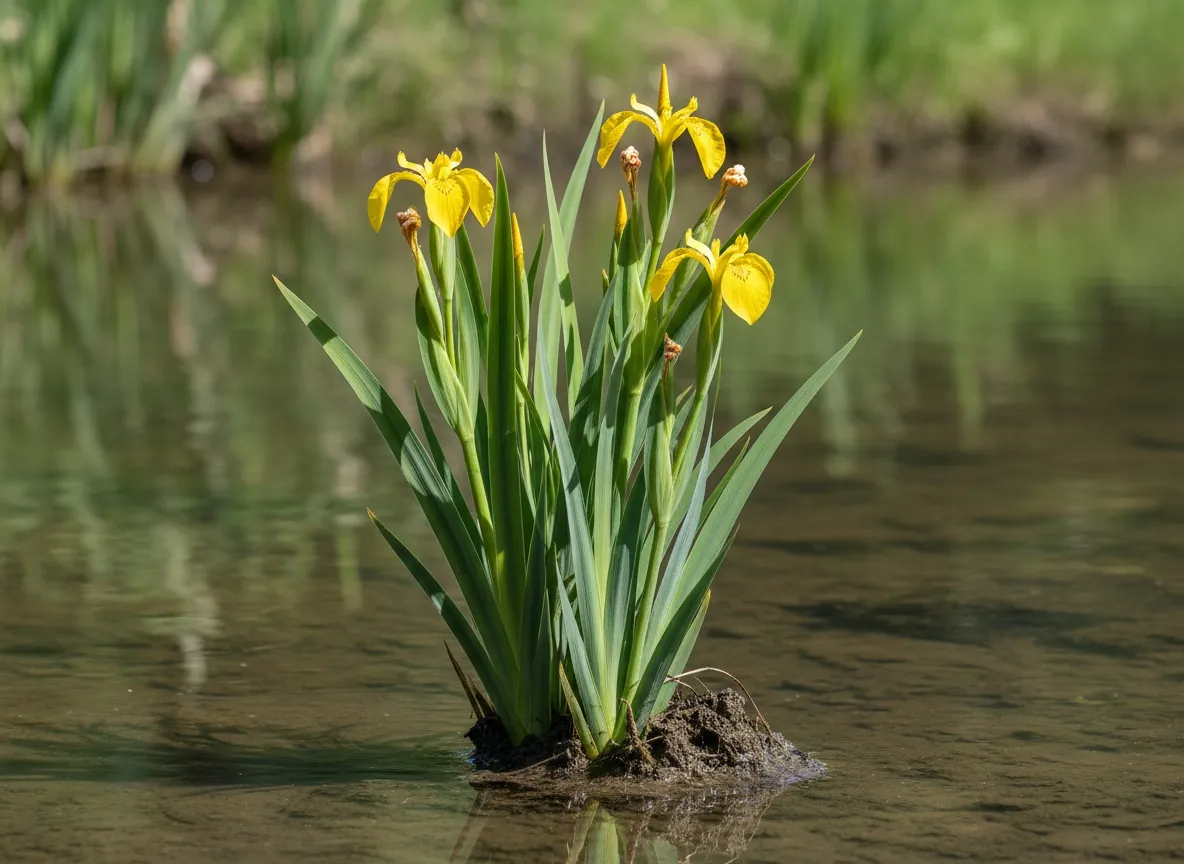
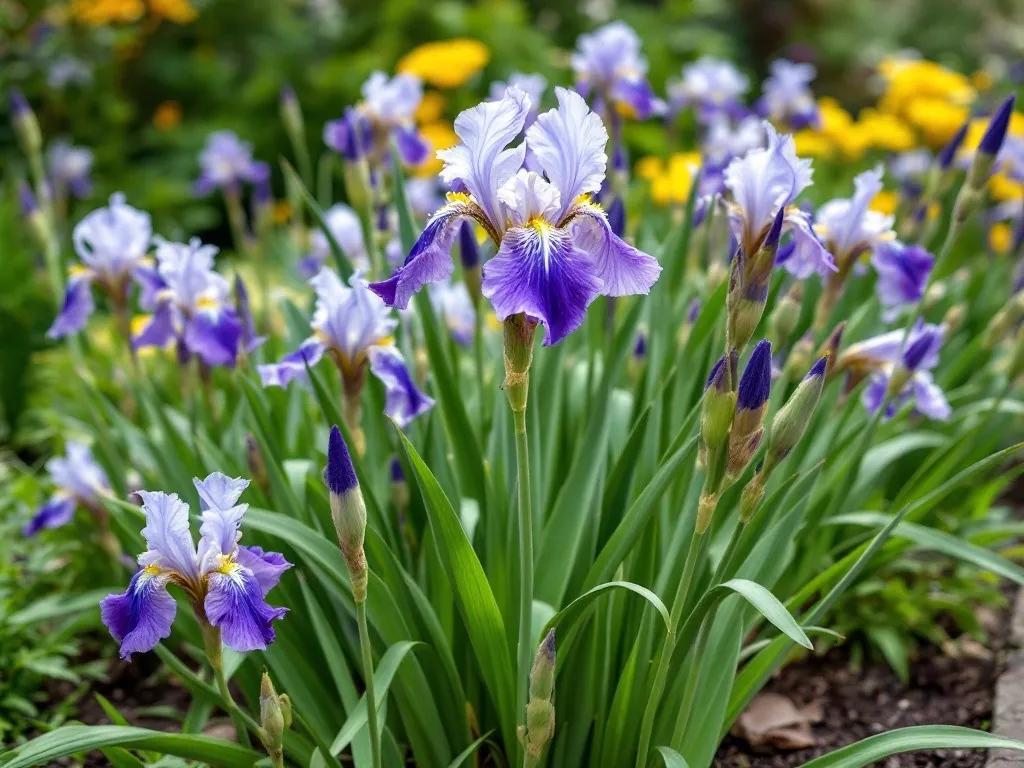
A rhizomatous perennial with sword-shaped, blue-green leaves arranged in a fan. The flowers are large, with three upright inner petals and three drooping outer ones bearing the characteristic 'beard' of hairs.
Growing and care
Watering
Drought-resistant. The rhizomes must be exposed to the sun and must not rot in moisture — the most common mistake is planting too deep.
Fertilizing
Avoid high-nitrogen fertilisers — they encourage rhizome rot.
Planting
Plant the rhizome shallowly so that its top is visible at the surface, in full sun.
Pruning
Remove spent flower stems; in autumn cut the leaves back to about 15 cm.
Companion plants
Good companions
Similar requirements — full sun, well-drained soil, drought tolerance; together they form a durable, low-maintenance bed.
Bad companions
They shade the iris rhizomes and keep moisture around them, which leads to rot.
The evidence level indicates whether the relationship is backed by research, observation, or gardening tradition.
Toxicity
| For whom | Level | Notes |
|---|---|---|
| Humans | Mild | The rhizomes contain compounds that irritate the digestive tract if eaten. |
| Dogs | Mild | — |
| Cats | Mild | — |
History and origin
Irises have been cultivated since antiquity — the iris motif (fleur-de-lis) became the heraldic symbol of the French monarchy. The genus name comes from the Greek rainbow goddess Iris, alluding to the richness of the flower colours.
Uses
For perennial beds, cottage and dry gardens, for edgings and as a cut flower. Excellent for sunny, well-drained sites.
Trivia
- From the rhizomes of some irises 'orris root' is obtained, used in perfumery.
- The fleur-de-lis symbol probably derives from a stylised iris flower, not a lily.
Frequently asked questions
Why is my iris not flowering?
The most common causes are planting the rhizomes too deeply, too much shade, an overcrowded clump or an excess of nitrogen. The rhizomes must sit shallowly and be exposed to the sun.
How deep should I plant iris rhizomes?
Very shallowly — the top of the rhizome should be visible at the soil surface and exposed to the sun. Planting too deep is the most common cause of failure to flower and of rot.
When and how should irises be divided?
Every 3–4 years, in summer after flowering (July–August). The rhizomes are dug up, divided into pieces with a fan of leaves and replanted at a fresh site.
Sources
- Plants of the World Online (POWO)Database (GBIF, POWO…)
- RHS — Bearded irisesInstitution / botanical garden
My note
A private note for this plant — saved in your browser.