In short
- Position: full sun, well-drained soil, slightly acidic to neutral.
- Seed potatoes are planted in April–May, once the risk of severe frosts has passed.
- Earthing up (hilling) is a key operation — it protects the tubers from greening and light.
- The green parts and the sprouts contain toxic solanine — they should not be eaten.
- The tubers are harvested in August–September, when the haulm starts to yellow and die back.
Botanical data
- Family
- Solanaceae (Solanaceae)
- Height
- 0.3–1 m
- Width
- 0.4–0.6 m
- Habit
- Spreading
- Growth rate
- Fast
- Position
- Full sun
- Soil
- Sandy, Humus-rich
- pH reaction
- pH 5.5–6.5
- Moisture
- Moderate
- Bloom
- June–July
- Hardiness
- —
- Propagation
- From cuttings
Characteristics
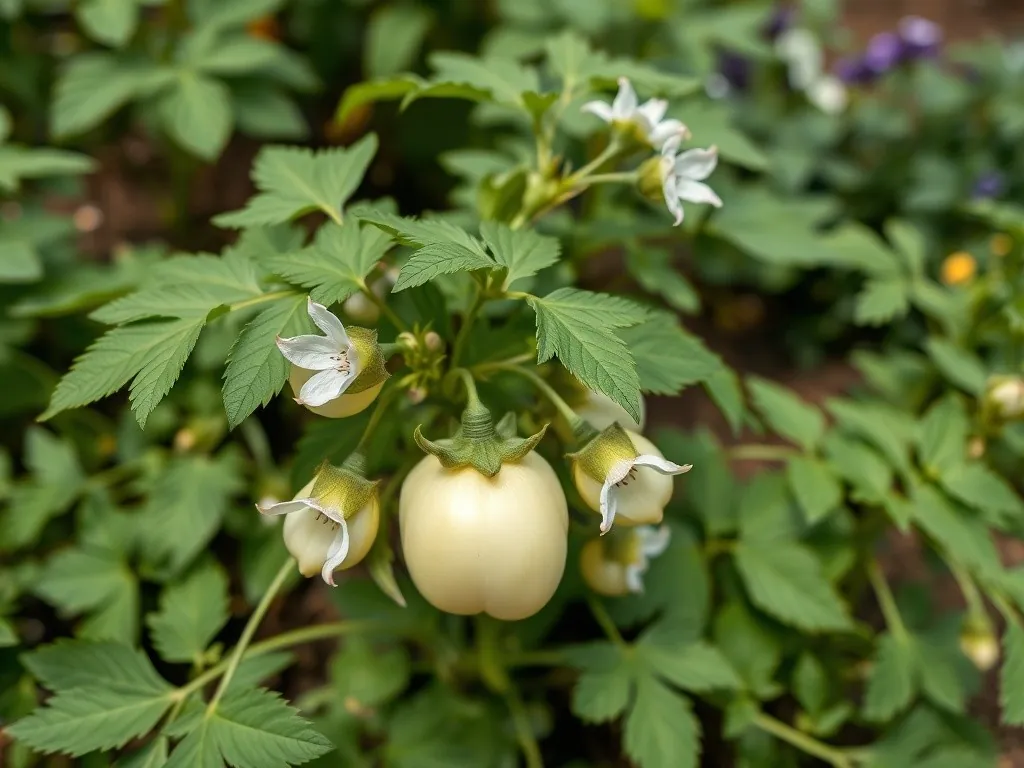
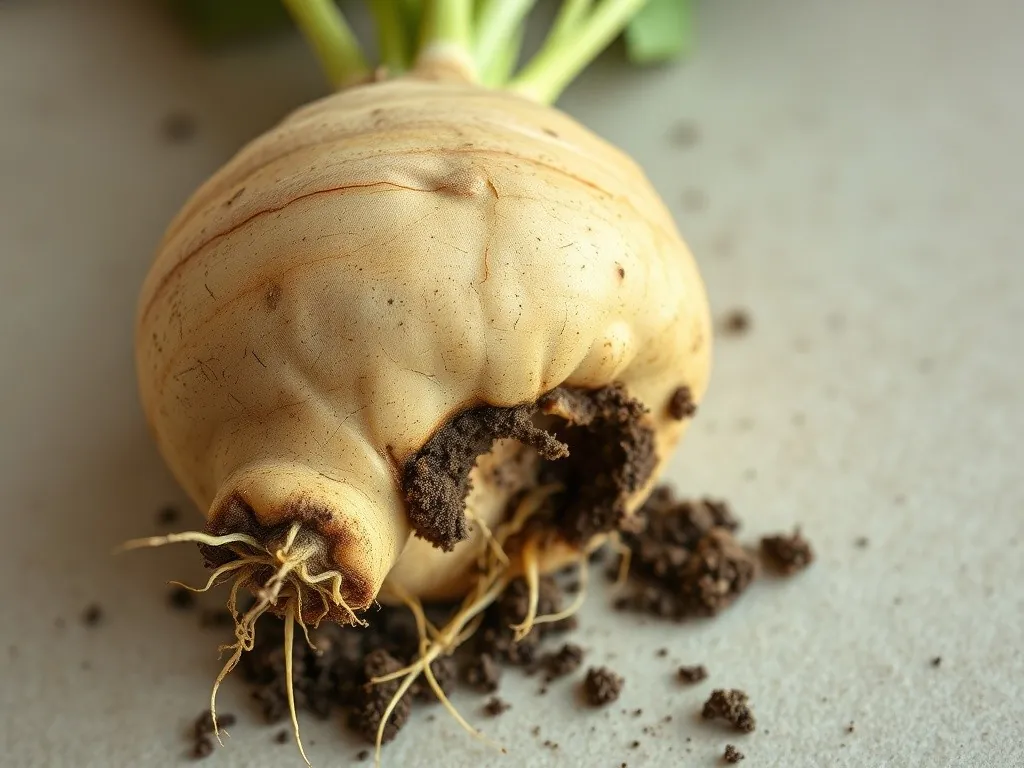
A herbaceous plant with spreading, angular stems and pinnate leaves. Underground it produces stolons ending in swellings — the tubers, which serve as a storage organ. The white or violet flowers, gathered in flat clusters, rarely develop into small, poisonous berries.
Growing and care
Watering
The most important thing is regular access to water during the phase of tuber set and growth; overwatering promotes rot.
Fertilizing
Limit nitrogen after tuber set — an excess prolongs the growth of the above-ground parts at the expense of the tuber yield.
Planting
Deeply loosened soil; the seed potatoes are best pre-sprouted (exposed to light) 2–3 weeks before planting.
Pruning
Heaping (earthing up) soil around the shoots — this is not pruning in the strict sense, but a key care operation protecting the developing tubers from light and greening.
Companion plants
Good companions
The bean fixes atmospheric nitrogen thanks to nodule bacteria, enriching the soil for the potato, and its scent additionally makes it harder for the Colorado potato beetle to find host plants.
Traditionally planted at the corners of the potato plot — gardeners believe it strengthens the plants' resistance to fungal diseases.
Bad companions
Both plants belong to the nightshade family and are susceptible to the same diseases, especially potato blight (Phytophthora infestans), which easily spreads between the species.
The vigorously spreading, trailing shoots of the cucurbits compete for space and nutrients with the shallow-rooted potato.
The evidence level indicates whether the relationship is backed by research, observation, or gardening tradition.
Toxicity
| For whom | Level | Notes |
|---|---|---|
| Humans | High | The green parts of the plant, the sprouts and the greened skin of the tubers contain solanine — a toxic glycoalkaloid; the ripe, cooked tubers without green parts are themselves safe. |
| Dogs | Moderate | Raw, green tubers and haulm can cause solanine poisoning. |
| Cats | Moderate | — |
History and origin
Domesticated by Andean peoples thousands of years ago, it reached Europe from South America in the 16th century. Initially regarded with suspicion and grown as a botanical curiosity, in the 18th–19th centuries it became the staple food of a large part of Europe, including Poland.
Uses
A staple vegetable in home and commercial growing; cultivated in allotment gardens and in fields. The tubers are used culinarily in many ways and industrially for the production of starch and alcohol.
Trivia
- The Irish potato crop failure of the 1840s, caused by potato blight, led to mass emigration and the deaths of over a million people.
- There are thousands of potato varieties worldwide, differing in the colour of the skin and flesh, the starch content and the culinary use.
Frequently asked questions
Why are green potatoes dangerous?
Greening of the skin means an increase in the concentration of solanine, a natural toxin protecting the plant against pests. In large amounts solanine is harmful to humans, so green parts of the tuber should always be cut away or the whole tuber discarded.
What is earthing up and why is it so important?
Earthing up is heaping soil around the growing shoots. It protects the developing tubers from light (preventing greening and bitterness) and increases the surface on which new tubers can form, which raises the yield.
When should you harvest potatoes?
New potatoes are harvested as early as June–July, when the plant is flowering. The main crop, intended for storage, is harvested in August–September, when the haulm starts to yellow and dry, which indicates the tubers are ripe.
Sources
- Plants of the World Online (POWO) — Solanum tuberosumDatabase (GBIF, POWO…)
- USDA PLANTS Database — Solanum tuberosumDatabase (GBIF, POWO…)
My note
A private note for this plant — saved in your browser.