In short
- It does not flower — like all ferns it reproduces by spores, not seeds.
- It requires high air humidity (60–80%) — this is requirement number one and the commonest cause of failure.
- The substrate must be constantly slightly moist; a single drying out withers all the fronds.
- A bright position, but without direct sun — diffuse light or partial shade.
- Strictly a pot plant — it does not overwinter outdoors in the Polish climate.
- A withered plant is usually not dead: after cutting the fronds back to the ground it reshoots from the rhizome.
Botanical data
- Family
- Pteridaceae (Pteridaceae)
- Height
- 0.25–0.5 m
- Width
- 0.3–0.5 m
- Habit
- Clump-forming
- Growth rate
- Moderate
- Position
- Partial shade, Shade
- Soil
- Peaty, Humus-rich
- pH reaction
- pH 5.5–6.5
- Moisture
- Moist
- Bloom
- —
- Hardiness
- —
- Propagation
- By division, From seed
Characteristics
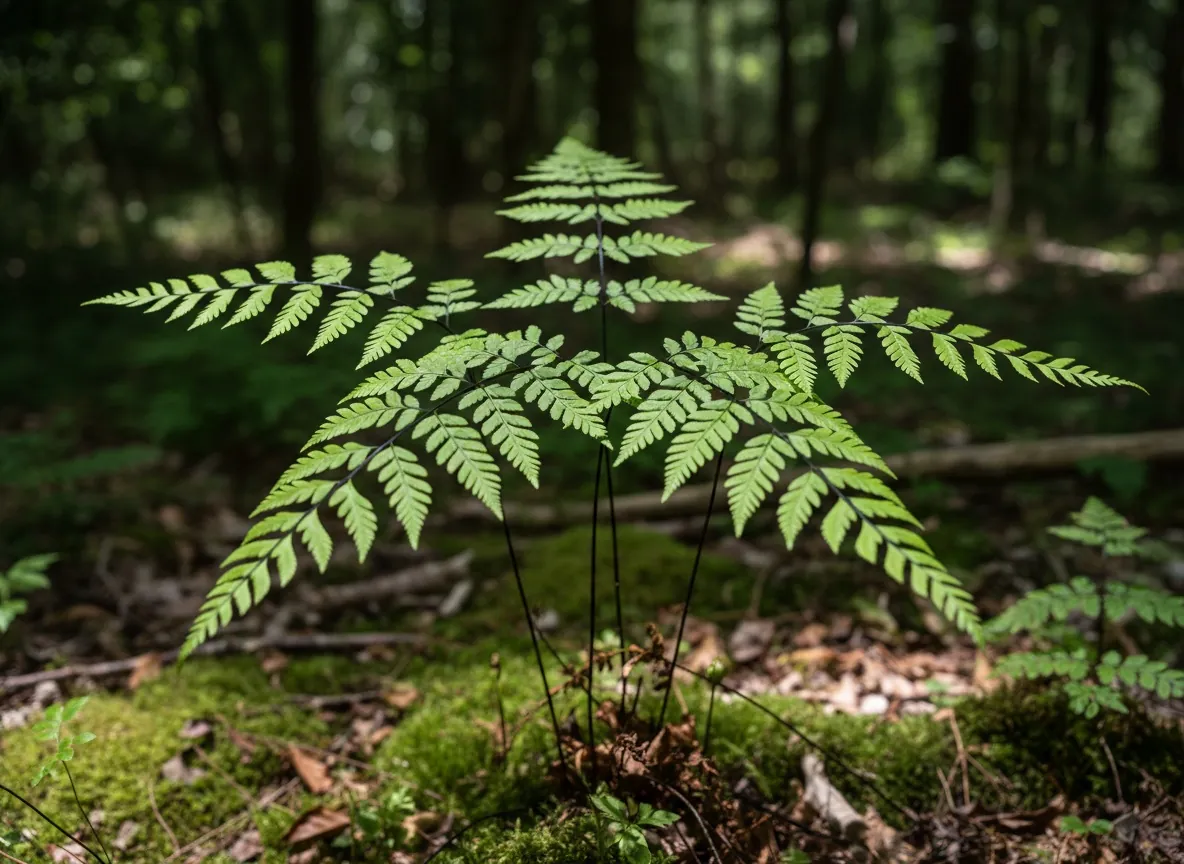
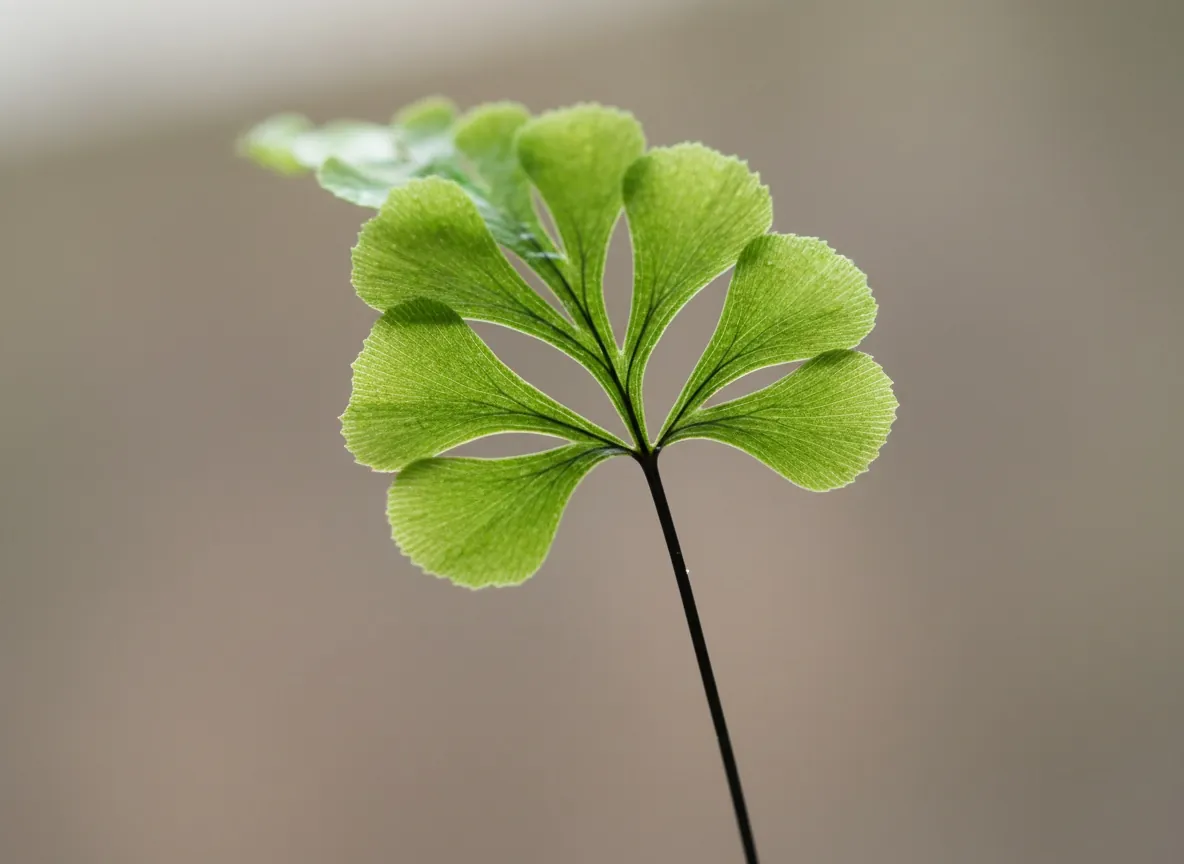
It forms a compact, arching clump 25–50 cm tall. The fronds are delicate, multiply pinnate, built up from numerous small, fan-shaped or triangular pinnules (segments) with a wavy, notched margin and a light green — in spring almost pale celadon — colouring. The distinguishing feature of the genus is the thread-like, stiff, black or dark brown, glossy stalks and rachises — to which the plant owes the name “Venus's hair”. The sporangia do not form clusters on the underside of the blade as in most ferns, but lie beneath the rolled-under, membranous margin of the pinnule.
Growing and care
Watering
The substrate must be constantly slightly moist — a single drying out of the root ball withers whole fronds irreversibly. Water with lukewarm, soft (stood or filtered) water, preferably from below; do not, however, allow water to stand in the cachepot.
Fertilizing
Always at half the dose recommended by the manufacturer — the delicate roots of maidenhair fern are easily scorched by fertiliser that is too concentrated.
Planting
A light, free-draining peat substrate with added perlite and bark; a pot that is not too large, and necessarily with a drainage hole. Do not sink the base of the clump.
Pruning
Cut withered or browned fronds off right at the base — the plant puts out new ones from the rhizome.
Companion plants
Good companions
Both plants like partial shade and high air humidity — stood together they create the humid microclimate that maidenhair fern badly needs.
Identical requirements: diffuse light, soft water and constantly humid air; both cope badly with dry air near a radiator.
A fern with similar needs but far less sensitive — it fills out the composition well and helps retain moisture around the more delicate maidenhair fern.
Bad companions
The succulent requires full sun and for the substrate to dry out between waterings — this cultivation regime is incompatible with the needs of maidenhair fern on every point.
The dry, sunny position they require withers the fronds of maidenhair fern within a few days.
The evidence level indicates whether the relationship is backed by research, observation, or gardening tradition.
Toxicity
| For whom | Level | Notes |
|---|---|---|
| Humans | None | — |
| Dogs | None | — |
| Cats | None | Regarded as one of the safer pot ferns — it contains no substances known to be toxic to pets. |
History and origin
The species comes from the tropical forests of South America, and its name commemorates the Italian naturalist Giuseppe Raddi, who studied the flora of Brazil in the 19th century. The maidenhair fern reached Europe during the Victorian craze for ferns (so-called pteridomania), when collecting and displaying exotic ferns in glass cases — Wardian cases — became a drawing-room passion. It was precisely in these enclosed cases that the plant fared best, for they maintained a humidity that no ordinary home can provide.
Uses
For bright, humid interiors: bathrooms with a window, kitchens, glass cases and plant terrariums, where constant air humidity comes naturally. It looks excellent in compositions with other plants of high humidity requirements, and in tall cachepots and on shelves, where it can let its filigree fronds arch freely.
Trivia
- The generic name Adiantum comes from the Greek adiantos — “unwettable”: the fronds are covered with a waxy layer off which water runs in droplets without wetting the blade. This is the paradox of the plant — the frond cannot be made wet, and yet without humid air the plant withers away.
- A plant dried to a crisp is rarely dead. Cutting all the fronds off right at the base and consistently maintaining moisture most often ends with new shoots emerging from the rhizome within a few weeks.
- The best place for a maidenhair fern in the home is a bright bathroom — daily baths and showers keep the air humidity there close to that of a tropical forest.
Frequently asked questions
Why have the fronds of my maidenhair fern dried out and gone brittle?
This is almost always the result of air that is too dry or of the root ball drying out — most often in winter, near a radiator. Maidenhair fern needs humidity of the order of 60–80% and a substrate that never dries out completely. Withered fronds will not revive, but the plant itself is usually alive: cut everything back to the ground, maintain moisture and move it to a more humid spot (e.g. a bright bathroom), and new shoots will emerge from the rhizome.
Does maidenhair fern flower and how is it propagated?
Maidenhair fern does not flower — it is a fern, so it produces neither flowers nor seeds. It reproduces by spores ripening beneath the rolled-under margin of the pinnules, which is difficult and time-consuming indoors. In practice the simplest method is division of an established clump during spring repotting — every fragment of rhizome with roots and a few fronds establishes without trouble.
Can a maidenhair fern be placed on a sunny windowsill?
No. Direct sun, especially from the south, scorches the delicate pinnules in a short time. In the wild the plant grows in the shade of a tropical forest, so indoors it needs a bright position but with diffuse light — preferably an east- or north-facing window, or well back in the room away from a south-facing pane.
Sources
- Plants of the World Online (POWO)Database (GBIF, POWO…)
- Missouri Botanical Garden — Adiantum raddianumInstitution / botanical garden
My note
A private note for this plant — saved in your browser.