In short
- IT HAS NO SPINES — one of the very few spineless cacti; safe to touch.
- Usually 5 sharp ribs; in cross-section it forms a star, from the side the outline of a bishop's mitre.
- The white “dots” are trichomes (flecks), not deposit or a pest — they must not be rubbed off.
- It grows very slowly; a typical pot specimen is 10-20 cm for years.
- It is propagated ONLY from seed — it produces no offsets for cuttings.
- It requires a dry, cool (8–12°C) winter rest and a calcareous, mineral substrate.
Botanical data
- Family
- Cactaceae (Cactaceae)
- Height
- 0.1–0.6 m
- Width
- 0.08–0.2 m
- Habit
- Rounded
- Growth rate
- Slow
- Position
- Full sun
- Soil
- Sandy, Chalky
- pH reaction
- pH 6.5–8
- Moisture
- Dry
- Bloom
- May–September
- Hardiness
- —
- Propagation
- From seed
Characteristics
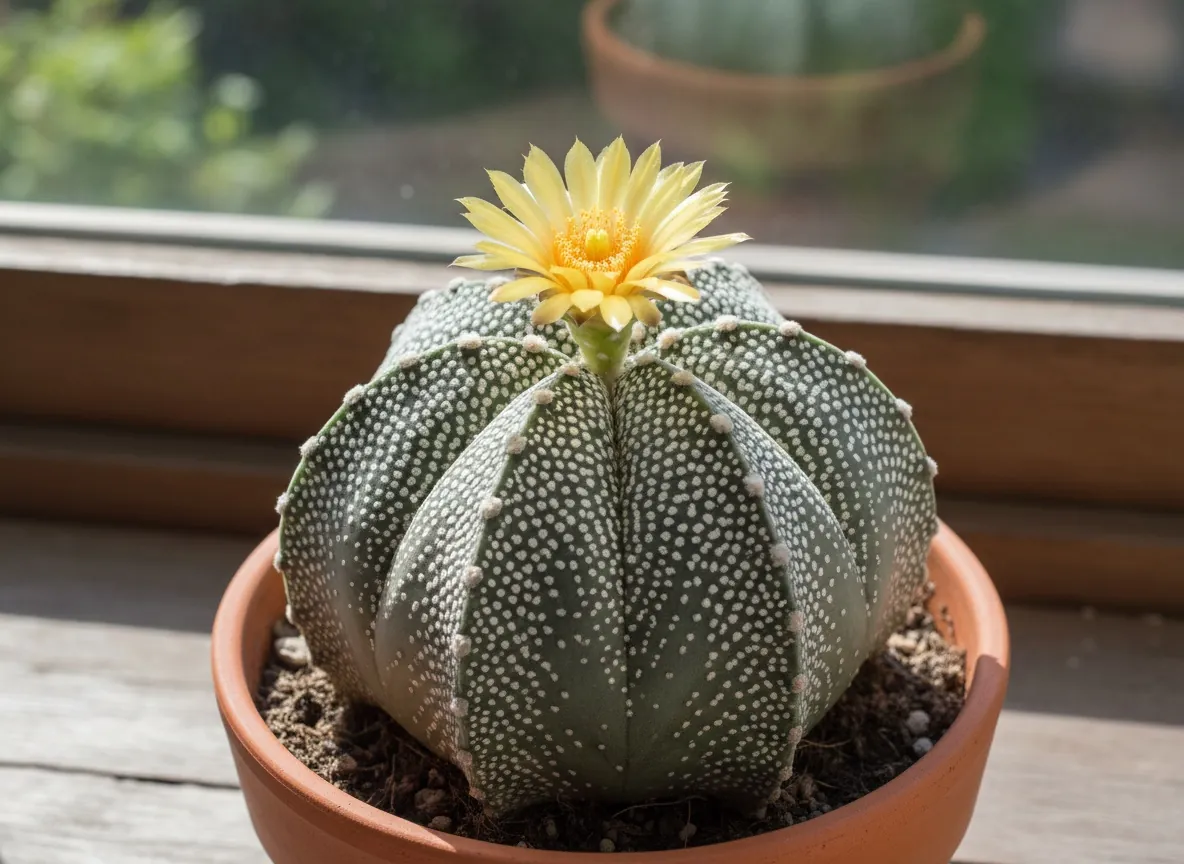
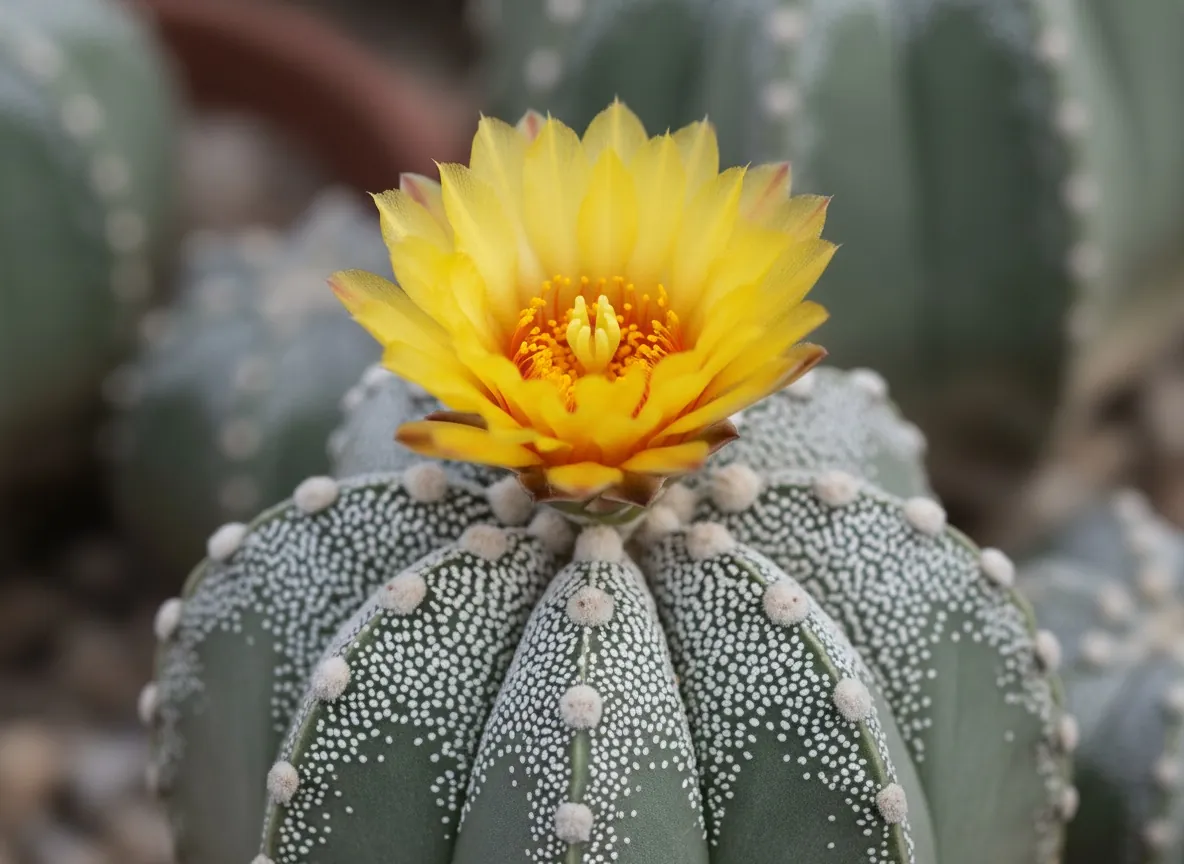
A cactus with a globular body, elongating with age into a short, barrel-shaped column, built most often of five very pronounced, sharply drawn ribs — in cross-section the plant forms a regular star, and viewed from the side it resembles a bishop's mitre, which gave it both of its common names. The number of ribs varies (from three to eight), and three- and four-ribbed forms are valued separately in collections. The most remarkable thing, however, is a feature it lacks: Astrophytum myriostigma is one of the few cacti entirely devoid of spines — in the areoles only a tuft of woolly felt remains. Instead, the whole grey-green skin is covered with dense, fine, white flecks (trichomes), built of bundles of thin hairs; it is they that give the plant its characteristic frosted appearance, reflect excess sunlight and help to capture the night dew. In summer, at the top, from the woolly growth zone, funnel-shaped, silky flowers 4-6 cm across open in succession, with pale yellow petals, not infrequently with an orange-red throat.
Growing and care
Watering
From May to September water generously, but only once the root ball has dried out completely; pour away any excess from the saucer immediately. From November to March do NOT water at all and keep it at 8–12°C — the dry winter rest is a condition for flowering and a compact habit. Pour water onto the substrate only: drops settling on the white felt leave permanent, rusty streaks, and water lying in the hollow of the crown is a direct route to rot.
Fertilizing
Very sparingly and only in the growing season — the plant grows slowly by nature, and forcing growth with nitrogen produces a bloated, cracked body with a distorted, irregular outline.
Planting
A mineral cactus substrate with a large proportion of grit, preferably calcareous (the species comes from limestone and responds well to added calcium). The pot deeper than it is wide — astrophytum has a taproot reaching down. Top-dress with gravel so that the root collar does not touch moist substrate. Repot into dry substrate and do not water for a week.
Pruning
The species produces no offsets and needs no cutting; at most one removes dried flower remains from the crown, gently, with tweezers.
Companion plants
Good companions
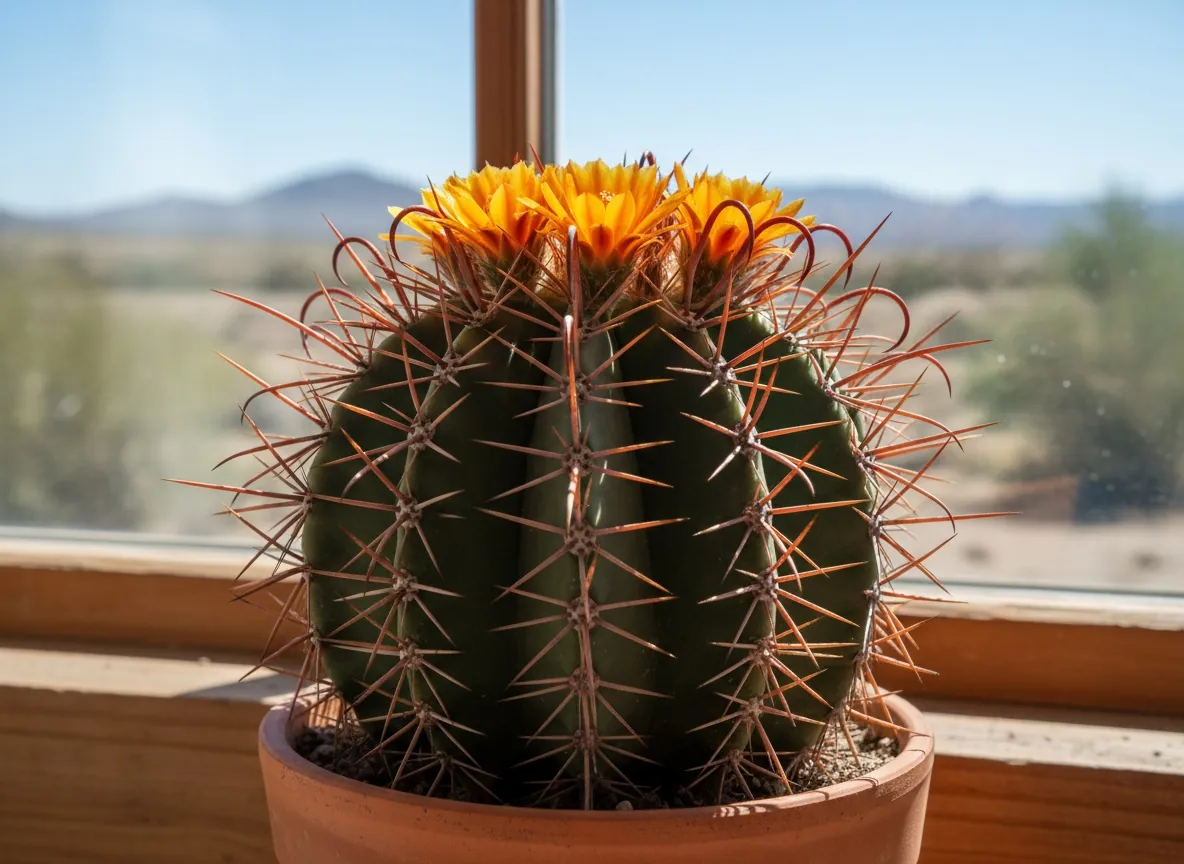
A cactus with an identical cultivation regime — full sun, mineral, alkaline substrate and a dry, cool winter rest; both come from the dry uplands of Mexico.
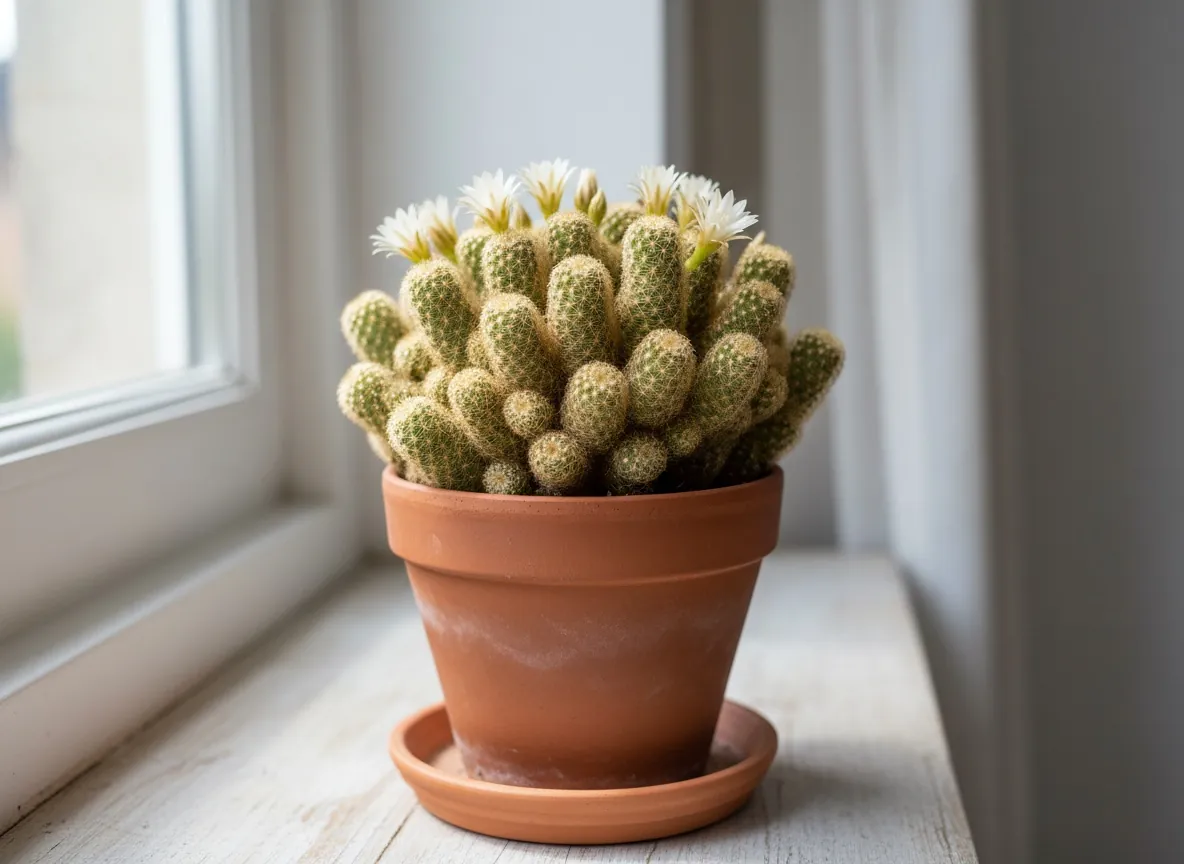
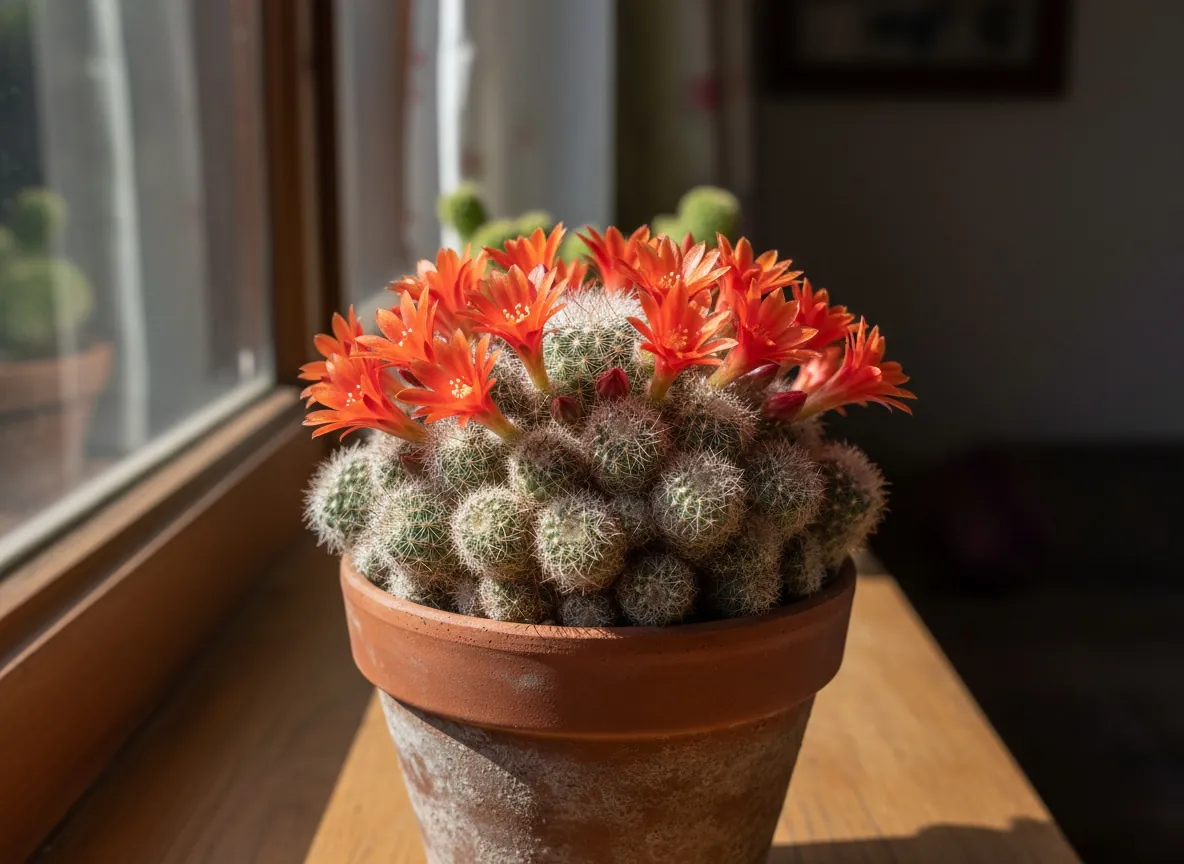
A Mexican, lime-loving cactus with the same soil and water needs; its clustering habit contrasts well with the single, star-shaped body of the astrophytum.
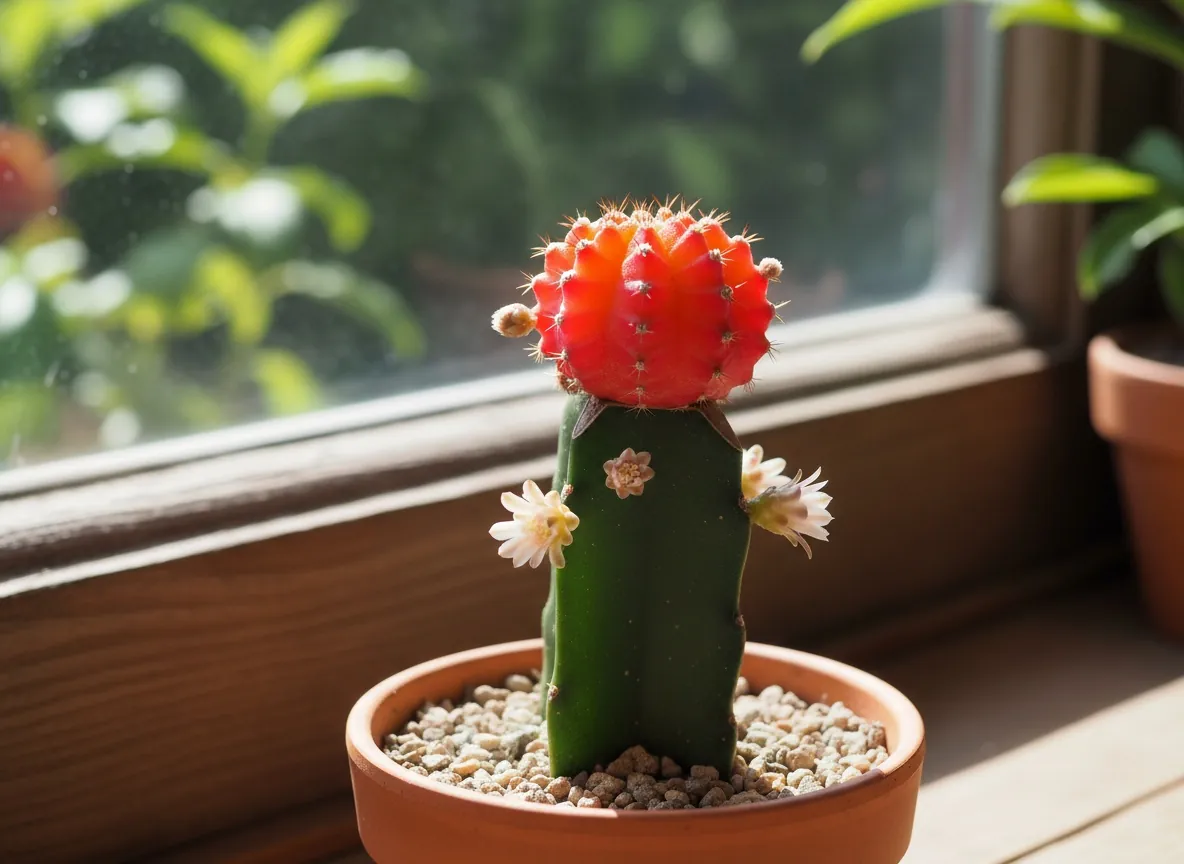
A succulent with the same, extremely mineral substrate and dry winter rest, and equally spineless — a safe combination for a bowl within arm's reach.
Bad companions
The fern requires constantly moist substrate and high air humidity — in such conditions astrophytum rots, and the settling moisture permanently stains the white felt.
Misting nearby settles drops on the astrophytum's felt, leaving rusty streaks, and water accumulating in the hollow of the crown causes rot.
The evidence level indicates whether the relationship is backed by research, observation, or gardening tradition.
Toxicity
| For whom | Level | Notes |
|---|---|---|
| Humans | None | A non-toxic plant and — which is rare among cacti — entirely spineless, so it can safely be picked up. One of the few cacti suitable for a home with small children. |
| Dogs | None | — |
| Cats | None | — |
History and origin
The species was described in the first half of the 19th century, and its name is an exact description of its appearance: Astrophytum is a compound of the Greek words astron (star) and phyton (plant), that is “star plant” — after the star-shaped cross-section; myriostigma in turn means “with countless spots” (myrios — countless, stigma — spot, mark) and refers to the white flecks strewn over the whole body. The plant quickly reached European collections as a botanical curiosity: a cactus that does not prick. The real flowering of its breeding, however, took place in Japan, where for decades forms have been selected with an exceptionally dense, snow-white felt or, on the contrary, entirely lacking it. Among the most famous are 'Onzuka', with intense white speckling, and 'Nudum', with a pure, dark green, naked skin. Today astrophytum is one of the pillars of cactus collecting worldwide.
Uses
A thoroughbred collector's cactus with a sculptural, geometric outline, for a bright, fully sunlit windowsill and for mineral compositions with grit. Thanks to its lack of spines it is one of the few cacti that can be placed within reach — on a desk, on a low shelf, in a home with children — without the risk of a prick. Its slow growth means it stays small for years and does not require frequent repotting, which makes it an almost ideal plant for a limited space.
Trivia
- It is one of the very few cacti that have no spines — in the areoles only a tuft of wool remains. The plant can safely be picked up, which is why it is sometimes recommended for homes with small children, where other cacti are ruled out from the start.
- The name of the species is an instruction manual written in Greek: Astrophytum myriostigma means literally “star plant with countless spots” — the first part describes the star visible in cross-section, the second the white flecks covering the skin.
- The classic, five-ribbed outline viewed from the side resembles a bishop's headgear, and hence the names “bishop's cap” and “bishop's mitre”. The number of ribs is not fixed, however: specimens occur with three, four, six and even eight ribs, and collectors value the three- and four-ribbed forms separately.
Frequently asked questions
Does astrophytum really have no spines?
Yes — and this is its most remarkable feature. Astrophytum myriostigma belongs to the handful of cacti entirely devoid of spines: in the areoles only a tuft of soft, woolly felt remains, so the plant can safely be picked up and repotted without gloves. This makes it one of the few cacti genuinely suitable for a home with small children. Beware of its relatives, though: other species of the same genus, for example Astrophytum ornatum, do have spines, and quite substantial ones — spinelessness is not a feature of the whole genus.
Where do these white dots on my cactus come from and can they be wiped off?
Do not rub them off! This is the most common and most damaging mistake with this plant. The white flecks are trichomes — bundles of fine hairs, a permanent element of the skin, which reflects excess sunlight and helps to capture the night dew. It is they that gave the species the name myriostigma, meaning “with countless spots”. They are sometimes taken for mealybugs or for a deposit from hard water and scraped off with a cloth or a brush, which damages the plant permanently and irreversibly: once rubbed off, the flecks never regrow in that spot, and a bare, dark patch remains. A simple test: trichomes are distributed evenly over the whole skin and cannot be moved, whereas mealybugs form irregular, flocculent clusters in the hollows and by the areoles, can be prised up with a stick, and beneath them sticky honeydew is visible.
How do you propagate astrophytum?
Only from seed — and you need to know this before you start looking for offsets. Astrophytum myriostigma produces practically no lateral offsets, so the method known from mammillarias or rebutias (“break off a shoot and root it”) simply does not apply here. The seeds are sown in spring, shallowly, on moist, mineral substrate, at about 20-25°C and under a cover that maintains humidity; they germinate quite readily, within 1-3 weeks. It does require patience, however: the species grows very slowly and a specimen the size of the one from the shop takes several years. Setting seed usually requires two genetically different plants flowering at the same time.
Sources
- Plants of the World Online (POWO)Database (GBIF, POWO…)
- Missouri Botanical Garden — Astrophytum myriostigmaInstitution / botanical garden
My note
A private note for this plant — saved in your browser.