In short
- Blooms from October to March — one of the few houseplants that provide ornament precisely in winter.
- Likes cool rooms (12–16°C) — in warmth it fades faster and is more prone to disease.
- Water from below or around the rim of the pot, never directly onto the tuber and the centre of the leaf rosette.
- In summer the tuber goes through a dormant period — the leaves yellow and die back, which is a natural process.
- The tuber is toxic, especially dangerous for children and pets.
Botanical data
- Family
- Primulaceae (Primulaceae)
- Height
- 0.15–0.3 m
- Width
- 0.15–0.25 m
- Habit
- Clump-forming
- Growth rate
- Slow
- Position
- Partial shade, Shade
- Soil
- Humus-rich, Peaty
- pH reaction
- pH 5.5–6.5
- Moisture
- Moderate
- Bloom
- October–March
- Hardiness
- —
- Propagation
- From seed
Characteristics
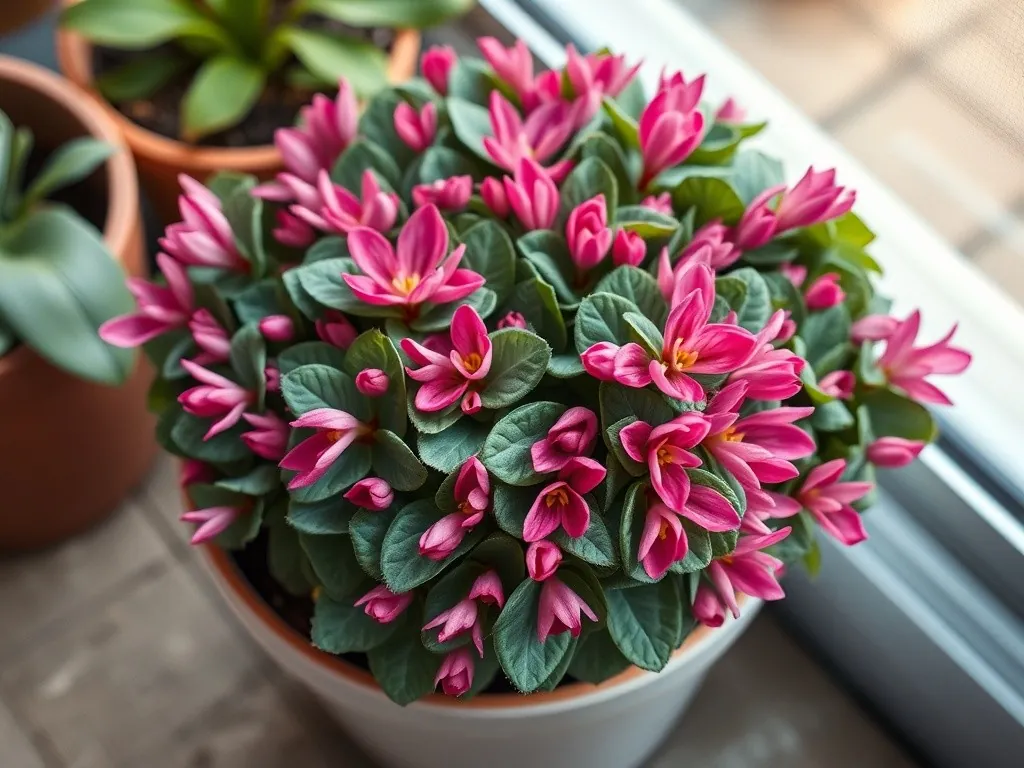
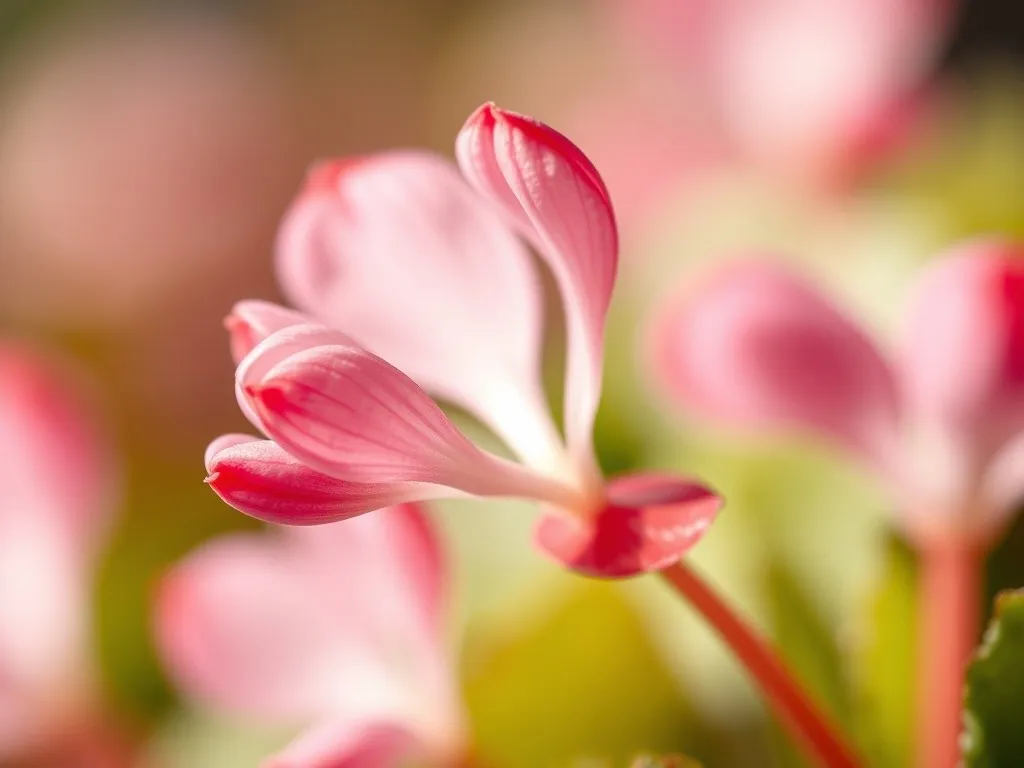
From an underground, flattened tuber grow heart-shaped leaves with a characteristic silvery-green marbling, and flowers on long stalks with five upward-curved petals that resemble butterflies in flight.
Growing and care
Watering
Water from below, standing the pot in water for a few minutes, or carefully around the rim of the pot; flooding the tuber and the leaf rosette causes rot. In summer, during dormancy, water only sparingly.
Fertilizing
In summer, during tuber dormancy, stop fertilising completely.
Planting
Well-drained, humus-rich substrate; plant the tuber shallowly, so its top remains just above the soil surface.
Pruning
Remove spent flowers and yellowed leaves with a firm twist right at the base of the stalk, not by cutting.
Companion plants
Good companions
A similar preference for cool locations and winter-spring flowering — pair well in cool window displays.
The same requirement for a cool, bright location and moderate watering during the winter season.
Bad companions
Likes warmth, high air humidity and substrate that stays moist year-round — the opposite of the cooler, drier conditions cyclamen needs during its dormant period.
The evidence level indicates whether the relationship is backed by research, observation, or gardening tradition.
Toxicity
| For whom | Level | Notes |
|---|---|---|
| Humans | Moderate | The tuber contains saponins — ingestion causes irritation of the digestive tract, vomiting, and in large amounts a more serious poisoning. |
| Dogs | Moderate | Eating the tuber can cause severe vomiting, diarrhoea, and in extreme cases cardiac arrhythmia. |
| Cats | Moderate | Symptoms similar to those in dogs — the underground tuber is especially dangerous, being much more toxic than the leaves and flowers. |
History and origin
The parent species originates from the eastern Mediterranean, from where it reached European botanical gardens in the 17th–18th centuries. Intensive breeding of pot varieties began in the 19th century and continues today, producing hundreds of cultivars that differ in flower colour and size.
Uses
Exclusively a houseplant — for cool, bright windowsills, unheated verandas, stairwells and rooms with temperatures below 18°C. A striking autumn-winter indoor ornament.
Trivia
- The genus name Cyclamen comes from the Greek kyklos (circle) and refers to the seed stalks that coil spirally after flowering.
- In many Central European countries, cyclamen is a traditional winter gift, an alternative to poinsettia.
Frequently asked questions
Why do Persian cyclamen leaves yellow and wilt in summer?
This is the tuber's natural summer dormancy, not a disease. Watering should be reduced to a minimum during this time, and the pot kept in a cool, shaded place until autumn, when the plant starts growing again.
How do you water cyclamen properly so it doesn't rot?
The safest method is to water from below — stand the pot in a bowl of water for 10–15 minutes, then pour off the excess. The water should not flood the tuber or the centre of the leaf rosette.
Is cyclamen safe in a home with a cat?
No — the cyclamen tuber is clearly toxic to cats and dogs and can cause severe vomiting and diarrhoea. In households with pets allowed to roam freely, it's better to choose a different plant or place it out of reach.
Sources
- Plants of the World Online (POWO) — Cyclamen persicumDatabase (GBIF, POWO…)
- RHS — Cyclamen persicumInstitution / botanical garden
My note
A private note for this plant — saved in your browser.