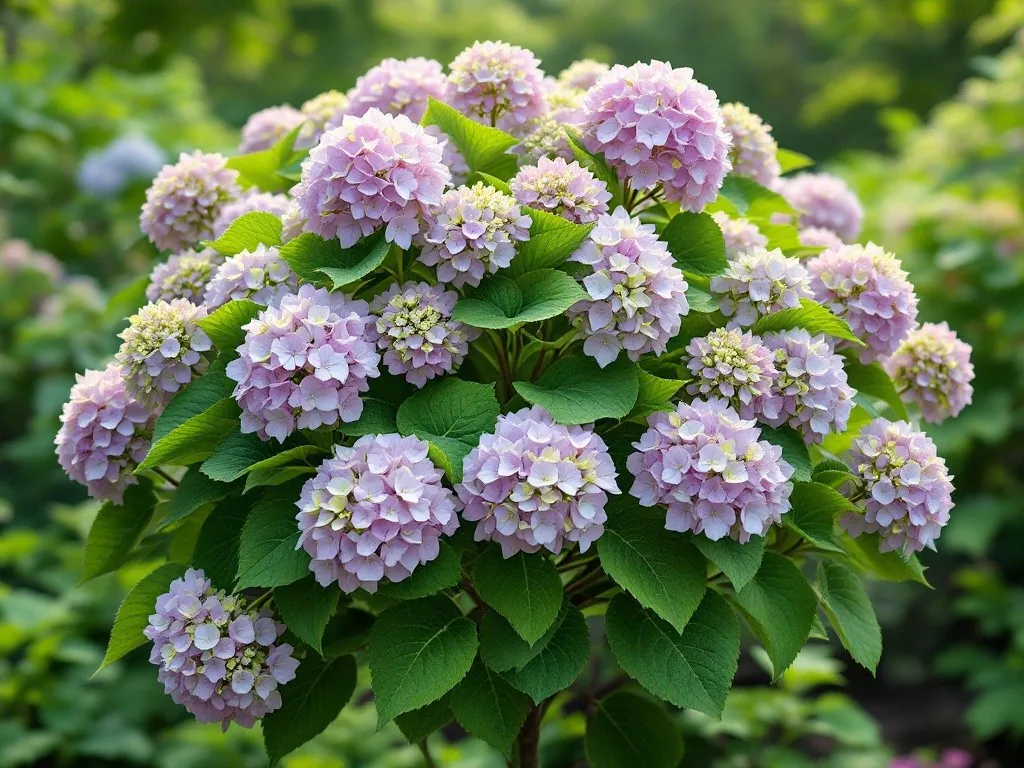
In short
- Tolerates full sun, unlike bigleaf hydrangea.
- Very cold-hardy (down to zone 3).
- Blooms on current-season wood — prune hard in spring.
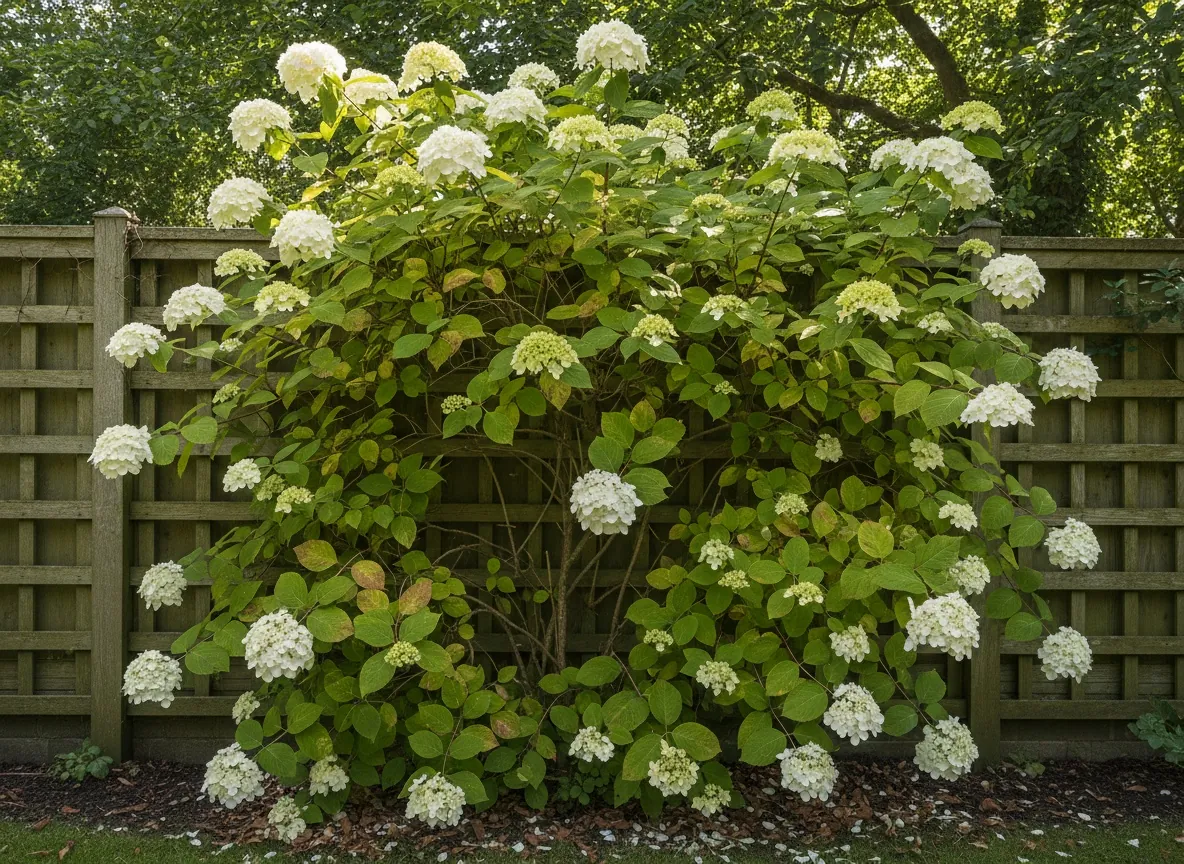
- Cone-shaped, white flower clusters that often turn pink in fall.
- Flower color does NOT depend on soil pH.
Botanical data
- Family
- Hydrangeaceae (Hydrangeaceae)
- Height
- 1.5–3 m
- Width
- 1.5–2.5 m
- Habit
- Upright
- Growth rate
- Fast
- Position
- Full sun, Partial shade
- Soil
- Humus-rich, Loamy
- pH reaction
- pH 5.5–7
- Moisture
- Moist
- Bloom
- July–September
- Hardiness
- USDA 3a–8a
- Propagation
- From cuttings
Characteristics
A shrub with upright shoots and oval leaves, forming large, cone-shaped flower panicles made up mostly of sterile flowers. The flowers open white and often turn pink as they age.
Growing and care
Watering
Likes moist soil but tolerates sun better than bigleaf hydrangea. Water regularly in hot weather, especially in full sun.
Fertilizing
Supports lush flower clusters; unlike bigleaf hydrangea, flower color does not depend on soil pH.
Planting
Fertile, humus-rich, moist soil; tolerates full sun and partial shade, making it much more versatile than bigleaf hydrangea.
Pruning
Prune hard (even by a third to half) — it blooms on current-season wood, so hard pruning strengthens flowering.
Companion plants
Good companions
Hosta likes the same moist, humus-rich soil and fills the space at the base of the hydrangea well.
Both hydrangea species pair well together, though panicle hydrangea tolerates more sun — worth factoring in when choosing a site.
Bad companions
Lavender needs dry, well-drained soil — the opposite of the hydrangea's moist site requirements.
The evidence level indicates whether the relationship is backed by research, observation, or gardening tradition.
Diseases and pests
Toxicity
| For whom | Level | Notes |
|---|---|---|
| Humans | Mild | Contains cyanogenic compounds — eating the leaves and buds may cause discomfort. |
| Dogs | Moderate | — |
| Cats | Moderate | — |
History and origin
Panicle hydrangea reached Europe from Asia in the 19th century. Thanks to its cold-hardiness, sun tolerance, and easy pruning, it became one of the most commonly planted hydrangeas in temperate-zone gardens.
Uses
For gardens and parks as a specimen plant, in groups, as an informal flowering hedge, and in standard (tree) form. The flower clusters are also suitable for drying.
Trivia
- Unlike bigleaf hydrangea, the flower color of panicle hydrangea does not depend on soil pH but on the age of the flower cluster.
- Some cultivars are trained as standards and sold as small hydrangea "trees".
Frequently asked questions
How does panicle hydrangea differ from bigleaf hydrangea?
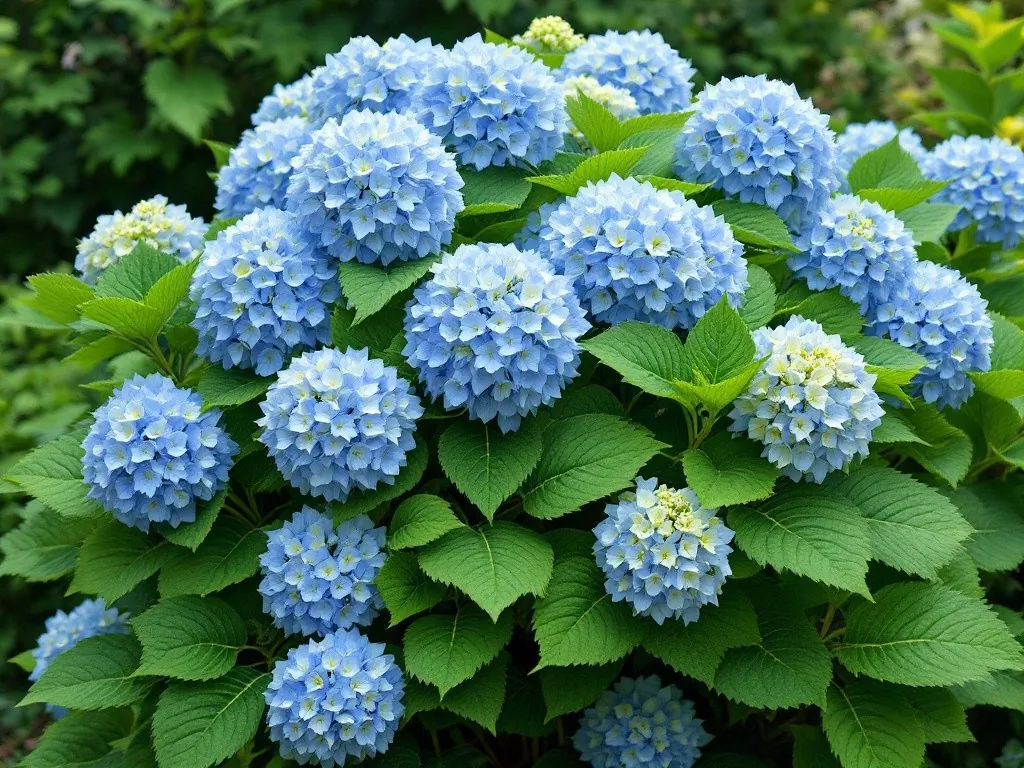
Panicle hydrangea has cone-shaped flower clusters, tolerates full sun, is much more cold-hardy, and blooms on current-season wood (so it can be pruned hard in spring). Bigleaf hydrangea has ball-shaped flower clusters, prefers partial shade, and blooms on last year's wood.
How and when should panicle hydrangea be pruned?
Early in spring, hard — even by half its height. Since it blooms on current-season wood, hard pruning encourages more abundant and larger flower clusters.
Can you change the flower color of panicle hydrangea?
No — unlike bigleaf hydrangea, its color does not depend on soil pH. The flowers naturally shift from white to pink as the cluster matures.
Sources
- Plants of the World Online (POWO)Database (GBIF, POWO…)
- RHS — Hydrangea paniculataInstitution / botanical garden
My note
A private note for this plant — saved in your browser.