In short
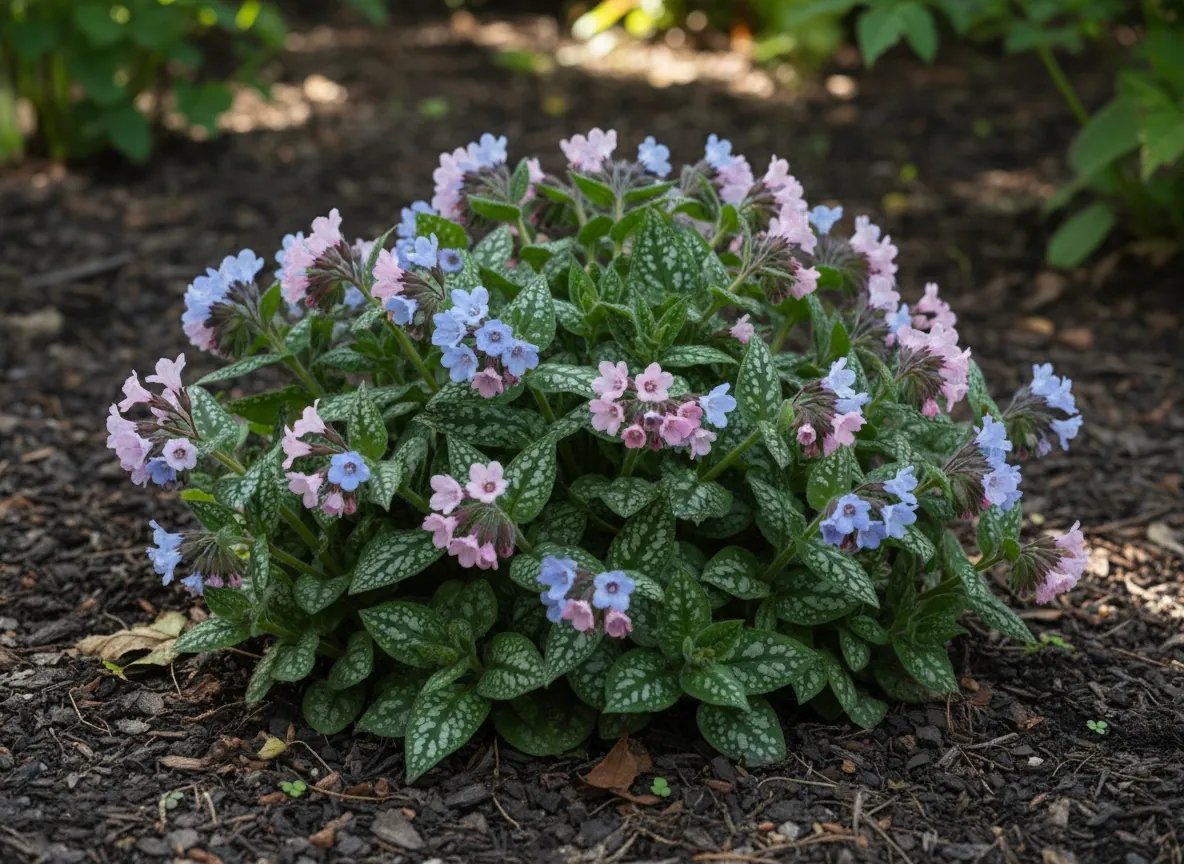
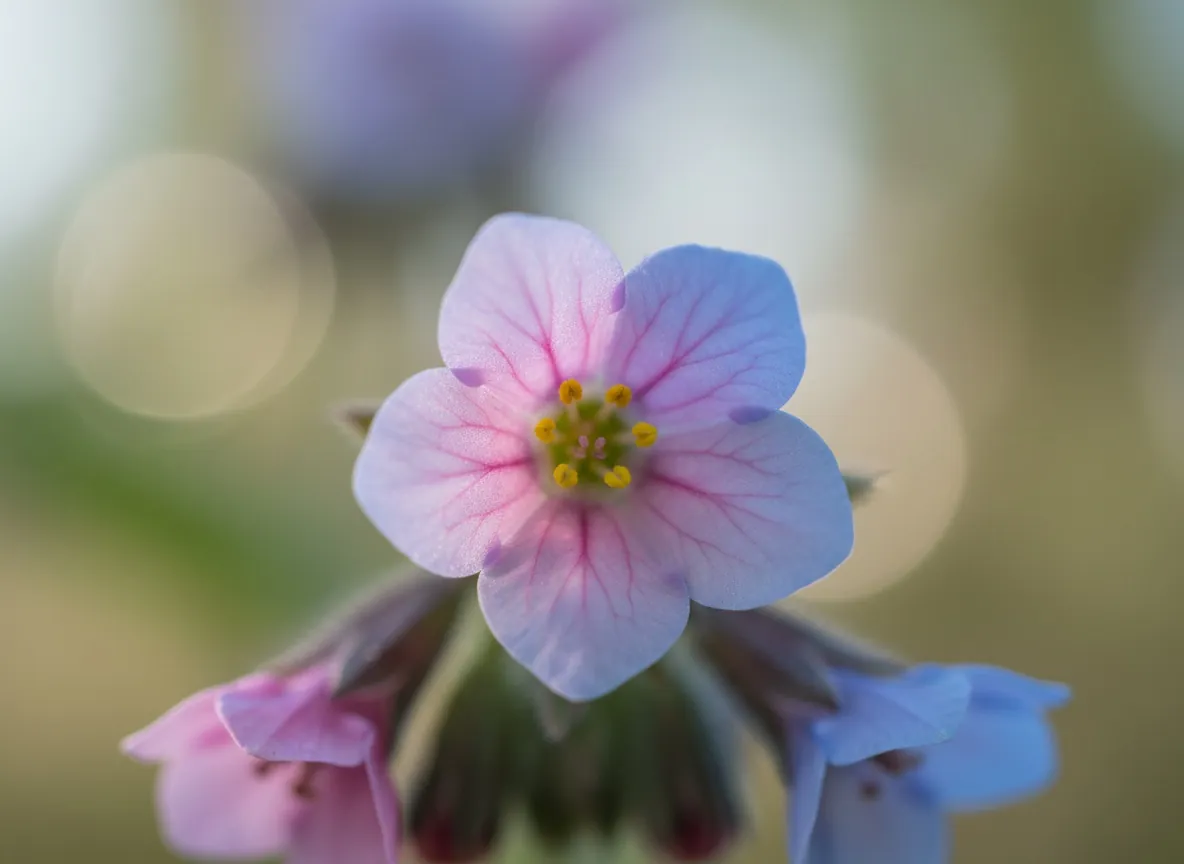
- The flowers change colour from pink to blue as the flower ages and is pollinated.
- Flowers very early, from March to May — one of the first canteens for bumblebees.
- The leaves are speckled silvery-white; the spots are air pockets beneath the leaf skin.
- A shade-loving plant: partial shade and shade, humus-rich and constantly moist soil.
- In drought it immediately gets powdery mildew — the remedy is cutting back after flowering and mulching.
- It contains trace pyrrolizidine alkaloids, so it is not suitable for prolonged herbal cures.
Botanical data
- Family
- Boraginaceae (Boraginaceae)
- Height
- 0.2–0.3 m
- Width
- 0.3–0.45 m
- Habit
- Clump-forming
- Growth rate
- Moderate
- Position
- Partial shade, Shade
- Soil
- Humus-rich, Loamy
- pH reaction
- pH 6–7.5
- Moisture
- Moderate, Moist
- Bloom
- March–May
- Hardiness
- USDA 4a–8a
- Propagation
- By division, From seed
Characteristics
It forms a low, loose clump 20–30 cm high, spreading slowly by short runners. The leaves are roughly hairy, ovate to lanceolate, dark green and covered with irregular, silvery-white spots — after flowering new ones grow, distinctly larger and more attractively speckled than the spring ones. The flowers are gathered into coiled cymes at the tips of the shoots; they are funnel-shaped, with a long tube, and open pink or carmine, passing over the days into violet and pure blue. Because the flowers on a single shoot are of different ages, the clump shimmers pink and blue at the same time — this is lungwort's most recognisable feature.
Growing and care
Watering
It does not tolerate drying out — in a dry summer the leaves wilt and become covered with powdery mildew. Moist soil and mulch are the most effective prevention of the disease, far better than any spraying.
Fertilizing
A layer of compost or ordinary leaves around the clump. Lungwort is a plant of the fertile woodland floor and likes humus, but it does not need mineral fertilisers.
Planting
Mix the top layer with compost and mulch. Plant in a place that will be shaded in summer — ideally under a deciduous tree that is still leafless in spring, while the lungwort is in flower.
Pruning
After flowering, cut the whole plant down just above the ground — within 2–3 weeks it will regrow with a fresh, healthy rosette of beautifully speckled leaves that will last into autumn. This is the most important operation with lungwort and at the same time the best way to deal with mildew.
Companion plants
Good companions
An ideal succession: lungwort flowers and shines with speckled leaves in early spring, and when it loses its looks in summer, the unfurled hosta takes its place in the bed. Both like humus-rich, moist soil in partial shade.
The fern unfurls its fronds exactly when the lungwort is cut back after flowering — together they keep the shady bed green throughout the season without gaps.
The Christmas rose finishes flowering in March, when the lungwort begins — together they provide an uninterrupted supply of nectar for the first insects and flowers in the bed from December to May.
Bad companions
Extremely conflicting requirements: lavender needs full sun and dry soil, while lungwort wilts in such conditions and immediately gets powdery mildew.
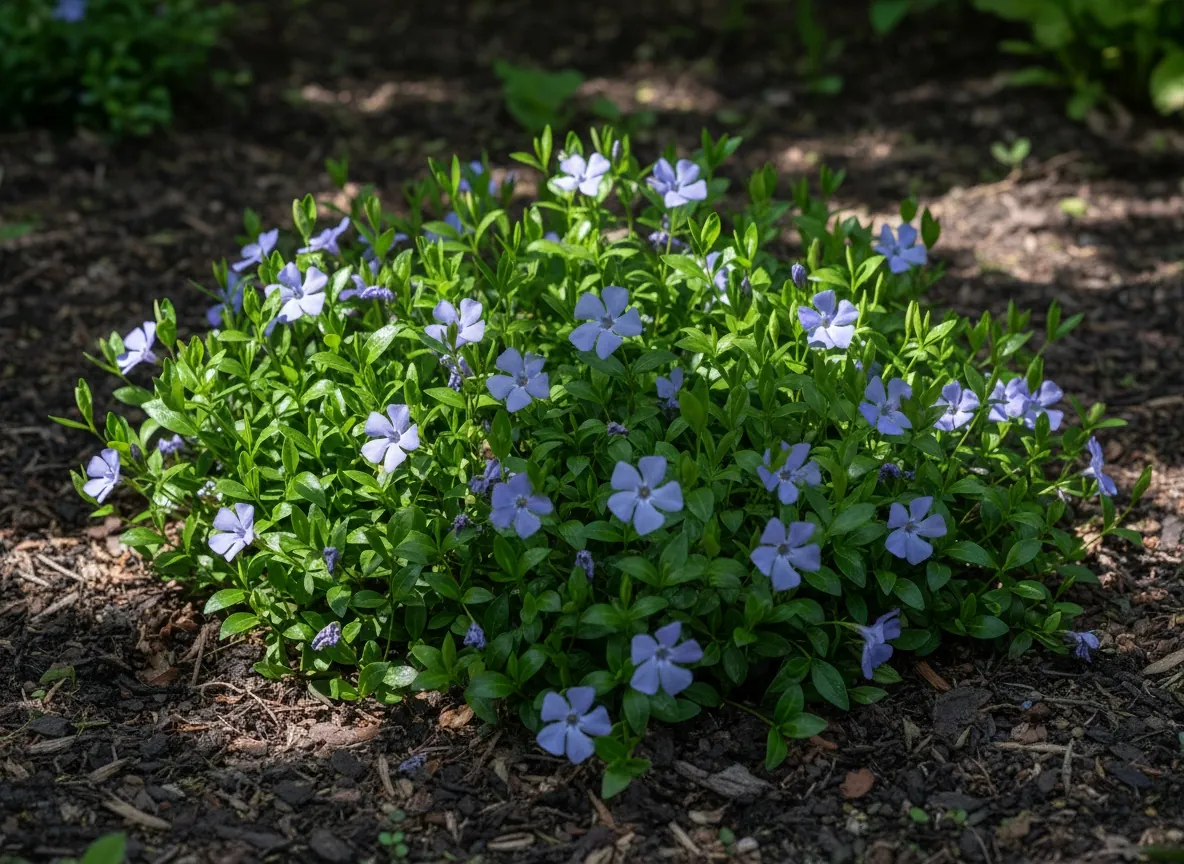
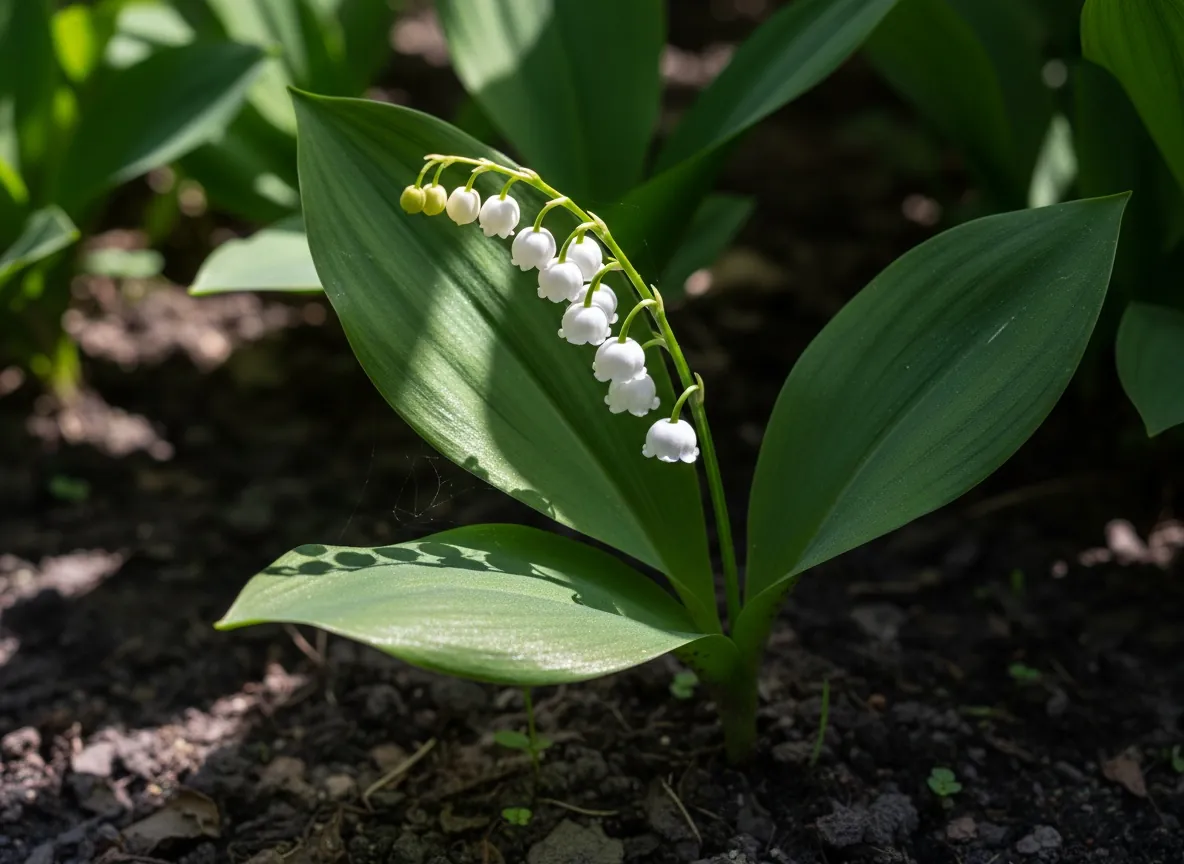
Lily of the valley takes over the whole ground layer with its runners and smothers the clump-forming, slower-growing lungwort, even though the habitat requirements of both plants coincide.
The evidence level indicates whether the relationship is backed by research, observation, or gardening tradition.
Toxicity
| For whom | Level | Notes |
|---|---|---|
| Humans | Mild | Lungwort is sometimes used in herbal medicine, but as a member of the borage family it contains trace amounts of pyrrolizidine alkaloids, which with prolonged intake can burden the liver. For this reason modern herbalism advises against long cures; incidental contact or eating a flower poses no threat. |
| Dogs | Mild | Eating a larger quantity of the roughly hairy leaves may irritate the digestive tract. |
| Cats | Mild | — |
History and origin
The genus name Pulmonaria (from Lat. pulmo — lung) and the Old Polish “płucne ziele” (lung herb) derive from the medieval doctrine of signatures, according to which the appearance of a plant was supposed to reveal its medicinal purpose: the speckled leaf resembled a diseased lung, so lungwort was used for respiratory illnesses. The reasoning was mistaken, but the herb does indeed contain mucilage and saponins, so as a throat-coating remedy it was not entirely useless. The Polish name “miodunka” (honey plant) says something quite different and far more reliable — it speaks of the abundant nectar that children once reached for by sucking the flowers.
Uses
For the ground layer under deciduous trees, for beds in partial shade and shade, for naturalistic and woodland gardens and for edging shady paths. Planted in groups it forms an effective cover with decorative, speckled leaves lasting into autumn — provided it is cut back after flowering. Very valuable in pollinator-friendly gardens, because it flowers when bumblebees, starving after the winter, have little to eat in the garden.
Trivia
- The change of flower colour from pink to blue is the effect of a change in pH in the vacuoles of the petal cells: the same anthocyanin is pink in an acid environment and blue as the reaction rises. For insects this is a clear message — a pink flower is fresh and full of nectar, a blue one already pollinated and empty. In this way the plant saves the pollinators' time and directs them where there really is something to collect.
- The silvery spots on the leaves are not a pigment — they are air spaces beneath the leaf skin which reflect light differently from ordinary tissue. The effect is therefore purely optical, like a fogged-up pane of glass.
- Lungwort is a heterostylous plant: some individuals have flowers with a long style and short stamens, others the reverse. This division means that the pollen lands on a different part of the bumblebee and effectively prevents self-pollination — which is why a single clump in a garden rarely sets seed.
Frequently asked questions
Why do the lungwort flowers on one plant have different colours?
Because they show their age. The flower opens pink and over time — and after pollination — passes into violet and blue. This is due to a change in the reaction inside the petal cells: the same anthocyanin pigment is pink in an acid environment and blue at a higher pH. For bumblebees this is practical information: pink flowers are fresh and have nectar, blue ones have already been emptied. Because the flowers on a shoot open one after another, the whole clump shimmers pink and blue at the same time.
The lungwort leaves are covered with a white coating — what should I do?
This is powdery mildew, the bane of lungwort, almost always linked to soil drying out and too bright a position. The most effective measure is not spraying but cutting the whole plant down just above the ground right after flowering, then watering thoroughly and mulching. Within 2–3 weeks the lungwort will regrow with a healthy, more attractively speckled rosette that will last into autumn. If the mildew returns every year, the plant must be moved into moister shade.
Is lungwort a good plant for bees and bumblebees?
Very good and, more importantly, it flowers at the right moment — from March, when little else is in flower in the garden and the overwintered bumblebee queens are looking for food to found a colony. The deep tube of the flower means it is used mainly by insects with long tongues: bumblebees and the hairy-footed flower bee. The honeybee reaches into it less well, but visits it too.
Sources
- Plants of the World Online (POWO) — Pulmonaria officinalisDatabase (GBIF, POWO…)
- RHS — Pulmonaria officinalisInstitution / botanical garden
My note
A private note for this plant — saved in your browser.