In short
- Position: sun or partial shade, moderately fertile, well-drained soil.
- Very easy to grow — it tolerates not very fertile sites and short droughts.
- Flowers abundantly from June to October and strongly attracts bees and butterflies.
- The flowers are a herbal raw material with anti-inflammatory and wound-healing properties.
- It self-seeds readily — after one season it may appear in the garden on its own.
Botanical data
- Family
- Asteraceae (Asteraceae)
- Height
- 0.3–0.6 m
- Width
- 0.3–0.4 m
- Habit
- Upright
- Growth rate
- Fast
- Position
- Full sun, Partial shade
- Soil
- Humus-rich, Loamy, Sandy
- pH reaction
- pH 6–7.5
- Moisture
- Moderate
- Bloom
- June–October
- Hardiness
- —
- Propagation
- From seed
Characteristics
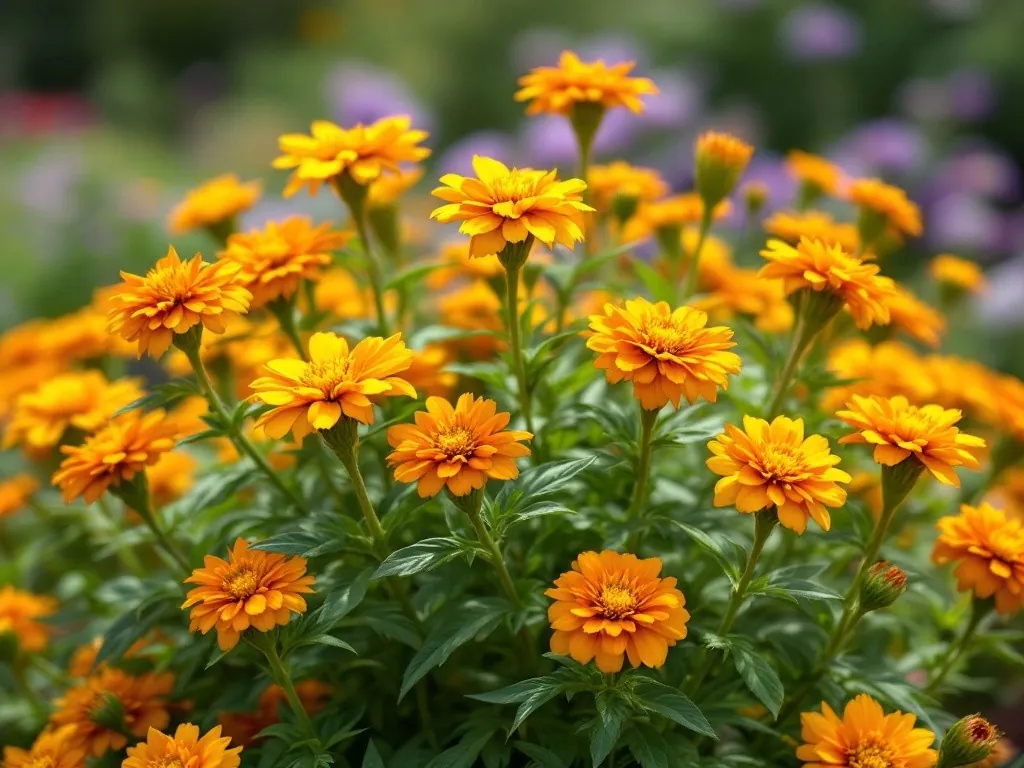
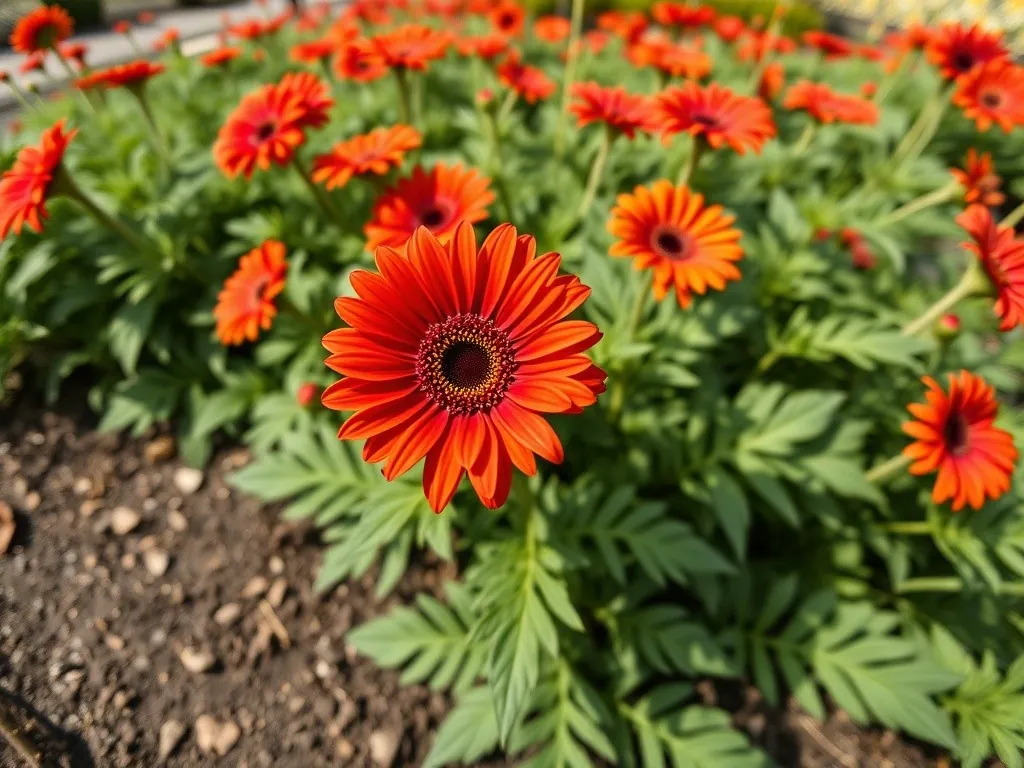
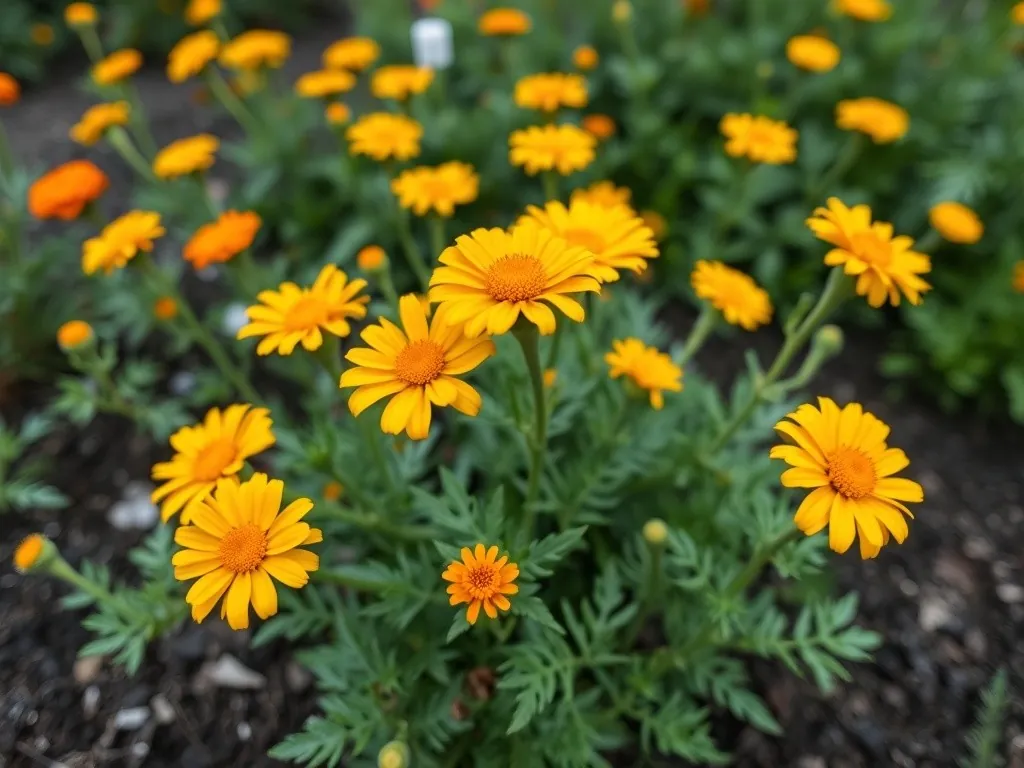
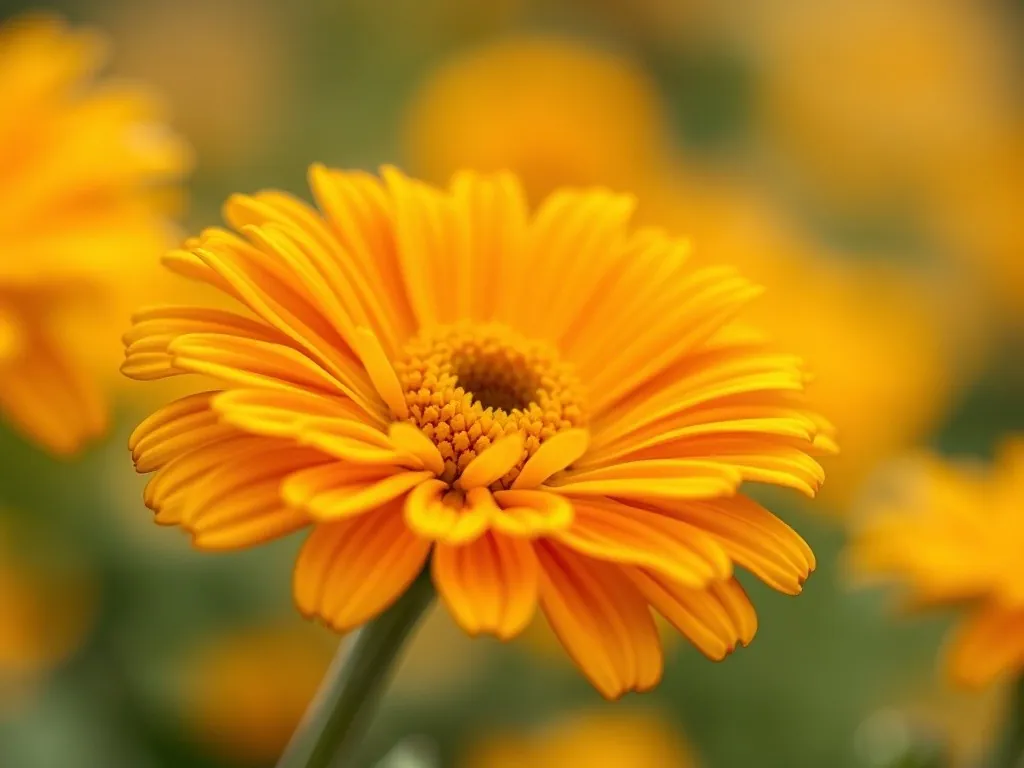
It forms upright, branched stems covered with elongated, slightly sticky leaves of a characteristic, resinous scent. The capitulate flower heads in shades of yellow and orange reach 4–7 cm in diameter and open during the day.
Growing and care
Watering
Fairly resistant to short-term drought, but regular watering in hot weather prolongs and intensifies flowering.
Fertilizing
The marigold does not require intensive fertilising — it grows well even on moderately fertile sites.
Planting
Dug-over, weed-free soil; the plant also tolerates moderately fertile sites.
Pruning
Regular removal of spent flower heads prolongs flowering and limits self-seeding.
Companion plants
Good companions
According to gardening tradition, the marigold repels some soil pests and attracts pollinating and predatory insects, supporting the cultivation of tomatoes.
The marigold's flowers attract pollinators and beneficial predators, which indirectly supports neighbouring vegetable crops.
Bad companions
The marigold prefers neutral soil, whereas acid-loving plants need a distinctly lower pH — these requirements are hard to reconcile in a single bed.
The evidence level indicates whether the relationship is backed by research, observation, or gardening tradition.
Toxicity
| For whom | Level | Notes |
|---|---|---|
| Humans | None | The flowers are edible and widely used in herbal medicine and cosmetics. |
| Dogs | None | — |
| Cats | Mild | May rarely cause mild irritation of the digestive tract if larger amounts are eaten. |
History and origin
The marigold was cultivated as early as ancient Egypt and Rome, both as a medicinal plant and as a colouring for food and cosmetics. The Latin genus name Calendula refers to the calendar — the plant flowered almost every month in the mild Mediterranean climate.
Uses
For annual borders, herb gardens, containers and companion planting in the vegetable garden. The flowers are collected for drying to make teas, oil macerates and home-made cosmetics.
Trivia
- Dried marigold flowers were once used as a cheaper substitute for saffron to colour food.
- Marigold ointment is one of the most popular home-made herbal preparations for minor abrasions and skin irritations.
Frequently asked questions
Does the marigold need to be sown every year?
Usually yes, though the plant self-seeds very readily — if some spent seed heads are left standing, marigolds may appear in the garden on their own in subsequent years.
What are marigold flowers used for?
Dried flowers are used in herbal medicine (ointments, compresses) and in home-made natural cosmetics, thanks to their anti-inflammatory properties that soothe skin irritations.
Does the marigold require fertile soil?
No, it does well even on moderately fertile, well-drained sites. Excess nitrogen produces mainly lush leaves at the expense of abundant flowering.
Sources
- Plants of the World Online (POWO) — Calendula officinalisDatabase (GBIF, POWO…)
- Missouri Botanical Garden Plant Finder — Calendula officinalisInstitution / botanical garden
My note
A private note for this plant — saved in your browser.