In short
- Native to Poland; a natural component of oxbow lakes, peat pits and ditches, today locally in retreat.
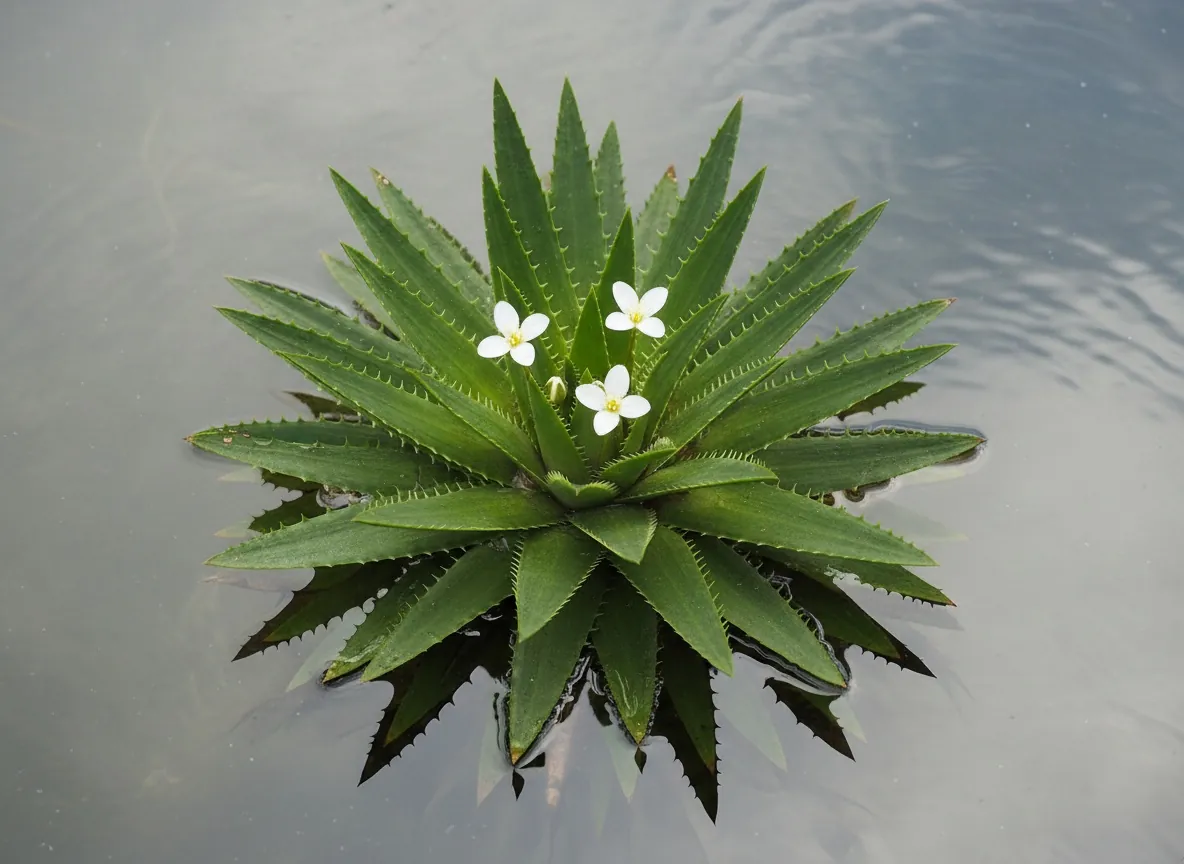
- The rosette of stiff, sharply toothed leaves looks like an aloe or the crown of a pineapple protruding from the water.
- It does not root permanently — it floats freely and regulates its own depth in the water column.
- It rises to the surface for flowering (June–August), and in autumn sinks to the bottom and overwinters there.
- It requires hard, fertile, calcium-rich water — in soft, acidic water it dies.
- The leaf edges cut like a saw — wear gloves when taking rosettes out of the water body.
Botanical data
- Family
- Hydrocharitaceae (Hydrocharitaceae)
- Height
- 0.1–0.4 m
- Width
- 0.3–0.5 m
- Habit
- Clump-forming
- Growth rate
- Fast
- Position
- Full sun, Partial shade
- Soil
- Humus-rich, Peaty, Clay
- pH reaction
- pH 6.5–8
- Moisture
- Wet
- Bloom
- June–August
- Hardiness
- USDA 4a–9a
- Propagation
- By runners, By division, From seed
Characteristics
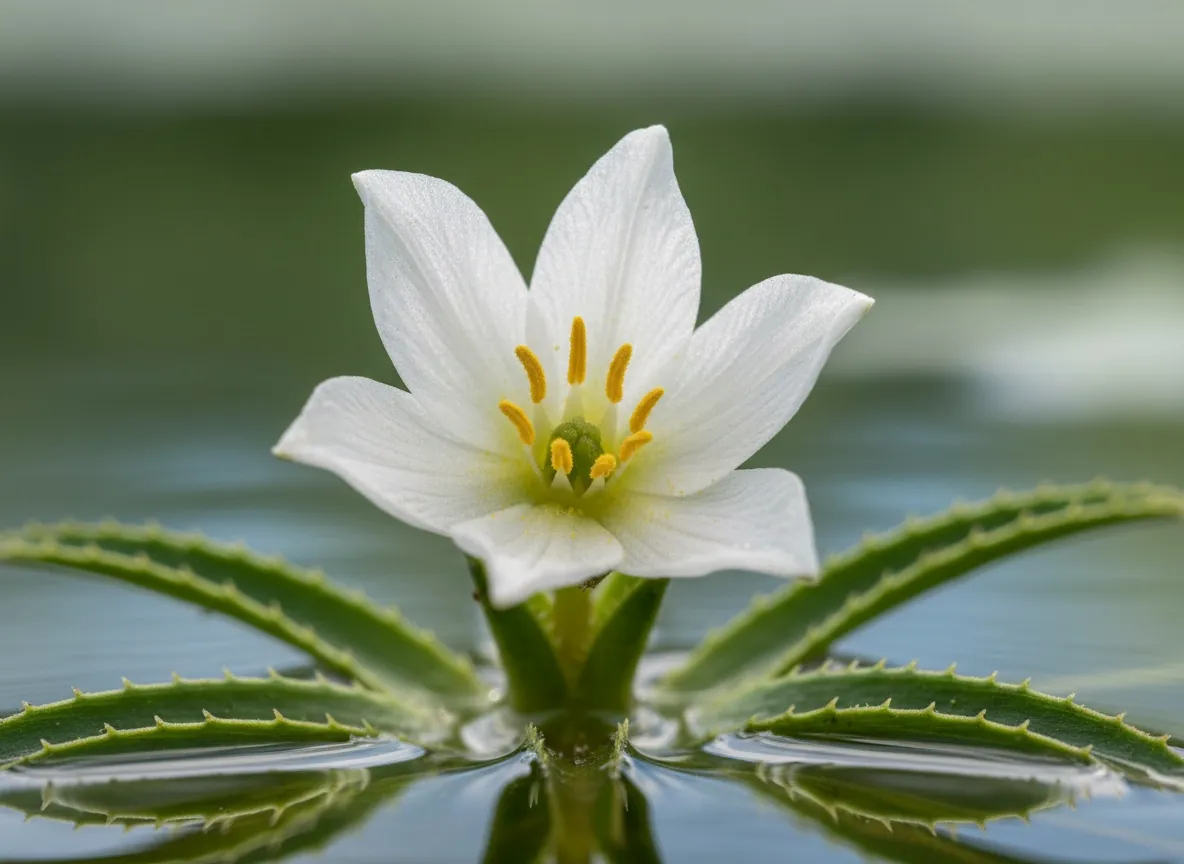
The plant forms a dense, symmetrical rosette of stiff, sword-shaped leaves 15–40 cm long, sharply toothed along the edges and pointed at the tip — deceptively similar to an aloe or to the crown of a pineapple, hence the common names. The rosette is not permanently anchored in the bottom: it floats in the water column, and the delicate roots hang freely, touching the sediment only periodically. The key to understanding this plant is its seasonal vertical migration. For most of the year the rosette stays submerged, and it rises only at the turn of June and July, when it prepares to flower: gas accumulates in the tissues and the whole plant emerges above the surface, lifting the upper half of its leaves and its flowers above the water. These are white, with three soft, slightly crumpled petals, 3–4 cm across. The species is dioecious — a single colony usually contains plants of one sex only, and in Poland female specimens strongly predominate, which is why seeds set rarely and reproduction takes place mainly through stolons. After flowering the plant submerges again, and in autumn, when the tissues soak up water and lose their gas, it sinks to the bottom, where it survives the winter beneath the ice.
Growing and care
Watering
The plant is not watered at all — it floats freely in the water column and takes nutrients straight from the water. All that counts is a steady level and the quality of the water: water soldier likes fertile, hard, calcium-rich water, and does not tolerate soft or acidic water or freshly filled liner pools. In a shallow pond, evaporated water must be topped up in summer so that the rosette does not settle on the bottom and dry out.
Planting
It needs neither a planting basket nor a substrate — the rosette is simply laid on the surface of calm water, and from then on the plant regulates its own depth. The optimal depth of the water body is roughly 30–100 cm, with a layer of silty sediment on the bottom in which the rosette will overwinter. The water must be hard and fertile; the position sheltered from wind, without a fountain or a stream.
Pruning
Simply take out surplus rosettes with a net or a rake once the colony begins to cover most of the surface. Work in gloves — the toothed leaf edges cut the skin like a saw. Leave the biomass you have fished out on the bank for a few hours so that small aquatic animals can return to the water body.
Companion plants
Good companions
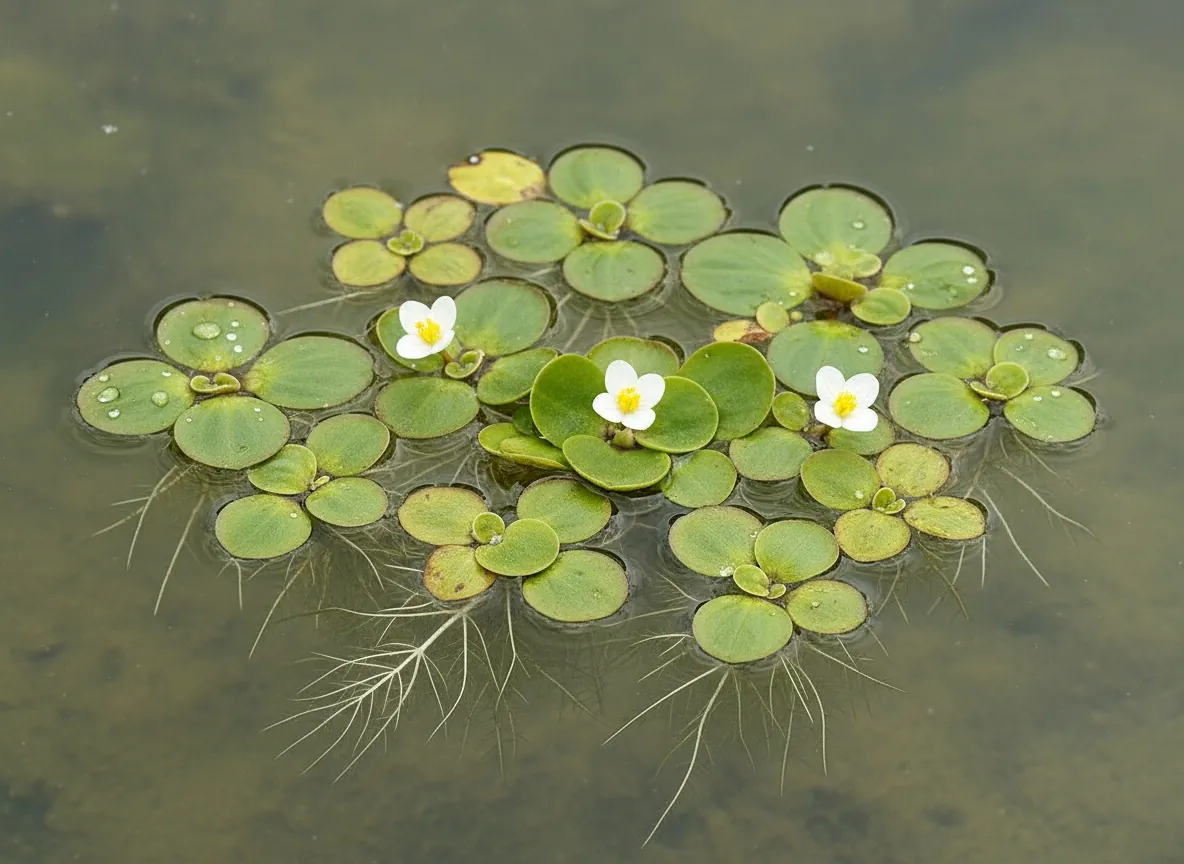
A close relative from the same family and with the same life strategy — both plants float freely, both overwinter on the bottom. They occupy different storeys, however: frogbit lies flat on the surface, while water soldier raises its rosette above it, so they form a naturalistic, multi-layered colony without sharp competition.
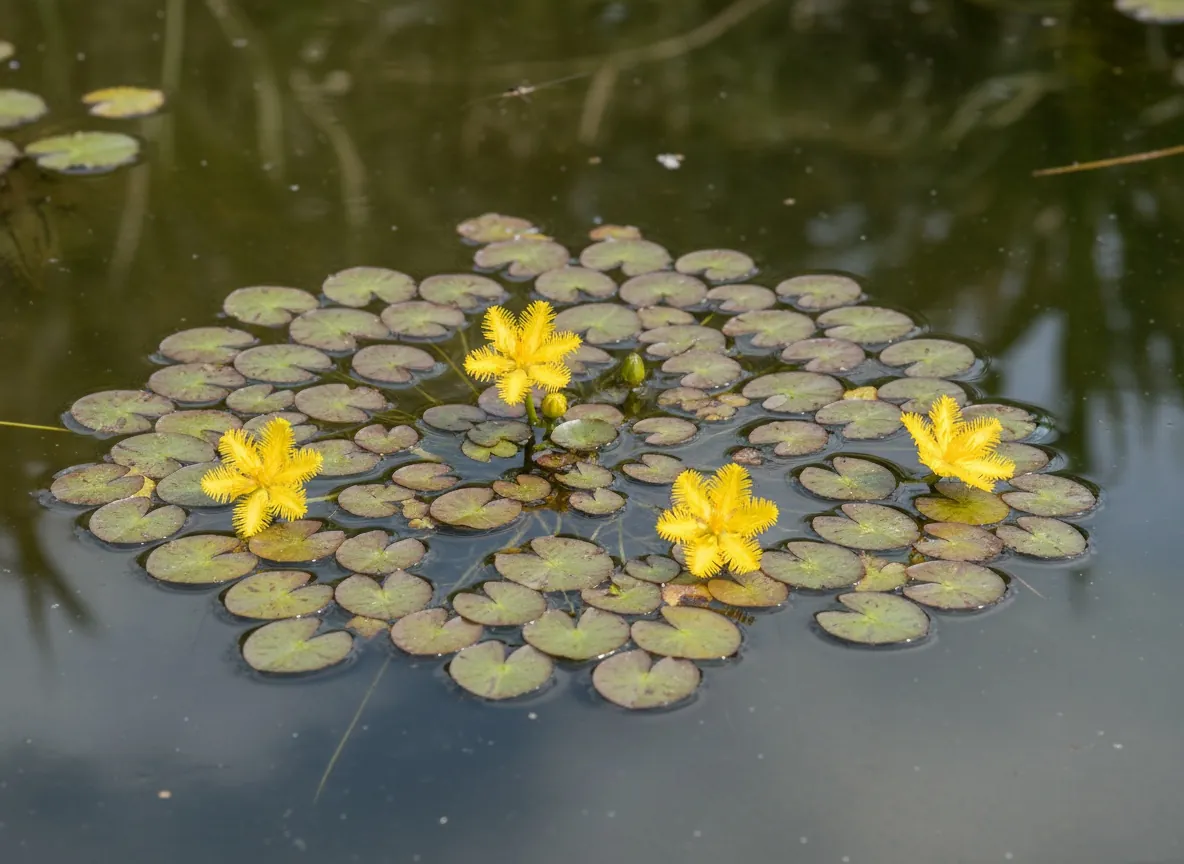
Water lilies anchor themselves by a rhizome in the bottom of the deep zone, while water soldier floats freely — they do not compete for space, and the large water lily leaves shelter the surface from wind, which water soldier needs.
A tall clump of yellow flag in the marginal zone breaks the wind over the surface and provides calm water, in which the rosettes of water soldier are not pushed towards one bank.
Bad companions
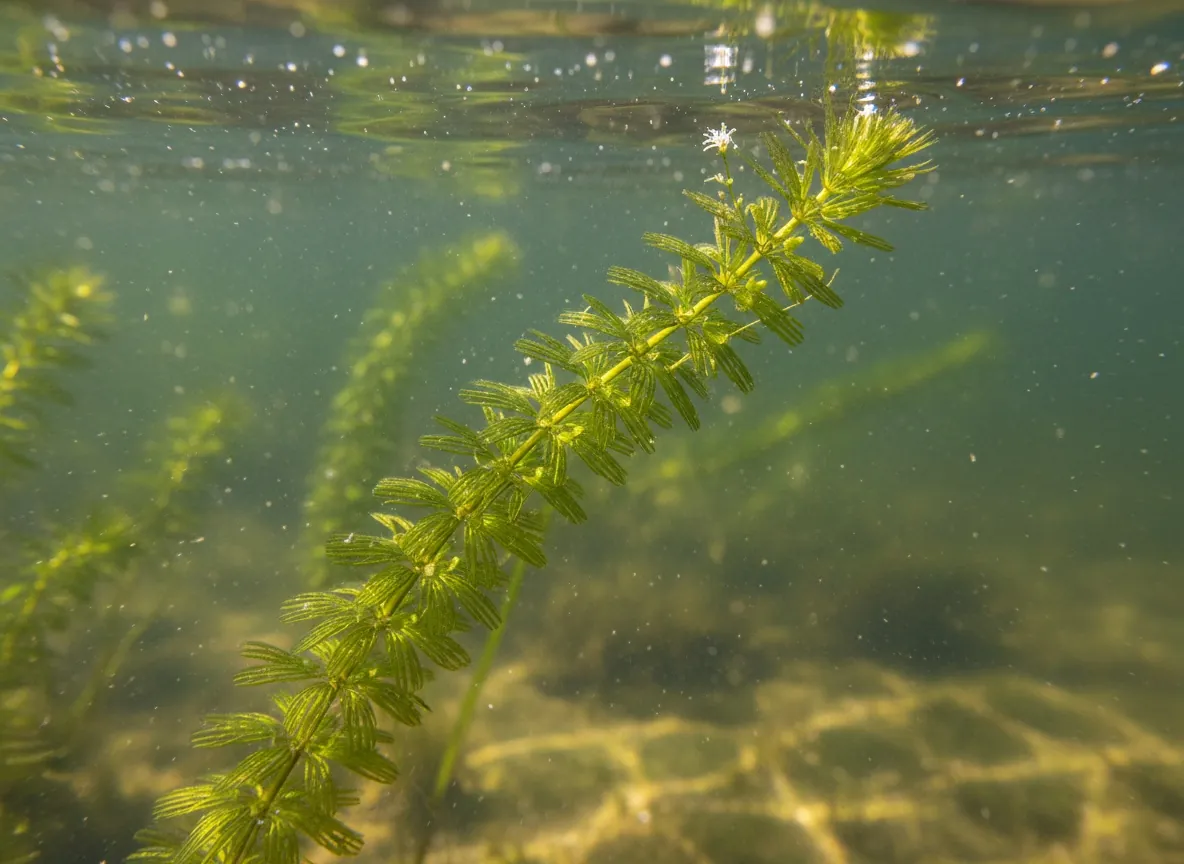
It forms a dense mat on the water surface and cuts off light from the rosettes of water soldier that emerge for flowering — beneath the mat the plant languishes and stops setting flowers.
Water soldier requires hard, calcium-rich and fertile water; in a water body managed for peat bog plants, on soft and acidic water, it simply will not survive the season.
The evidence level indicates whether the relationship is backed by research, observation, or gardening tradition.
Toxicity
| For whom | Level | Notes |
|---|---|---|
| Humans | None | The plant is not toxic, but its leaves have sharply toothed, stiff edges on which it is very easy to cut oneself — always wear gloves when taking rosettes out of the water body. The German name of the species, Krebsschere, meaning “crab's pincers”, refers precisely to these edges. |
| Dogs | None | — |
| Cats | None | — |
History and origin
Water soldier has no history of cultivation or economic use behind it — but it is an excellent witness to the state of Poland's wetlands. For centuries it was an ordinary, common component of oxbow lakes, peat pits and drainage ditches; its dense, prickly colonies provided natural shelter for fish and aquatic insects. In the 20th century, river regulation, the draining of oxbow lakes, the filling-in of peat pits and changes in water chemistry caused it to thin out markedly in many regions of Poland and Western Europe. In the Netherlands and Germany the species was included in active conservation programmes, among other reasons because of the large white-faced darter, whose larvae develop almost exclusively in water soldier colonies. The opposite fate met it in Canada, where it arrived in the 20th century by way of botanical gardens — there, without natural constraints, it took over the canals of the Trent River basin and is being eradicated as an invasive species. It is the same pattern that repeats itself in many aquatic plants: common and desirable at home, troublesome outside its range.
Uses
A plant for naturalistic garden ponds and larger pools with hard, fertile water — wherever we care about a native species of real value for nature rather than exotic floating plants. The ornamental effect is distinctive: for most of the season one sees dark, prickly rosettes showing through just below the surface, and only in July does the water body become covered with emerged “pineapples” bearing white flowers. A dense colony gives shelter to fry and dragonflies, limits algae and aerates the water. Water soldier will not do well in small containers on a terrace or in a freshly filled water body with soft tap water — it needs stabilised, hard water and a silty bottom in which to overwinter. The plant should never be moved to natural water bodies outside one's own garden.
Trivia
- Water soldier makes a vertical migration through the entire depth of the water body every year. In summer it accumulates gas in its tissues and rises to the surface in order to flower above the water; in autumn the tissues soak up water, the plant grows heavy and sinks to the bottom, where it waits out the freezing of the surface. That is why a water body densely overgrown with rosettes in July looks completely empty in November.
- In Poland and most of Central Europe almost only female plants grow — the species is dioecious, and male specimens are a rarity here. Without pollination, seeds practically never set, so entire extensive colonies of water soldier are in fact clones propagated by stolons.
- Water soldier colonies are a key habitat of the large white-faced darter (Leucorrhinia pectoralis) — a dragonfly listed in the Habitats Directive annex, whose larvae develop almost exclusively among its rosettes. The disappearance of water soldier means, in practice, the disappearance of this dragonfly, which is why in the Netherlands and Germany the species is sometimes reintroduced specifically in order to bring the insect back.
Frequently asked questions
Why does water soldier float at the surface at one time and then disappear from view?
That is its normal cycle, not a sign of disease. For most of the year the rosette stays submerged in the water column. At the turn of June and July gas accumulates in the tissues, the plant rises and lifts the upper half of its leaves and its flowers above the water — this is the only moment when it is clearly visible. After flowering it submerges again, and in autumn it grows heavy and sinks to the bottom, where it overwinters. The water body then looks empty, but the plant will come back in spring, provided we do not remove the sediment from the bottom.
Is water soldier protected, and can it be planted in the garden?
In Poland water soldier is not covered by species protection, so it can legally be bought in a garden centre and planted in one's own pond. What is not permitted is digging plants up at natural sites or moving them to water bodies outside one's own garden — this is a species that is in retreat in many regions, and its colonies are a key habitat of the protected large white-faced darter. Always take your material from a legal, retail source.
My water soldier died off after one season in my pond — why?
The most common cause is unsuitable water. Water soldier requires hard, fertile, calcium-rich water; in soft, acidic water or in a freshly filled liner pond it will not survive the season. The second typical cause is autumn cleaning of the bottom — the rosettes overwinter precisely in the sediment, and removing it along with them ends the cultivation. Check also whether the water body is not too shallow (roughly 30–100 cm is needed) and whether a fountain is not stirring the water, because water soldier requires a calm, sheltered position.
Sources
- Plants of the World Online (POWO) — Stratiotes aloidesDatabase (GBIF, POWO…)
- GBIF — Stratiotes aloidesDatabase (GBIF, POWO…)
My note
A private note for this plant — saved in your browser.