In short
- Native to Poland, but rare — under PARTIAL PROTECTION; for the garden use only nursery plants, never ones from the wild.
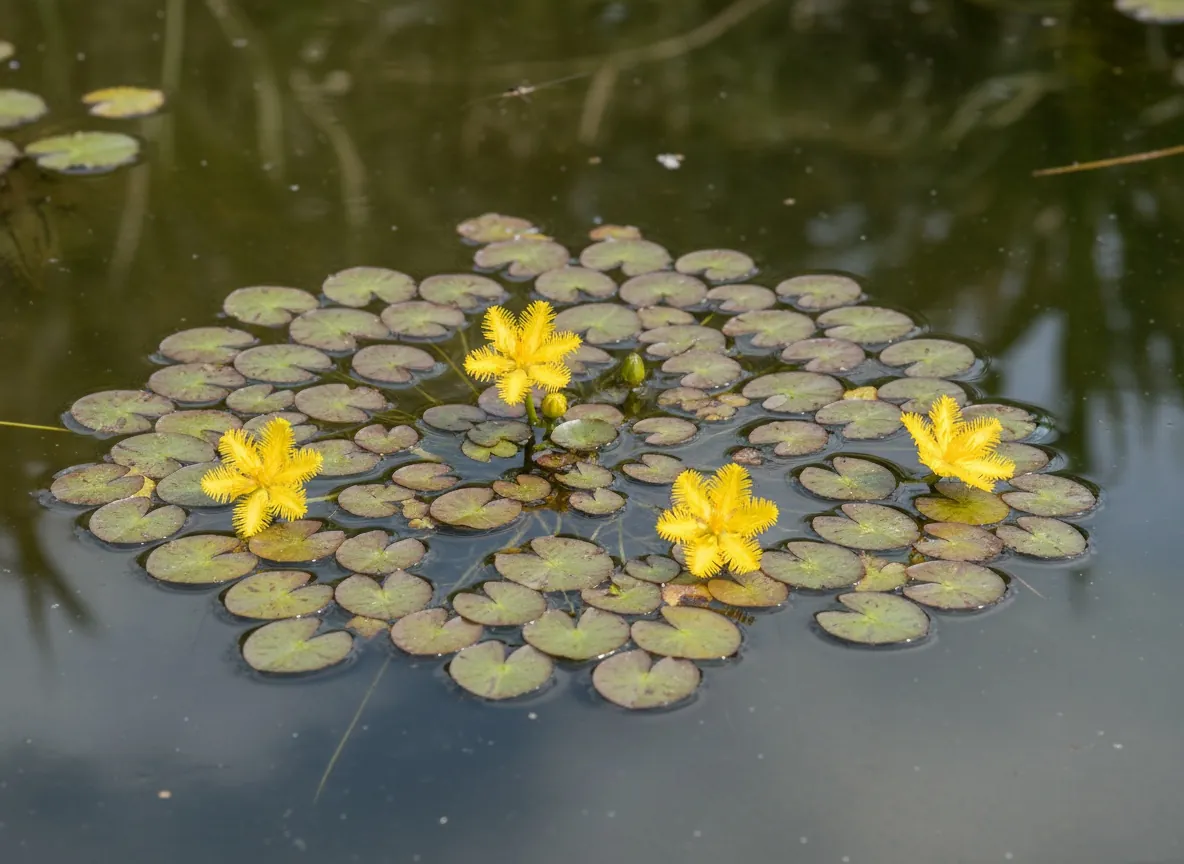
- The leaves float on the surface and look like water lilies in miniature (5–12 cm across), often with brown marbling.
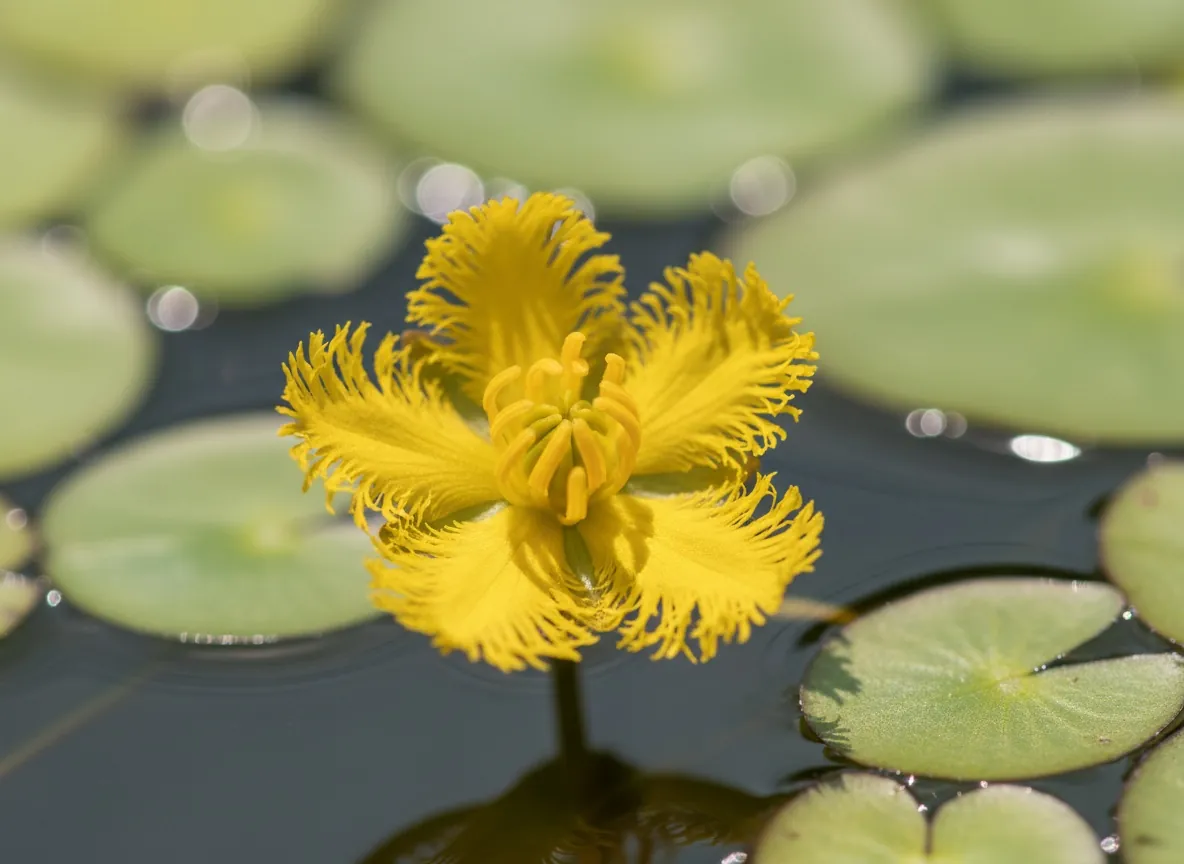
- The flowers are pale yellow, with five petals with a distinctly fringed, ragged edge — an unmistakable feature.
- It flowers for a long time, from June to September; a single flower lives one day, but new ones open continuously.
- It roots in the bottom at a depth of roughly 30–80 cm — plant it in a basket, because it spreads strongly by its shoots.
- Do not confuse it with water lilies: those have white flowers and much larger leaves, and belong to a completely different family.
Botanical data
- Family
- Menyanthaceae (Menyanthaceae)
- Height
- 0.03–0.1 m
- Width
- 0.6–1.5 m
- Habit
- Creeping
- Growth rate
- Fast
- Position
- Full sun, Partial shade
- Soil
- Clay, Humus-rich, Loamy
- pH reaction
- pH 6.5–8
- Moisture
- Wet
- Bloom
- June–September
- Hardiness
- USDA 4a–10a
- Propagation
- By division, By runners, From seed
Characteristics
The plant grows from a rhizome creeping along the bottom, from which it sends up long, flexible shoots reaching the water surface — their length adjusts to the depth of the water body, thanks to which the species tolerates fluctuations in level of up to some tens of centimetres. The leaves float on the surface, are rounded to heart-shaped, 5–12 cm across, leathery and glossy, often purple beneath and not infrequently marbled brown above — the whole resembles a water lily in miniature, but the plant belongs to the bogbean family (Menyanthaceae), not to the water lily family. The diagnostic feature is the flowers: pale yellow, 3–4 cm across, raised a few centimetres above the surface, with five petals ending in a distinct, ragged fringe — as if someone had trimmed their edge with scissors. No other native aquatic species has such flowers. A single flower opens for one day only, but the plant sends up new ones throughout June, July, August and September, so the flowering gives the impression of being uninterrupted. After flowering it sets flattened capsules with seeds equipped with stiff bristles that float on the water. Reproduction proceeds chiefly by vegetative means — the shoots root at the nodes, and every detached fragment is capable of founding a new colony.
Growing and care
Watering
The plant is not watered — it is rooted in the bottom and its leaves float on the surface. All that counts is a steady water level: a drop in the surface exposes the leaves, which wilt and dry out within a few hours. The plant tolerates fluctuations in level of up to some tens of centimetres, because it lengthens its leaf stalks, but it does not tolerate the bottom drying out completely.
Fertilizing
In a fertile, silty bottom, fertilising is unnecessary and indeed harmful — fringed water lily grows vigorously anyway, and an excess of nutrients in the water favours algae. If at all, then one tablet of slow-release fertiliser pressed deep into the substrate of the basket, so that it does not dissolve into the open water.
Planting
A zone with a water depth of roughly 30–80 cm above the rhizome — shallower and the plant grows but flowers more poorly, deeper and it will not send leaves up to the surface. Plant ONLY in a planting basket filled with heavy clay soil and weighted with gravel; planted directly in the bottom, it will take over the whole surface within a few seasons with creeping shoots. A sunny position, calm water, without a fountain.
Pruning
Pull out surplus leafy shoots with a net or a rake once the colony covers more than half the water surface. Cut off spent flowers before the capsules ripen if we do not want self-seeding — the seeds float on the water and spread throughout the water body. Every 2–3 years take the basket out and trim the overgrown rhizome.
Companion plants
Good companions
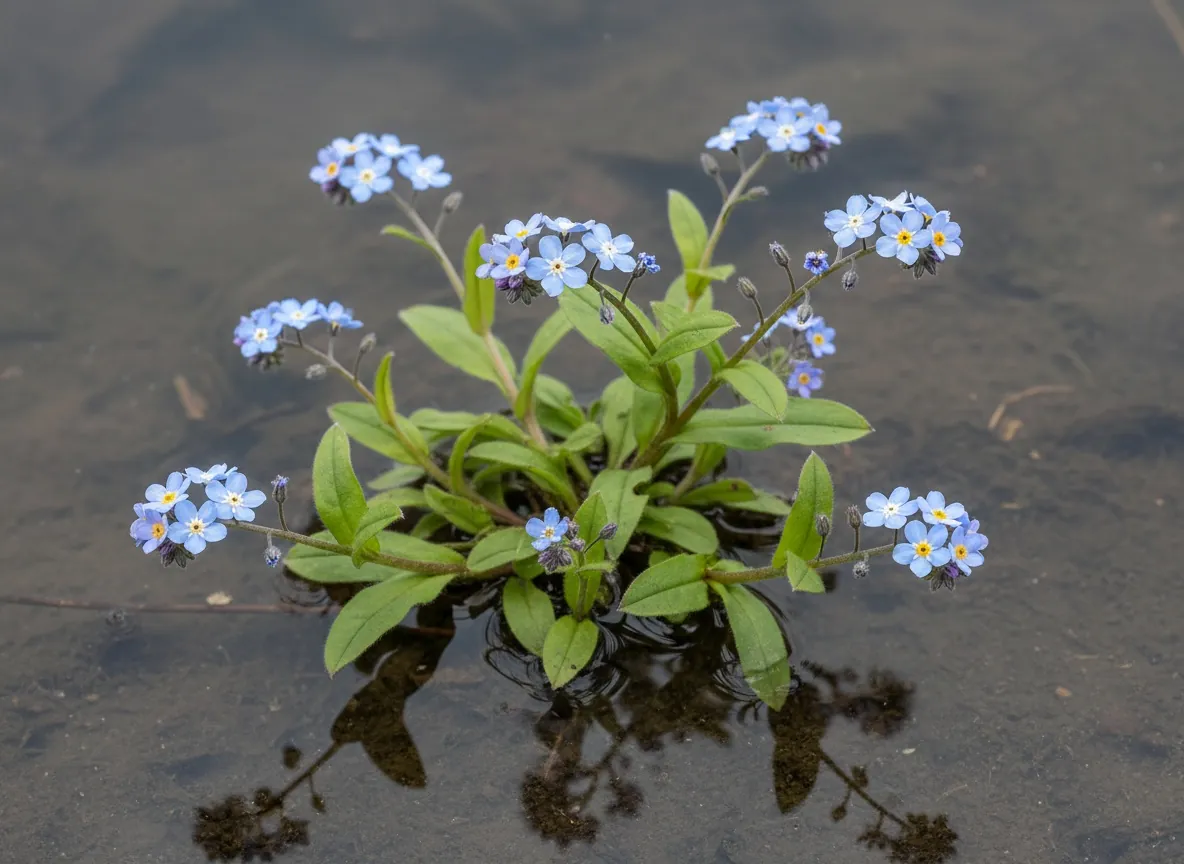
They occupy different zones of the water body — the flag the marginal belt, the fringed water lily the deep zone — so they do not compete, and the tall clump of the flag breaks the wind over the surface, which floating leaves need. Both flower yellow, but at different times, so the bank is colourful from May to September.
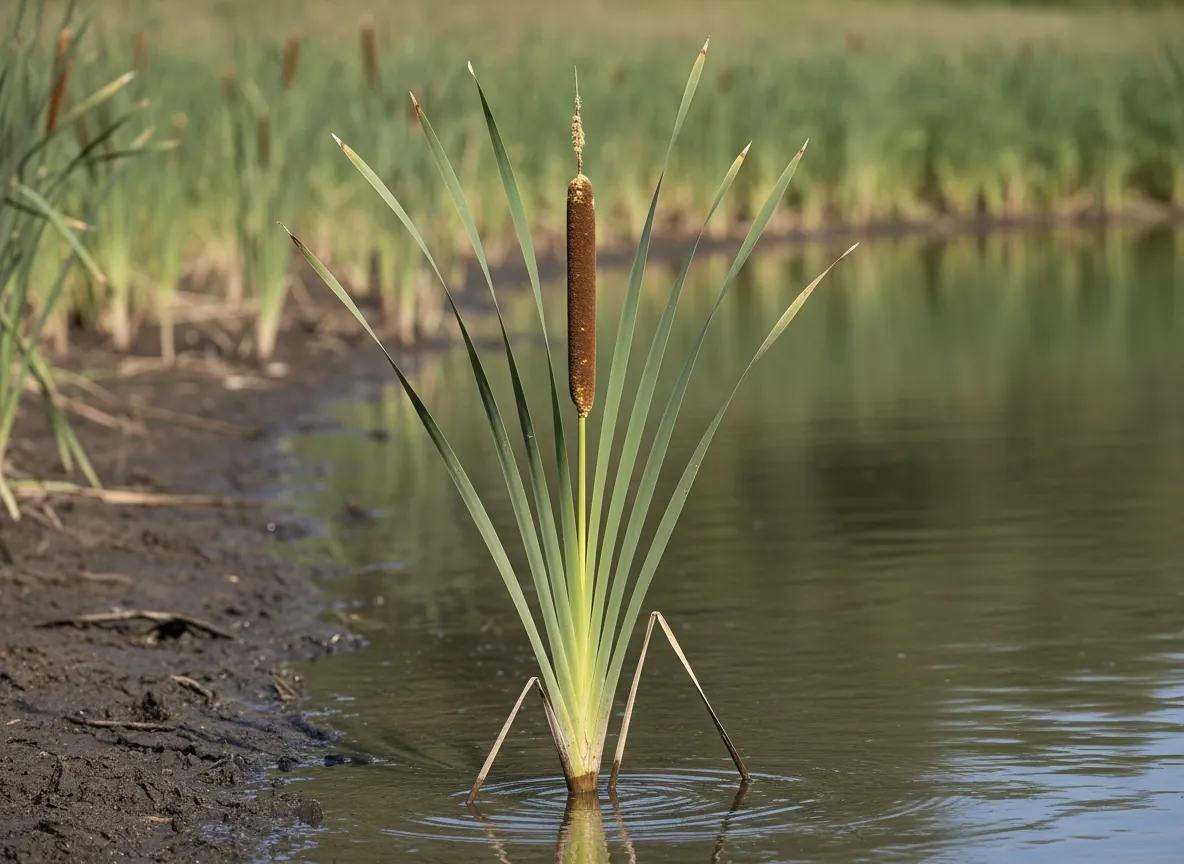
The reedmace keeps to the marginal belt, the fringed water lily to the open water — they do not get in each other's way, and the vertical leaves of the reedmace give the water body a structure that the flat leaves of fringed water lily cannot provide.
The submerged oxygenating plant competes with algae for nutrients and keeps the water clear, which favours fringed water lily; in return, the latter shades the surface and further limits algal blooms. Note: Canadian waterweed is an alien and invasive species — in a naturalistic water body it is better to reach for the native rigid hornwort.
Bad companions
Both plants occupy exactly the same niche — rooted in the bottom, with leaves at the surface — and compete directly for light at the water surface. Water lilies have larger leaves and win in shade, while fringed water lily hits back with the faster growth of its shoots; in a small pond this will always end with one displacing the other.
The enormous leaves of lotus rise high above the water and completely shade its surface — beneath them the floating leaves of fringed water lily receive no light and the colony dies out.
The evidence level indicates whether the relationship is backed by research, observation, or gardening tradition.
Toxicity
| For whom | Level | Notes |
|---|---|---|
| Humans | None | — |
| Dogs | None | — |
| Cats | None | — |
History and origin
Fringed water lily has always been a component of the oxbow lakes and slow-flowing waters of the great rivers of Europe and Asia, but it was never a common species in Poland — its sites are concentrated in the valleys of the Vistula and the Oder, and have always been scattered. River regulation, the cutting off of oxbow lakes from the main channel and changes in water chemistry have thinned them out considerably, which is why the species was placed under partial protection: it may not be collected or destroyed at natural sites, although plants originating from nursery production can legally be bought. Its history outside its natural range is quite different. It reached North America in the 19th century as an ornamental plant for ponds and — like many aquatic plants carried around the world — proved troublesome there: the floating leaves form a dense mat that cuts off light and oxygen, on account of which the species was deemed invasive, and in some states its sale was banned. It is the same regularity that can be seen in yellow flag or frogbit: native and desirable at home, dangerous where the natural constraints are lacking.
Uses
A striking plant for the deep zone of naturalistic garden ponds and pools — wherever water lilies would be too large but we want floating leaves and a long summer flowering. It performs especially well in water bodies 30–80 cm deep, in which typical water lily cultivars languish. It shades the surface, limiting the development of algae, and its leaves provide shelter for amphibians and small invertebrates. Three rules, without which there is no sense in planting it: buy plants exclusively from a nursery (the species is under partial protection and collecting it in the wild is not permitted), always plant it in a basket restricting the growth of the rhizome, and never throw surplus biomass into waters outside the garden — from every fragment of shoot a new plant regrows.
Trivia
- The fringed, ragged petal margins are not an ornament but a diagnostic feature — they make it possible to tell fringed water lily from every other yellow-flowering aquatic species, including yellow water lily, whose flower is globular and smooth like a little goblet.
- Although it looks like a yellow water lily, it is only very distantly related to one: it belongs to the bogbean family (Menyanthaceae), close to the gentians, whereas water lilies are Nymphaeaceae — one of the oldest lineages of flowering plants. The similarity of the leaves is a textbook example of convergence: two unrelated plants have worked out the same shape because they are solving the same problem — how to keep a leaf on the water surface.
- The seeds of fringed water lily have stiff bristles along their edges, with which they catch on the feathers of water birds and on animal fur — and at the same time they float on the water for weeks. This combination has made the species excellent at colonising new water bodies, and explains its invasive career outside Europe.
Frequently asked questions
How does fringed water lily differ from white water lily?
Most simply by the flowers: fringed water lily has yellow flowers, small (3–4 cm) and raised a few centimetres above the surface, with characteristically ragged, fringed petal margins, whereas white water lily has large (10–15 cm), white flowers lying on the water. The leaves of fringed water lily are also considerably smaller (5–12 cm as against 20–30 cm) and often marbled brown. Despite the deceptive similarity of the leaves the plants belong to completely different families, and fringed water lily is content with shallower water — 30–80 cm instead of 60–150 cm.
Is fringed water lily protected, and can I plant it in a pond?
In Poland the species is under partial protection. This means that it may not be collected, dug up or destroyed at natural sites — but plants originating from nursery production can legally be bought and planted in one's own garden pond. Buy only in garden centres and never bring plants from a river or an oxbow lake. Do not throw surplus biomass into natural waters — from every fragment of shoot a new plant regrows.
Fringed water lily is overgrowing my whole pond — how do I limit it?
That is its natural tendency: the shoots creep along the bottom and root at the nodes, so planted directly in the bottom it will take over the surface within a few seasons. The best solution is to plant it in a planting basket from the outset and to trim the rhizome every 2–3 years when taking the basket out. On a day-to-day basis it is enough to pull out surplus shoots with a net, leaving roughly half the water surface clear so that submerged plants have enough light. It is also worth cutting off spent flowers before the capsules ripen — the seeds float on the water and sow themselves throughout the water body.
Sources
- Plants of the World Online (POWO) — Nymphoides peltataDatabase (GBIF, POWO…)
- GBIF — Nymphoides peltataDatabase (GBIF, POWO…)
My note
A private note for this plant — saved in your browser.