In short
- Do not plant closer than 15–20 m to a building, drainage, pipes or a septic tank — the roots destroy them.
- It grows very fast but lives a short time: usually 40–60 years.
- The branches are brittle — after gales and wet snow limbs break out regularly.
- Requires a moist or waterlogged position; it copes badly with drought.
- The bark contains salicin — the precursor of the active substance of aspirin.
Botanical data
- Family
- Salicaceae (Salicaceae)
- Height
- 8–15 m
- Width
- 8–15 m
- Habit
- Cascading
- Growth rate
- Fast
- Position
- Full sun, Partial shade
- Soil
- Loamy, Humus-rich, Clay, Sandy
- pH reaction
- pH 5.5–8
- Moisture
- Moist, Wet, Moderate
- Bloom
- March–April
- Hardiness
- USDA 6a–8b
- Propagation
- From cuttings, By layering
Characteristics
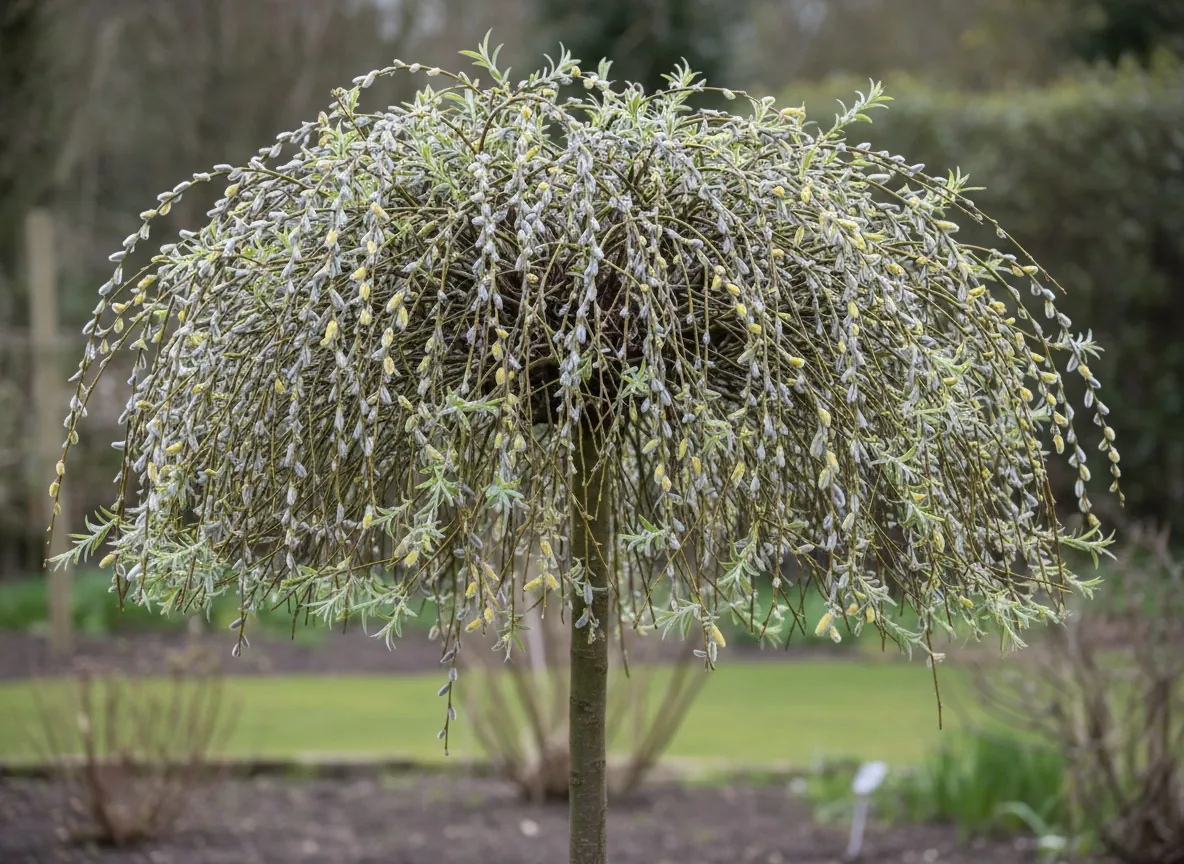
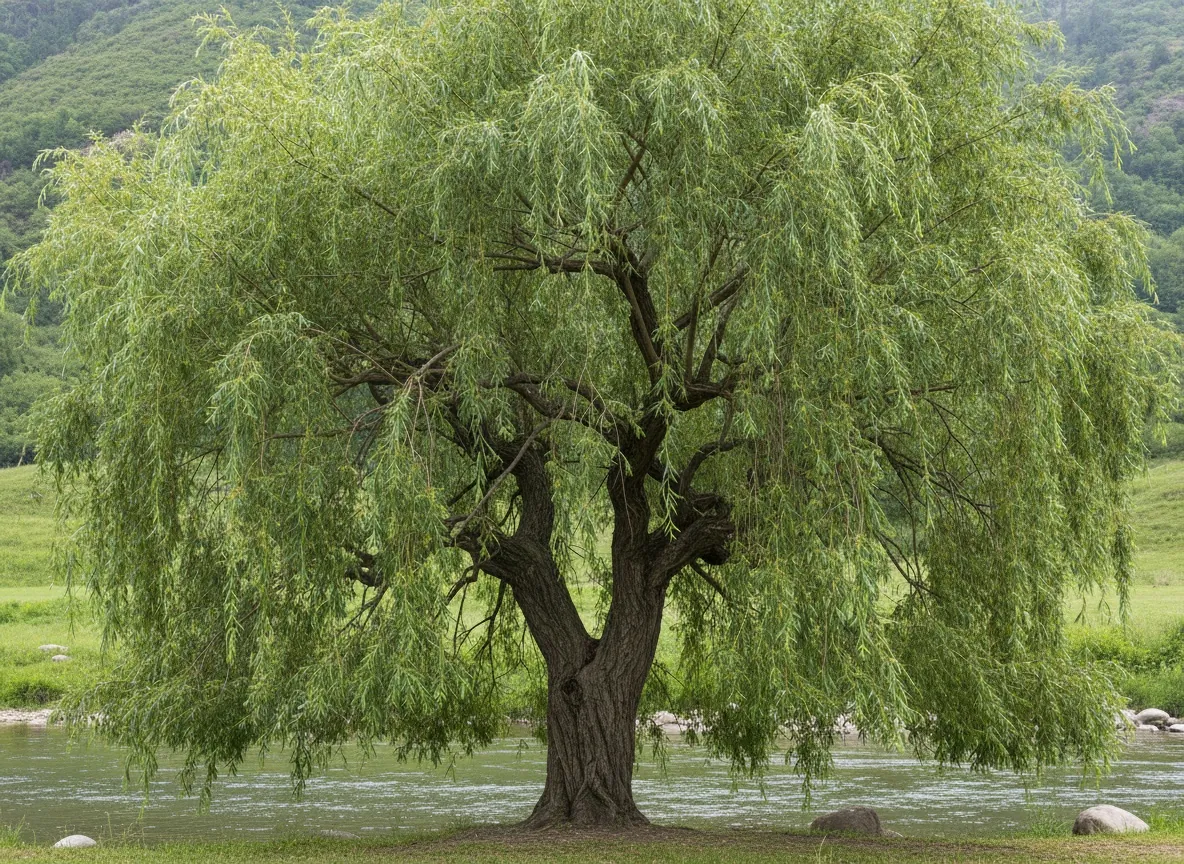
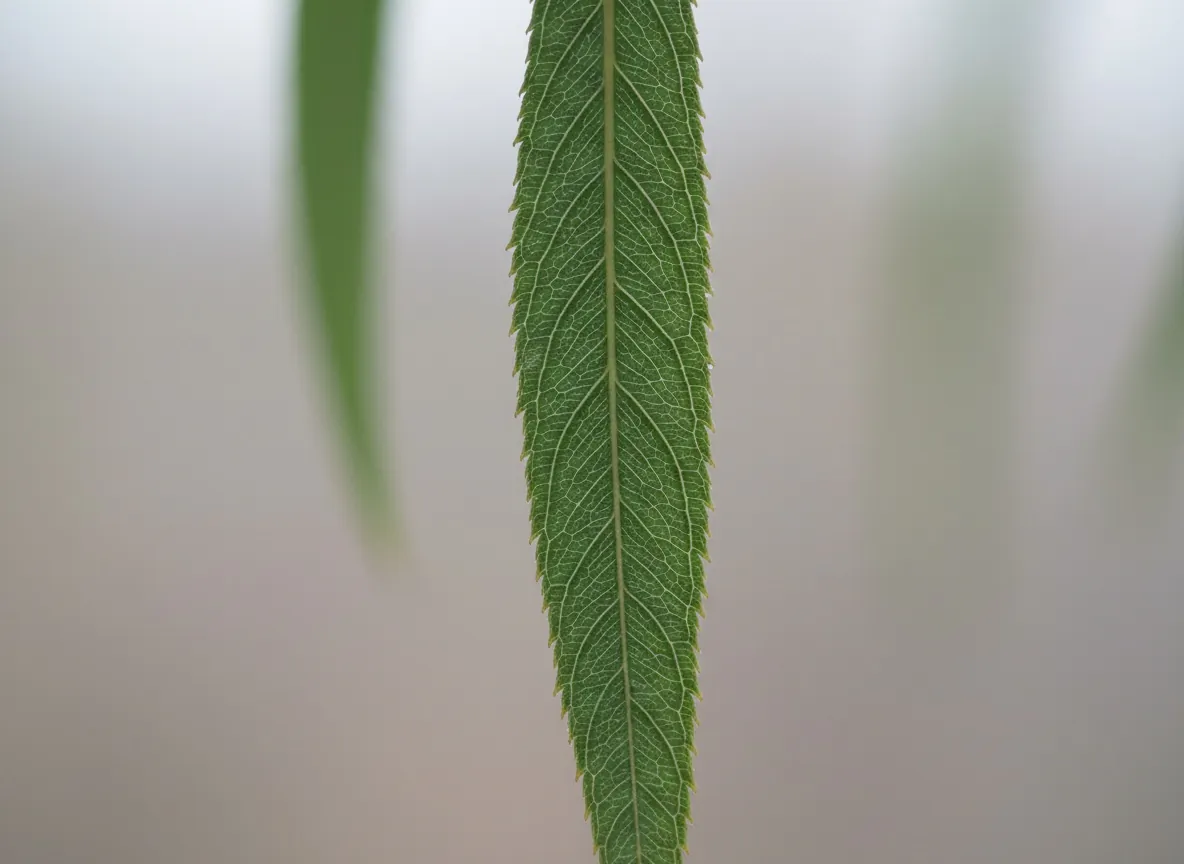
A tree with a short trunk and a broad, domed crown, from which hang thin, pliable shoots reaching at times the ground itself. The leaves are narrowly lanceolate, 8–16 cm long, light green above and bluish beneath. The flowers are inconspicuous catkins opening in March and April, before the tree is fully in leaf. The root system is shallow, very dense and exceptionally far-reaching.
Growing and care
Watering
An enormous demand for water — this is precisely why the roots seek moisture so aggressively and grow into drains and pipes. Away from the bank of a water body it requires generous watering in a drought.
Fertilizing
Moderately — the willow grows very fast anyway, and excess nitrogen produces even more brittle shoots.
Planting
The distance is what matters, not the soil: do not plant closer than 15–20 m to a building, foundations, drainage, septic tank, well or water and sewage connections. The best position is the bank of a pond or river, away from services.
Pruning
Systematically remove dead, damaged and broken shoots; the hanging withies can be shortened so that they do not sweep the ground.
Companion plants
Good companions
A natural companion of a waterside — both species tolerate flooding and suit the same moist position.
A plant of the marginal zone which, together with the willow, creates a naturalistic framing for a pond.
It flowers in early spring in the waterlogged ground at the foot of the willow, before the latter comes into full leaf.
Bad companions
The very expansive roots actively seek water, grow into leaking pipes and drains, burst them, and can undermine foundations and paving. A safe distance is at least 15–20 m.
The shallow, dense roots of the willow take all the water and nutrients, and the hanging branches cut off the light.
The evidence level indicates whether the relationship is backed by research, observation, or gardening tradition.
Toxicity
| For whom | Level | Notes |
|---|---|---|
| Humans | None | The bark contains salicin — the precursor of salicylic acid, from which aspirin derives. It is not a toxic substance, but people allergic to salicylates should avoid contact with the sap and with infusions of the bark. |
| Dogs | Mild | — |
| Cats | Mild | Cats metabolise salicylates poorly — eating the bark or shoots may cause irritation of the digestive tract. |
History and origin
Brought from China to Europe in the 18th century, it quickly became a symbol of mourning and melancholy, which is why it was planted on a mass scale in cemeteries and romantic parks. An extract of willow bark was used against pain as early as antiquity; the salicin isolated from it began the work that led to the synthesis of aspirin at the end of the 19th century.
Uses
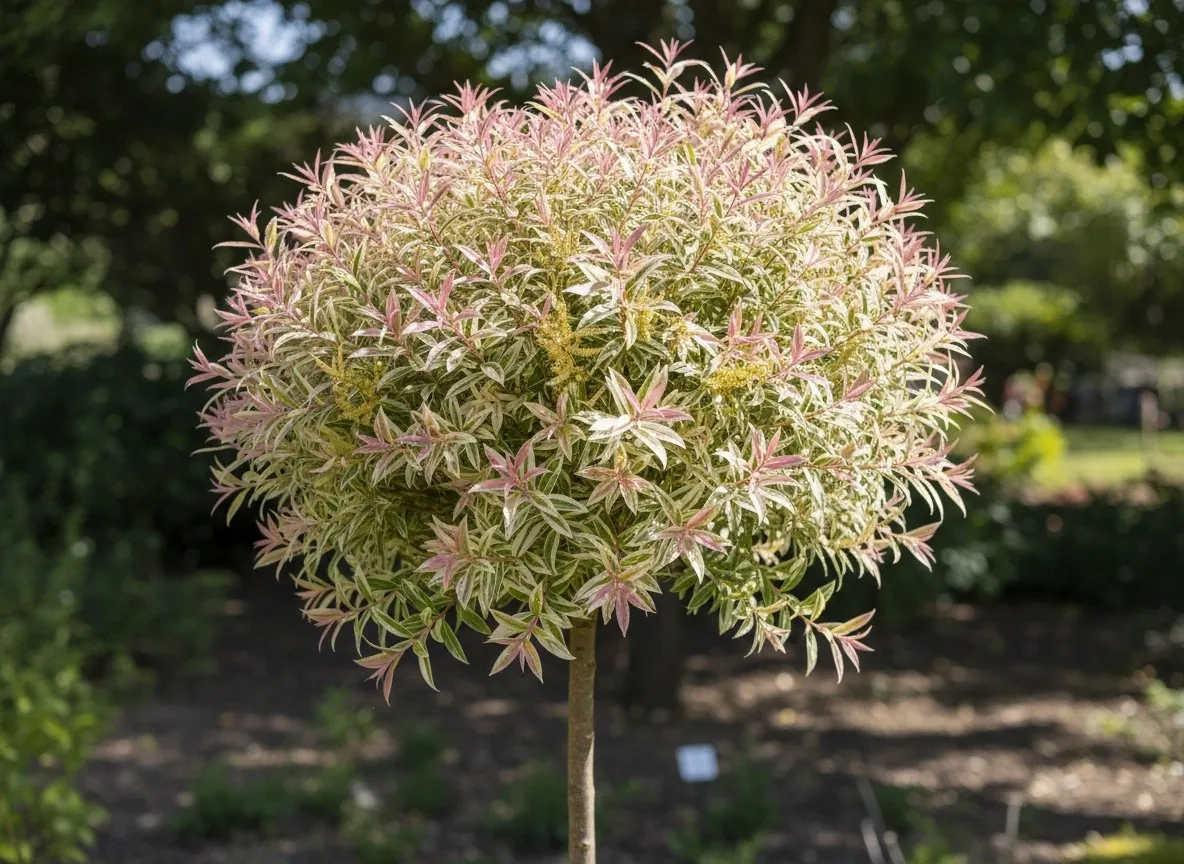
Only for large gardens and parks, ideally on the bank of a pond or river or in a spot that floods periodically — keeping a large distance from any infrastructure. It is also used to stabilise slopes and banks, since it roots easily from withies pushed into the ground. In a small garden it is better to plant dwarf willows grafted on a stem instead.
Trivia
- Linnaeus gave the species the name babylonica, believing it to be the tree from the biblical description of the rivers of Babylon — in reality it comes from China, and a quite different willow grew by the Euphrates.
- Most of the specimens planted in Polish parks today are not the pure species but the more frost-hardy hybrid Salix × sepulcralis, most often the cultivar Chrysocoma with yellow shoots.
Frequently asked questions
How far from the house can a weeping willow be planted?
A minimum of 15–20 m from the building, foundations, terrace, drainage, septic tank, well and water and sewage connections. Willow roots actively seek water, grow into leaking pipes and drains, burst them from the inside, lift paving and can undermine foundations. On a typical building plot there is simply no safe place for it.
How long does a weeping willow live?
Surprisingly briefly for a tree of this size — usually 40–60 years. That is the price of fast growth: the wood is soft and light, the branches brittle, and older specimens often rot inside and lose limbs during gales or wet snow. An old willow over a path or car park requires regular inspections.
Does a weeping willow dry out a plot?
Partly yes — a mature tree takes up very large amounts of water and is sometimes used to dry out waterlogged ground. This is not a controlled solution, however: the same roots that draw water from the ground will just as readily find the drainage and the pipes. To dry out a plot it is better to use a designed drainage system and leave the willow to the banks of water bodies.
Sources
- Plants of the World Online (POWO)Database (GBIF, POWO…)
- RHS — Salix babylonicaInstitution / botanical garden
My note
A private note for this plant — saved in your browser.