In short
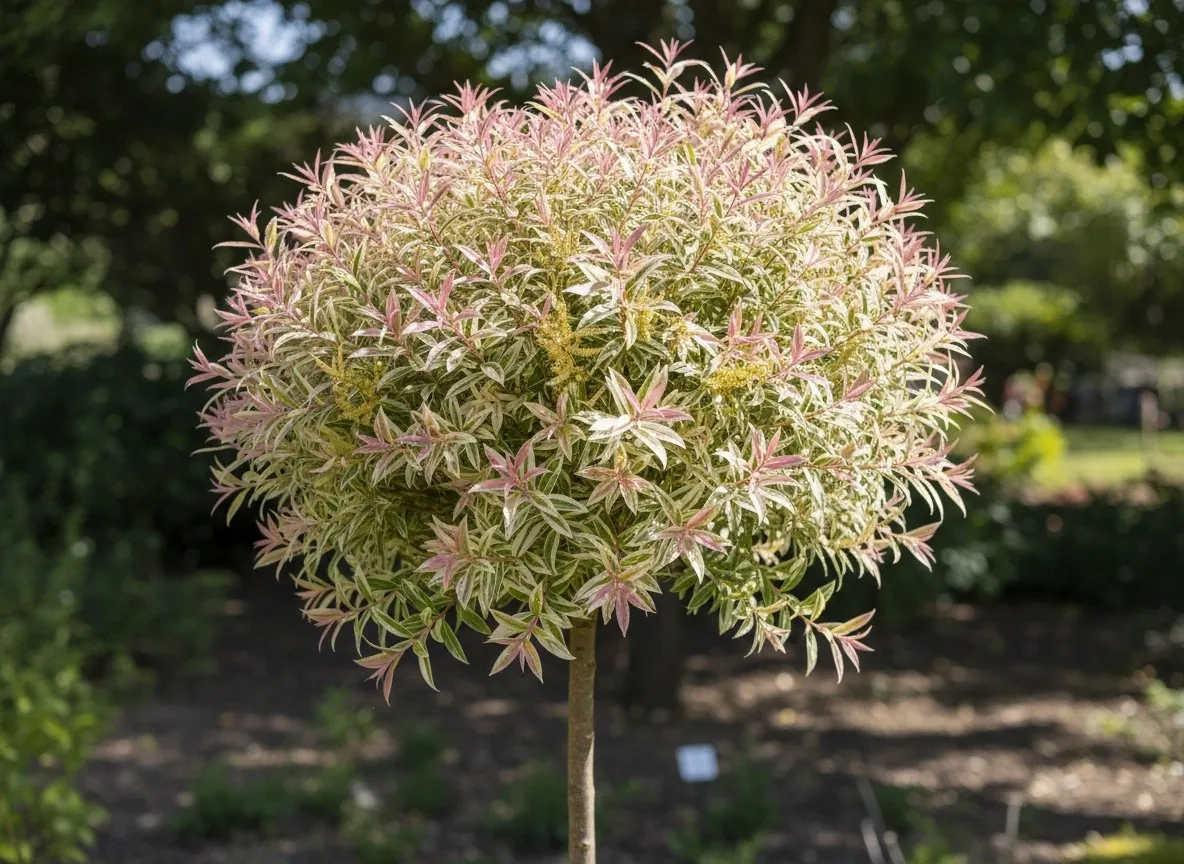
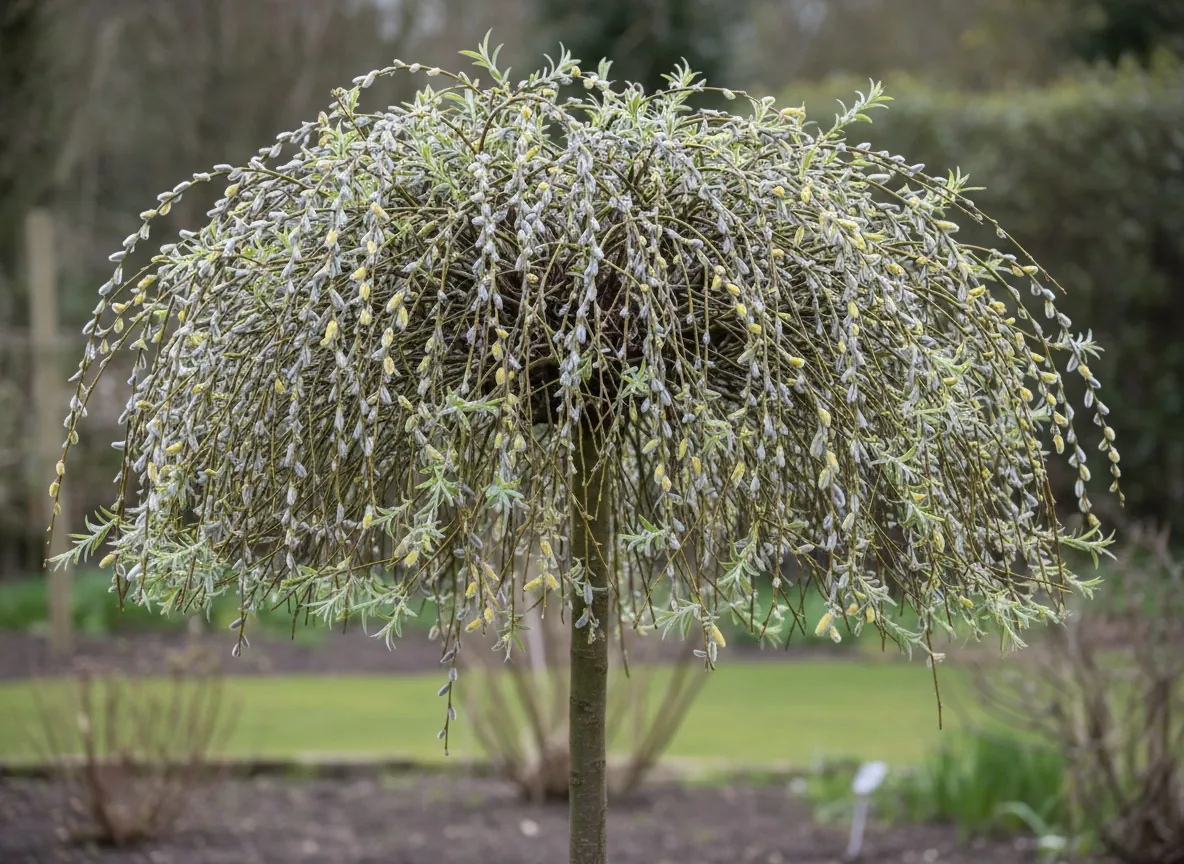
- Stem-grafted weeping form — a small crown with a curtain of hanging shoots.
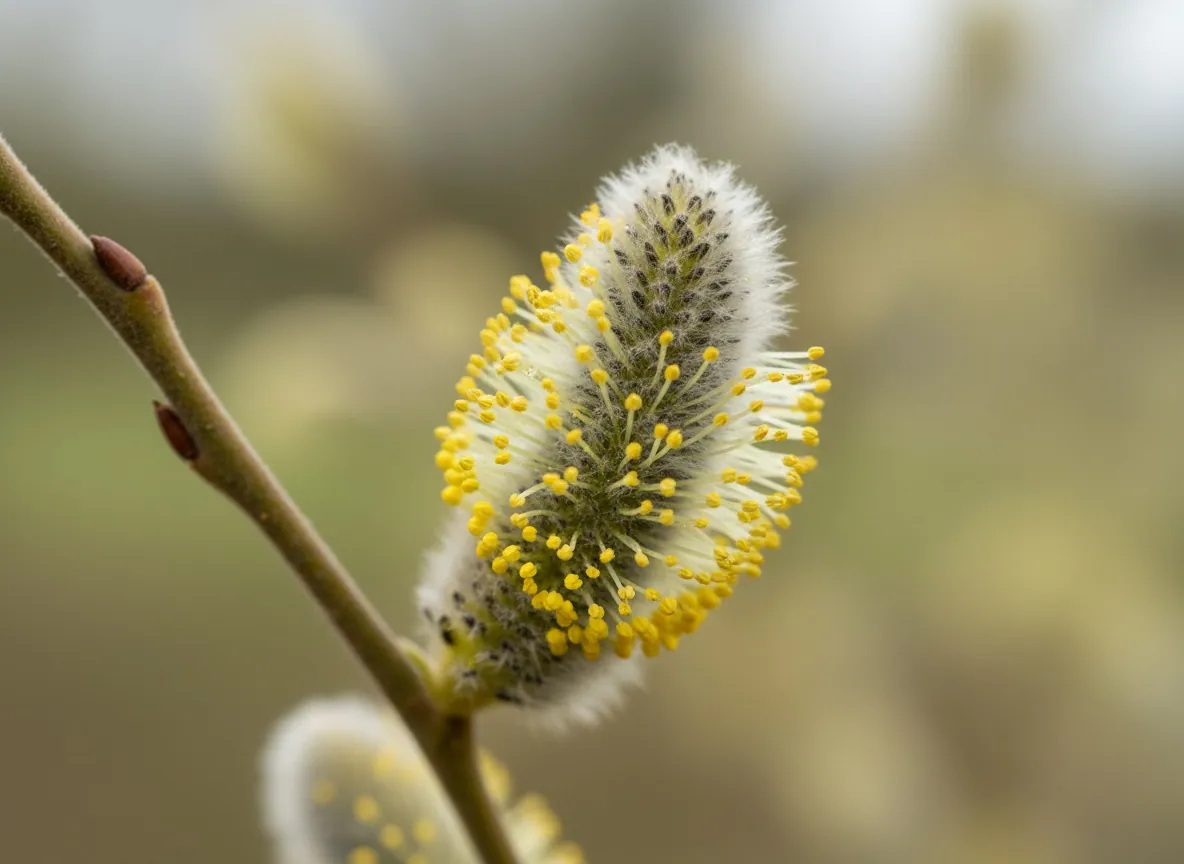
- The silvery-yellow early-spring catkins are one of the first sources of forage for bees.
- Likes a sunny or partly shaded site and constantly moist, fertile soil.
- Very frost-hardy — it withstands frosts down to USDA zone 4.
- Ideal for small gardens, beside garden ponds and for large containers.
Botanical data
- Family
- Salicaceae (Salicaceae)
- Height
- 1.5–2 m
- Width
- 1–1.5 m
- Habit
- Cascading
- Growth rate
- Fast
- Position
- Full sun, Partial shade
- Soil
- Loamy, Humus-rich
- pH reaction
- pH 5.5–7.5
- Moisture
- Moist, Moderate
- Bloom
- March–April
- Hardiness
- USDA 4a–8b
- Propagation
- From cuttings
Characteristics
A stem-grafted form producing a compact, umbrella- or dome-shaped crown of shoots hanging densely to the ground. The leaves are broadly elliptic, dark green above and silvery-hairy beneath. 'Kilmarnock' is a male clone — in early spring, before the leaves emerge, it covers itself with silvery, fluffy catkins that take on a golden-yellow tone as the anthers ripen.
Growing and care
Watering
Like most willows it likes constantly moist soil and tolerates prolonged drought poorly, but withstands periodic flooding well. Water container specimens in summer even every 2–3 days.
Fertilizing
Moderately — the fast-growing willow does not require intensive feeding.
Planting
Enrich the planting hole with compost; on drier, well-drained sites add moisture-retaining organic matter. It looks best as a specimen.
Pruning
Thin out the dense curtain of hanging shoots and shorten the longest so the crown does not lie on the ground and keeps its regular, umbrella-like shape. Unconditionally remove shoots breaking out on the trunk below the graft union.
Companion plants
Good companions
The same group of stem-grafted ornamental willows with similar moisture requirements — they combine nicely together as small accents in a small garden.
Both species like a constantly moist site by a garden pond; the marsh marigold flowers in early spring at the same time as the willow catkins.
Hostas grow well in moist, fertile substrate and the light shade beneath the willow's umbrella-shaped crown.
Bad companions
Extremely different water requirements — lavender needs a dry, well-drained site, while the willow needs constant moisture; growing them together harms one of the plants.
The evidence level indicates whether the relationship is backed by research, observation, or gardening tradition.
Toxicity
| For whom | Level | Notes |
|---|---|---|
| Humans | None | Willow bark contains salicin — a compound with an aspirin-like effect — but the plant is not regarded as toxic. |
| Dogs | None | — |
| Cats | None | — |
History and origin
The weeping cultivar of the goat willow was found in the mid-19th century near the Scottish town of Kilmarnock and quickly propagated as an ornamental tree. Because the weeping form does not produce a straight trunk, it has from the start been grown exclusively as a top-grafted plant — so that the hanging shoots form the characteristic “umbrella”.
Uses
A popular tree for small gardens, for borders, beside garden ponds and for container growing on a terrace or balcony. Planted singly as an ornamental specimen, especially where the early-spring catkins and the compact, weeping habit are valued.
Trivia
- 'Kilmarnock' is a male clone — its catkins are covered with yellow pollen, an early-spring source of forage for bees; the female counterpart is the cultivar 'Weeping Sally'.
- For centuries willow bark supplied salicin — the raw material from which acetylsalicylic acid, i.e. aspirin, is derived.
- The height of the tree is fixed in advance by the grafting height — the crown hangs downwards and practically does not grow taller.
Frequently asked questions
How tall will the Kilmarnock willow grow?
Its height is set by the graft point on the trunk — most often 1.5–2 m. The crown of weeping shoots hangs downwards and spreads mainly sideways, so the tree practically does not grow taller than the graft point.
When and how do you prune a weeping willow on a stem?
Best just after the catkins have finished, in early spring. You thin out the dense curtain of hanging shoots and shorten the longest so they do not lie on the ground. You also need to remove any shoots breaking out on the trunk below the graft union.
Is the Kilmarnock willow good for bees?
Yes. It is a male clone whose silvery catkins become covered with yellow pollen in early spring. It flowers in March and April, when few plants offer forage, so it is a valuable, early source of pollen for bees and other pollinators.
Sources
- Plants of the World Online (POWO)Database (GBIF, POWO…)
- RHS — Salix caprea 'Kilmarnock'Institution / botanical garden
My note
A private note for this plant — saved in your browser.