In short
- A twining climber — it winds around its support and does not attach by itself.
- The flowers are most fragrant in the evening and at night, attracting moths and other pollinating insects.
- It grows best on the principle of “feet in the shade, head in the sun” — a shaded base, sunlit flowering shoots.
- The red berries in autumn are toxic to humans but readily eaten by birds.
- Frost-hardy to USDA zone 5, it overwinters in Poland without cover.
Botanical data
- Family
- Caprifoliaceae (Caprifoliaceae)
- Height
- 2–6 m
- Width
- 1–2 m
- Habit
- Cascading
- Growth rate
- Fast
- Position
- Full sun, Partial shade, Shade
- Soil
- Humus-rich, Loamy
- pH reaction
- pH 5.5–7.5
- Moisture
- Moderate, Moist
- Bloom
- June–September
- Hardiness
- USDA 5a–9a
- Propagation
- From cuttings, By layering, From seed
Characteristics
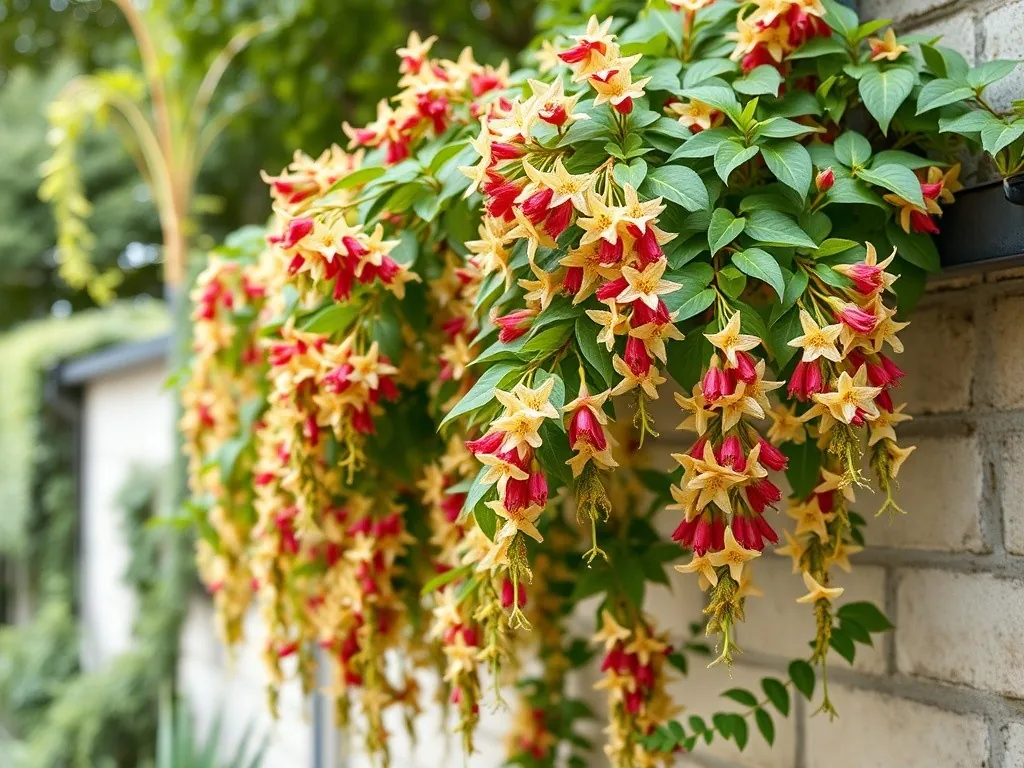
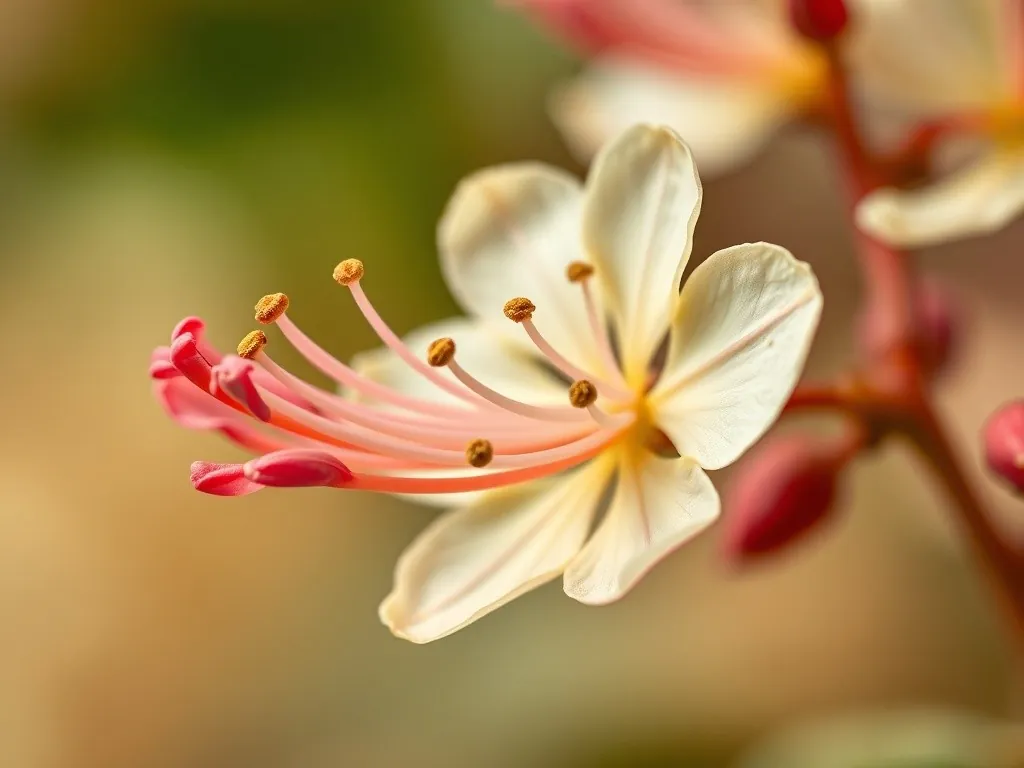
A woody, twining climber with oval, matt-green leaves and flowers gathered in head-like inflorescences at the tips of the shoots. The tubular flowers, cream to yellowish with a reddish tinge on the outside, give off an intense, sweet scent that intensifies after dusk. In autumn, glossy, red berries appear in clusters.
Growing and care
Watering
Apply the principle of “feet in the shade, head in the sun” — mulch and keep the base of the plant moist while the flowering shoots climb towards the sun.
Fertilizing
Moderate doses are enough — an excess of nitrogen reduces flowering in favour of leaf growth.
Planting
Provide a shaded, mulched base and a sunny spot for the upper shoots; set up a trellis, cords or climbing stakes right away.
Pruning
Shorten overly long shoots, thin out the dense centre of the shrub for better ventilation.
Companion plants
Good companions
Similar light requirements and the possibility of training them together over the same pergola or fence — the contrasting flowers extend the ornamental season.
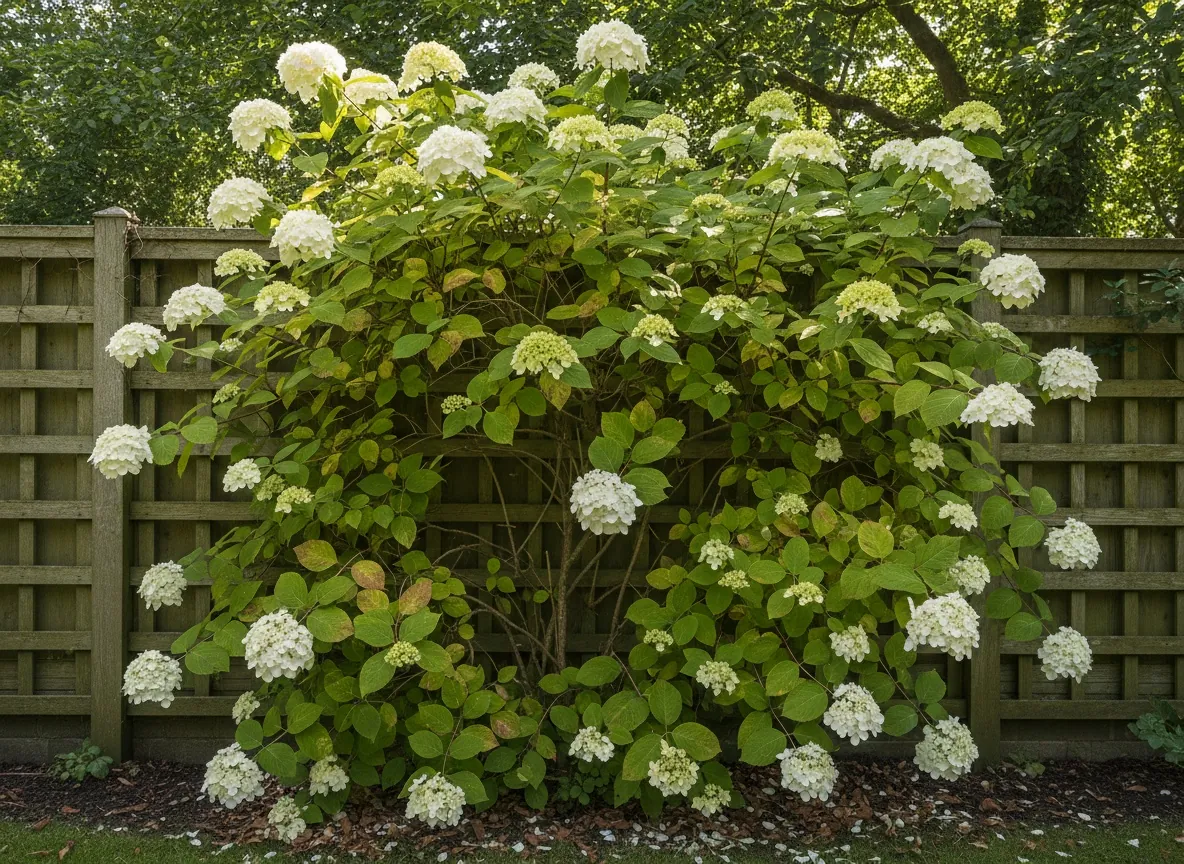
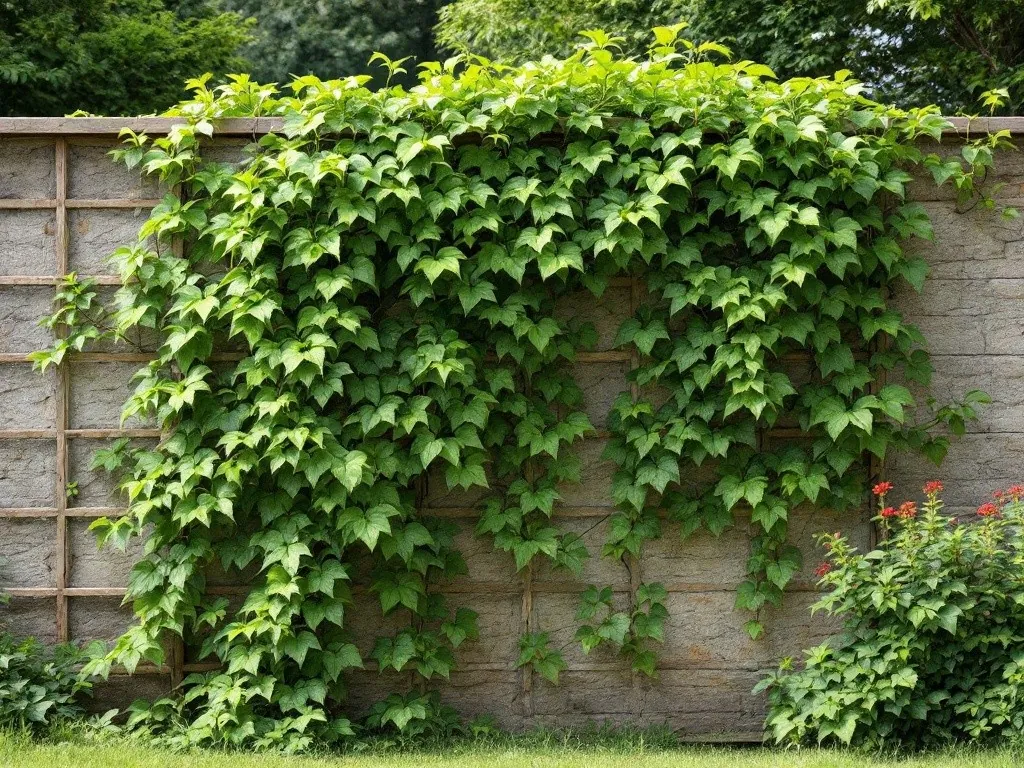
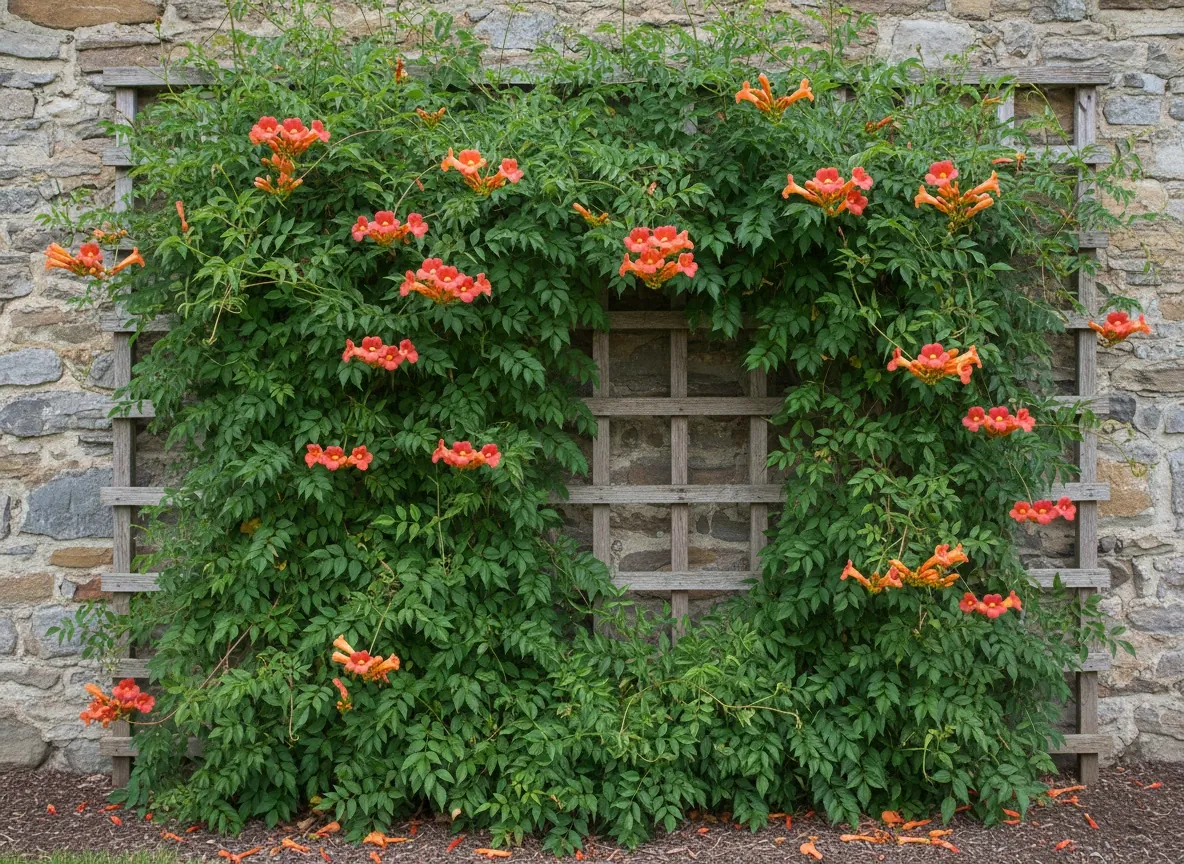
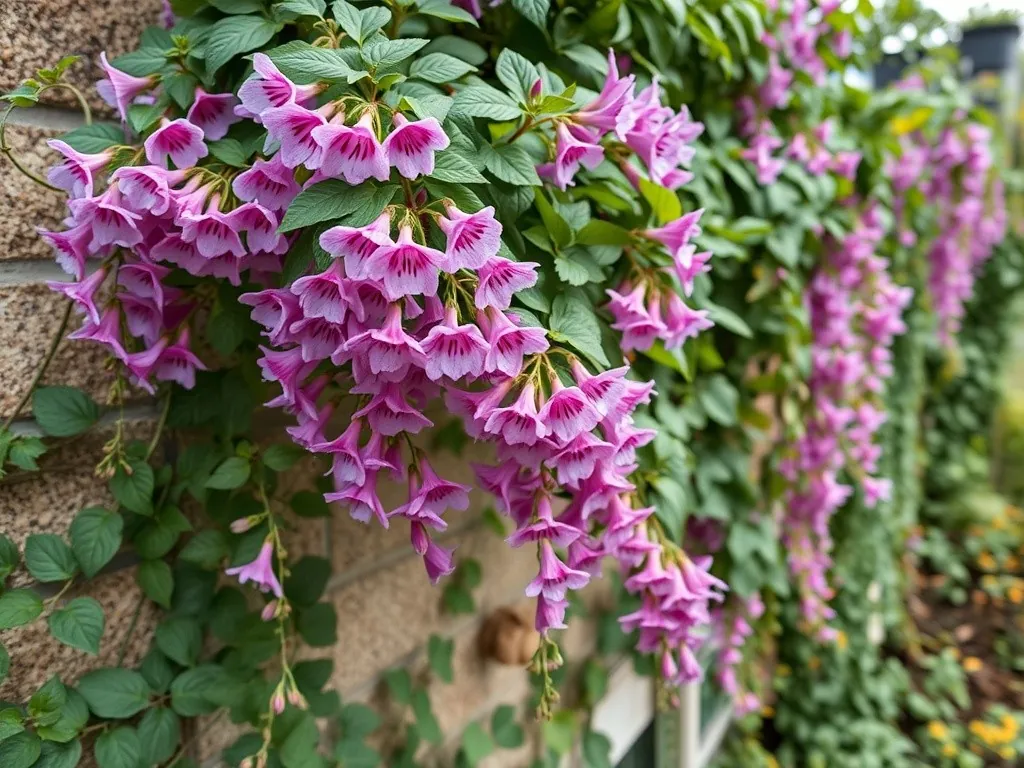
Both climbers tolerate the principle of “feet in the shade, head in the sun” well and can climb together over the same structure.
Bad companions
Honeysuckle is readily colonised by aphids, which easily move from it onto nearby beans.
The evidence level indicates whether the relationship is backed by research, observation, or gardening tradition.
Toxicity
| For whom | Level | Notes |
|---|---|---|
| Humans | Moderate | The red berries are toxic if eaten and can cause vomiting and abdominal pain. |
| Dogs | Moderate | — |
| Cats | Moderate | — |
History and origin
A native European species, present for centuries in hedgerows and by cottages in the rural areas of Great Britain and Western Europe, where it is known as “woodbine”. In Polish folk tradition, protective properties were attributed to honeysuckle when it was planted at the entrance to a house.
Uses
For clothing fences, pergolas, arbours and old trees in naturalistic gardens, near terraces and benches — where the evening scent can be fully appreciated. An excellent plant for supporting pollinators and birds.
Trivia
- The genus name Lonicera commemorates the German botanist and physician Adam Lonicerus of the 16th century.
- The strong, nocturnal scent of the flowers is a strategy adapted to pollination by moths, active after dusk.
Frequently asked questions
Why do honeysuckle flowers smell strongest in the evening?
This is a natural strategy adapted to pollination by moths and other nocturnal insects, which are the main pollinators of this species — the intense scent after dusk is meant to attract them more effectively than during the day.
Are honeysuckle berries dangerous?
Yes, the red berries are toxic to humans and pets if eaten — they can cause vomiting and abdominal pain. It is worth watching small children near the fruiting plant, though for birds the berries are a safe and valuable food in autumn.
How do you train honeysuckle so that it flowers well?
It is worth applying the principle of “feet in the shade, head in the sun” — shade and mulch the base of the plant and allow the shoots to climb towards the sun. An annual, light pruning after flowering keeps a compact habit and encourages more abundant flowering in the next season.
Sources
- Plants of the World Online (POWO)Database (GBIF, POWO…)
- RHS — Lonicera periclymenumInstitution / botanical garden
My note
A private note for this plant — saved in your browser.