In short
- Fixes atmospheric nitrogen thanks to root nodule bacteria — do not feed it nitrogen.
- After harvest cut the haulm but do NOT pull out the roots — they leave nitrogen in the soil.
- Sow early, from the end of March; it tolerates cold and light frosts.
- Tall varieties need support — netting, brushwood or strings.
- Do not plant next to alliums: garlic, onion and leek.
Botanical data
- Family
- Fabaceae (Fabaceae)
- Height
- 0.4–2 m
- Width
- 0.2–0.4 m
- Habit
- Creeping
- Growth rate
- Fast
- Position
- Full sun, Partial shade
- Soil
- Humus-rich, Loamy, Sandy
- pH reaction
- pH 6–7.5
- Moisture
- Moderate
- Bloom
- May–July
- Hardiness
- —
- Propagation
- From seed
Characteristics
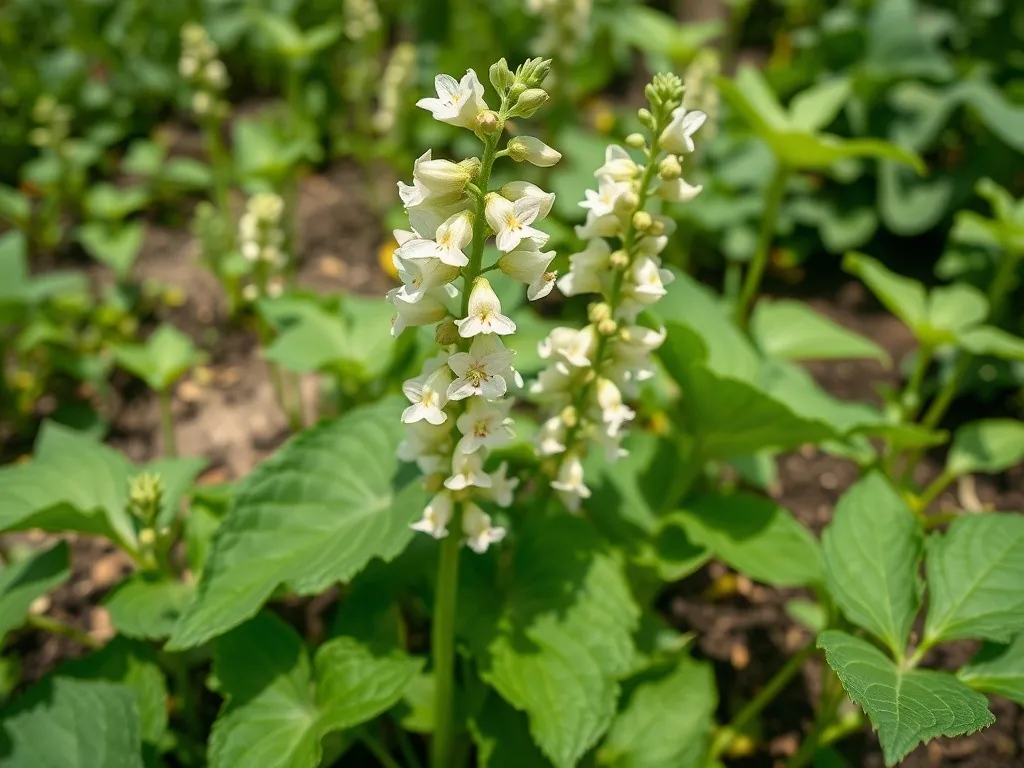
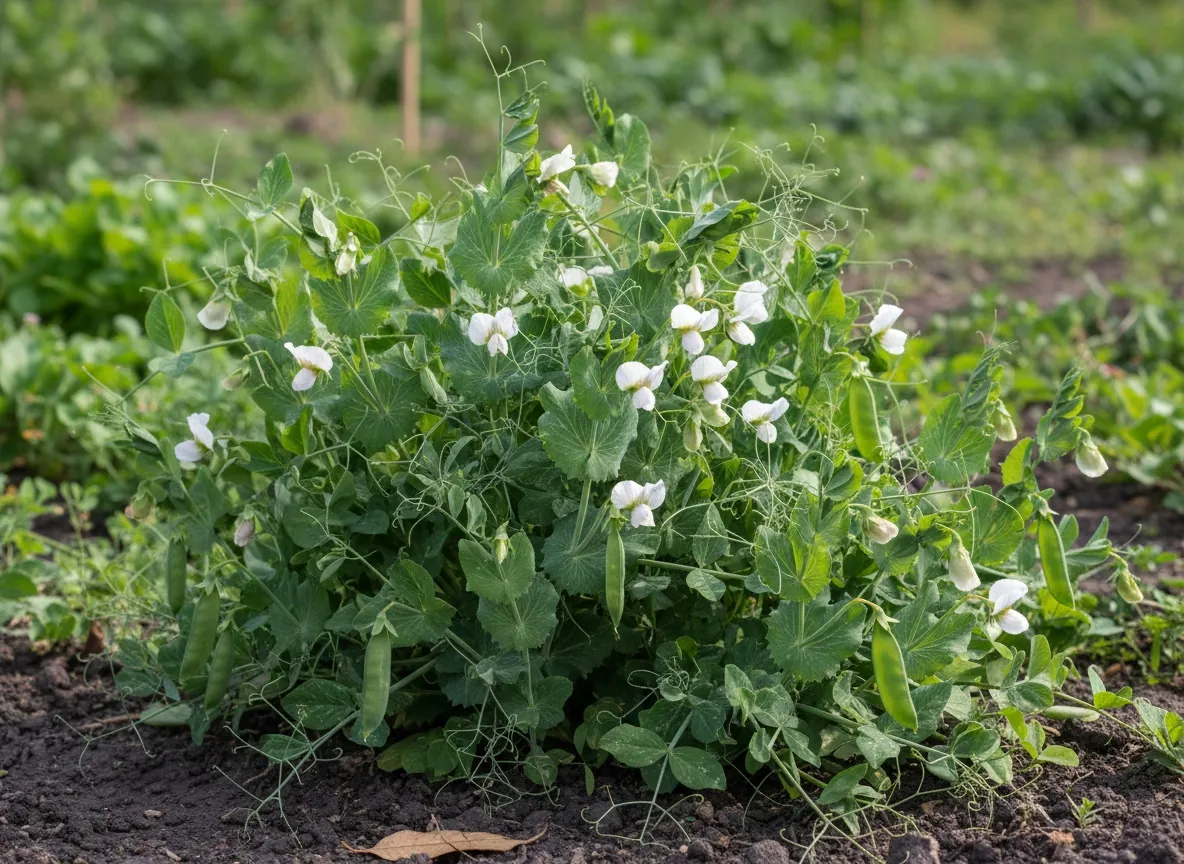
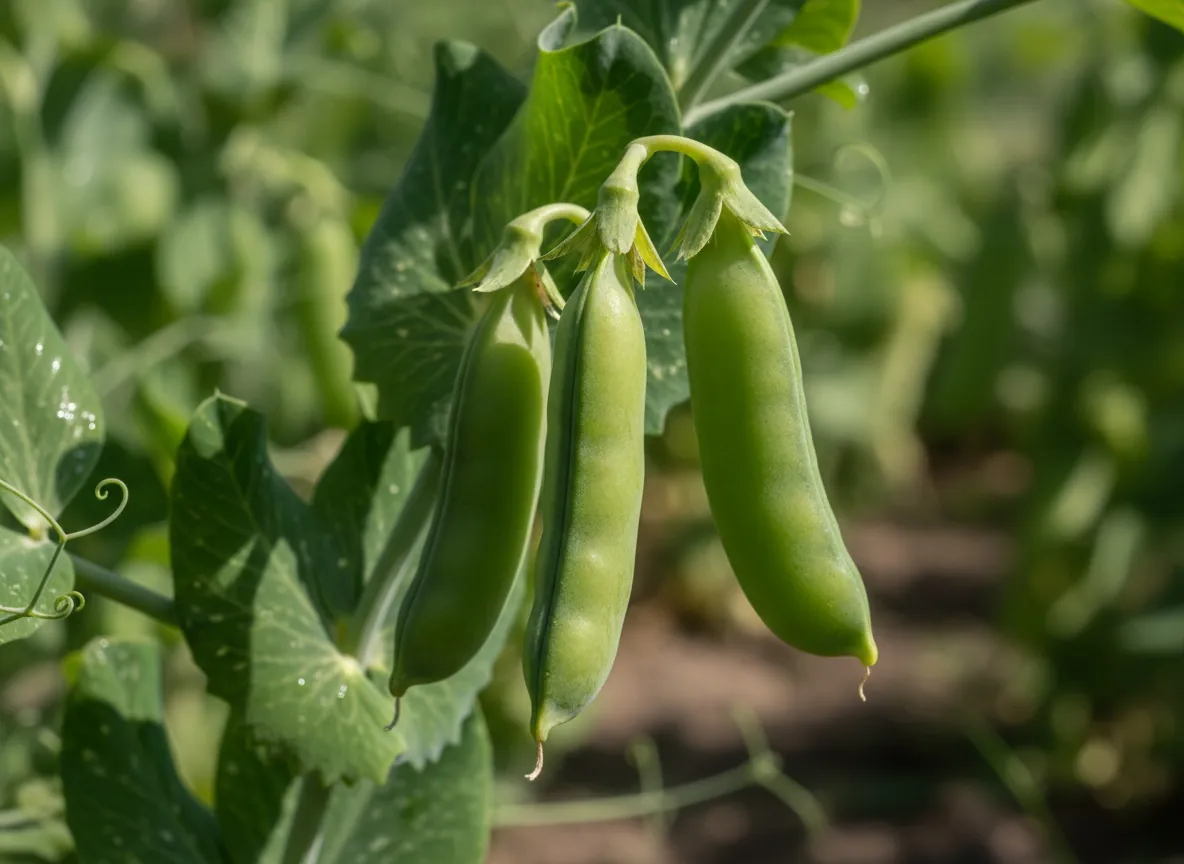
A herbaceous plant with hollow, delicate stems, climbing by means of tendrils formed from modified terminal leaflets. The leaves are pinnate, blue-green, with large stipules at the base. The pea-like flowers, most often white, are self-pollinating — they pollinate themselves while still in the bud. The fruit is a pod: in shelling varieties with a hard parchment inside, shelled for the seeds; in sugar varieties without parchment, edible whole. Small, spherical nodules form on the roots — this is where the nitrogen-fixing bacteria live.
Growing and care
Watering
It is most sensitive to water shortage during flowering and pod filling — drought at this time translates directly into a smaller crop. Water at the root, as wet leaves favour mildew.
Fertilizing
Do NOT feed with nitrogen — the pea fixes atmospheric nitrogen itself, and nitrogen fertilising actually inhibits the formation of root nodules and induces the plant to build excess foliage at the expense of pods.
Planting
Well-drained soil with a neutral reaction, without fresh manure. Give tall varieties a support straight away — netting, brushwood or strings. Do not grow peas after themselves or after other legumes more often than every 4 years.
Pruning
After the harvest is over, cut the haulm right at ground level and compost it.
Companion plants
Good companions
Groch wzbogaca glebę w azot związany przez bakterie brodawkowe, z czego korzysta marchew rosnąca obok i po nim, a obie rośliny nie konkurują o tę samą warstwę gleby.
Niska sałata dobrze wykorzystuje półcień rzucany przez rządek grochu i jego wcześnie zwolnione stanowisko.
Szybko dojrzewa i zdąży zejść z zagonu, zanim groch rozrośnie się na całą przestrzeń — klasyczna uprawa współrzędna.
Ogórek jest wymagający pokarmowo i korzysta z azotu pozostawionego przez groch w glebie.
Tradycyjny następca grochu w płodozmianie — bardzo żarłoczny, dobrze wykorzystuje wzbogaconą azotem glebę.
Bad companions
Rośliny cebulowe wydzielają związki siarkowe, które hamują bakterie brodawkowe Rhizobium na korzeniach grochu, a tym samym jego zdolność wiązania azotu.
Klasyczna zła para: cebulowe i bobowate wzajemnie się hamują, groch rośnie w ich sąsiedztwie wyraźnie słabiej.
Kolejna roślina cebulowa — sąsiedztwo z grochem tradycyjnie uznaje się za niekorzystne dla obu upraw.
Należy do rodzaju Allium, dzieli z pozostałymi cebulowymi niekorzystny wpływ na rozwój grochu.
The evidence level indicates whether the relationship is backed by research, observation, or gardening tradition.
Toxicity
| For whom | Level | Notes |
|---|---|---|
| Humans | None | The seeds and young pods of sugar varieties are fully edible. Raw seeds of fodder varieties can be hard to digest. |
| Dogs | None | — |
| Cats | None | — |
History and origin
The pea is one of the first plants people domesticated — its seeds have been found at sites in the Fertile Crescent dating back some 10,000 years, alongside wheat and barley. For centuries it was eaten mainly as dry seed, the basis of a cheap and filling peasant cuisine. Green peas harvested unripe as a vegetable are a relatively late idea, which spread in Europe only in the 17th century, starting at the French court, where they became a fashionable delicacy.
Uses
A bed vegetable for every garden, valuable also as an element of crop rotation: grown before greedy vegetables (brassicas, potatoes, cucumbers), it leaves them soil enriched with nitrogen. Sugar varieties are harvested for young pods eaten whole, shelling varieties for green peas to boil, freeze and preserve, while seeds left to full maturity are dried for soups.
Trivia
- It was on peas that Gregor Mendel carried out his experiments on the inheritance of traits in the 1860s. By crossing varieties differing in flower colour or seed shape, he discovered the laws of inheritance and gave rise to genetics — the pea is thus the plant from which this whole field of science began.
- The pea does not take nitrogen solely from the soil: in the nodules on its roots live Rhizobium bacteria, which fix nitrogen directly from the air and pass it to the plant in exchange for sugars. That is why after peas the soil is more fertile than before the crop.
- Mendel did not choose the pea by chance — it flowers self-pollinating and pollinates itself while the bud is still closed, so the researcher had full control over which plant was crossed with which.
Frequently asked questions
Do peas need to be fed with nitrogen?
No — and it is better not to. The pea lives in symbiosis with Rhizobium bacteria, which fix nitrogen straight from the air in the nodules on its roots. Nitrogen fertilising discourages the plant from forming nodules (since the nitrogen is served on a plate) and induces it to build lush haulm at the expense of pods. Compost and a phosphorus-potassium fertiliser before sowing are enough.
What to do with peas after harvest?
Cut the haulm right at ground level and compost it, but do not pull out the roots. It is precisely in the root nodules that the fixed nitrogen is stored — roots left in the soil will decompose and feed the next crop. Pulling them out with the root ball simply removes that nitrogen from the bed.
Why not plant peas next to onions and garlic?
Alliums release sulphur compounds with an antibacterial action, which harm the nodule bacteria on pea roots and so strike at exactly the mechanism by which the pea handles nitrogen. In practice, gardeners have observed for generations that peas and beans grow markedly more poorly near alliums.
Sources
- Plants of the World Online (POWO)Database (GBIF, POWO…)
- RHS — PeasInstitution / botanical garden
My note
A private note for this plant — saved in your browser.